
Message from the DEDE Officers
Lauren Fuess, Chair (chair.dede@sicb.org); Cynthia Downs, Chair-Elect; Robin Warne Program Officer (dpo.dede@sicb.org); Molly Simonis, Program Officer Elect; Emily Le Sage, Secretary (secretary.dede@sicb.org); Jennifer Houtz, Secretary-Elect; David Chang van Oodrt, Student/ Postdoctoral Affairs Committee Representative
SICB 2026 in Portland, OR
As we look forward to the SICB 2026 meeting in Portland, OR (January 3-7, 2026), it is shaping up to be another outstanding meeting! DEDE will be co-sponsoring four symposia with complementary oral and poster sessions.
Monday, January 5, 8:30 AM-3:30 PM, Behavioral and environmental monitoring with open-source, low-cost tools (S6).
Organizers: Yash Sondhi, Case Western Reserve University
Brett Seymoure, University of Texas at El Paso
Thomas Franzem, Kent State University
Tuesday, January 6, 8:00 AM-3:30 PM, Animal collective movement in complex environments (S7)
Organizers: Yangfan Zhang, Harvard University
Hungtang Ko, Princeton University
Tuesday, January 6, 8:00 AM-2:30 PM, Spotlighting the role of behavior in a rapidly changing world (S9)
Organizers: Kimberly S. Sheldon, University of Tennessee
Martha M. Muñoz, Yale University
Elizabeth P. Derryberry, University of Tennessee
Wednesday, January 7, 8:00 AM-3:30 PM, Needle in the haystack: Finding tools to study puncture and injection mechanisms in parasites (S10)
Organizers: Abby Weber, University of Illinois Urbana-Champaign
Patrick Wilson, University of Illinois Urbana-Champaign
Philip S L Anderson, University of Illinois Urbana-Champaign
2026 DEDE Best Student Presentations
Congrats to the 3 students whose talks were selected for the DEDE Best Student Talk Competition! The DEDE BSP presentations are Monday January 5 from 8:00 – 10:00 AM in B115.
- Kailey McCain, University of South Florida: Managing risk with gut resilience in house sparrows
- Kristen Rosamond, University of Missouri-St. Louis: Impact of gut microbiome modulation on nestling house sparrow physiology
- Syeda Mehreen Tahir, Arizona State University: High protein diet increases susceptibility of Desert Locust, Schistocerca gregaria to Metarhizium bi
Congrats to the 9 students whose posters were selected for the DEDE Best Student Poster Competition! The DEDE BSP poster sessions are from Monday January 5 from 3:30-5:30 PM and Tuesday January 6 from 3:30-5:30 in Exhibit Hall A/A1. In alphabetical order:
- Jonathan Adamski, Florida International University: Elucidating the role of shed skins in the persistence of Ophidiomyces ophiodiicola in soils
- Alizabeth Atkison, Allegheny College: Maternal effects on the innate immune system in nestling Tree Swallows
- Kally Chamberlain, Mote Marine Laboratory: Bioactivity of Stingray Venom
- Ava Hendrix, Bucknell University: Assembling the genome of a bat Epomophorus labiatus with an XO sex determination system
- Margalit Mauricio, Swarthmore College: Variation in immune response of female cat fleas (Ctenocephalides felis) against a bacterial infection
- Chloe Poenisch, Texas State University: A new method to assess host-pathogen dynamics in Astrangia poculata
- Himat Sidhu, University of Chicago: Characterizing Schistosoma mansoni-infected Biomphalaria glabrata tissue
- Vansh Singhal, University of Arkansas: Do parental feeding rates affect cytokine expression of nestling Eastern Bluebirds (Sialia sialis)?
- Rosemary Westcott, Duquesne University: Preparing for Battle: Impacts of Pond Water on Tadpole Microbiome, Immune Priming, and Development
Check out the end of the newsletter for a Q&A with some of the students!
Time Sensitive Announcements
We need judges for the Best Student Presentations!
The poster and oral presentation competition depends on volunteer judges, so please sign up as a judge for the Best Student Presentations when you register or email chair.dede@sicb.org to volunteer.
DEDE Mentor-Mentee Meet-up
It is that time of year to sign up for our DEDE mentor meet-up program! This mentor meet-up program will run in-person during the 2026 annual meeting in Portland, OR. Whether you are looking to be a mentor this year (postdocs, faculty, government, industry or NGO professional), or looking to be a mentee (undergraduate students, graduate students, postdocs), please fill out this form by Friday, 28 November 2025! SICB is also interested in extending the mentorship programs across all divisions, and will be gathering interest in being a mentor or mentee for your division via the registration form through early bird registration as well.
If you are aware of non-SICB-members within fields of ecoimmunology and disease ecology that will be attending SICB and might like to participate in the DEDE mentor meet-up program, please feel free to pass this email along! We would love to facilitate as much networking as possible within DEDE, especially when linking early career scientists with later-stage scientists.
We look forward to a successful DEDE mentor meet-up! Don’t hesitate to reach out to our SPDAC David Chang van Oodrt (dchangvo@princeton.edu) with any questions regarding this program for the 2026 meeting in Portland.
Apply for the Lochmiller Young Investigator Award
On December 1, 2025, applications will be due for the Robert Lochmiller Award, to be awarded to an early career investigator for distinguished contributions to the fields of ecological immunology and disease ecology. Eligible candidates are those who are members of SICB and who have completed their doctorate within the past ten years at the time of application. The award recipient will be announced at the annual meeting.
Candidates may apply directly or be nominated and both types of candidates will be evaluated equivalently. Candidates and nominators should use the following form(https://forms.gle/bkshean5gkXKnd5HA). Nominees will be contacted to submit their application by December 1, 2025.
Candidates should include:
- One-page (<500 words) description of their work.
- In the description of their work (<500 words), applicants should highlight how their work has contributed to the overall fields of ecoimmunology and/or disease ecology in recent years, as well as their potential for mentoring new and diverse scientists in these fields. Descriptions with more than 500 words will be disqualified.
- Two reprints of their strongest works
- A curriculum vitae.
Candidates must also have two letters of recommendation forwarded to the Awards Committee Chair (chair.dede@sicb.org).
Join the list of past Lochmiller Young Investigator Awardees:
2025: Erin Sauer (Rutgers University) and Jenn Houtz (Allegheny College)
2024: Daniel Becker (University of Oklahoma)
2023: Lauren Fuess (Texas State University), Gabrielle Names (North Dakota State University)
2022: Patricia Lopes (Chapman University), Sarah Knutie (University of Connecticut)
Building community at SICB 2026
Outgoing and Incoming DEDE Officers
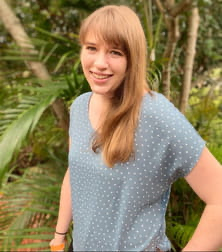
Outgoing DEDE Chair (2024-2026): Lauren Fuess
- Current position: Assistant Professor at Texas State University
- How long have you been a member of SICB?: Thirteen years!
- Tell the SICB community about your research: My group seeks to address questions at the intersection of symbiosis biology and immunology, often taking an ecological and evolutionary approach. We’re interested in understanding the roles of immune system in regulating symbioses, and the roles of symbiotic associations in driving variability in immune systems across scales (intraspecific to phylogenetic approaches). We work primarily in non-model cnidarians, but also dabble in other systems like fish.
- What advice would you give to students attending the SICB meeting for the first time?: Explore your interests! SICB is a wonderfully broad conference with tons of talks to go to. Stretch yourself to go to something outside of your comfort zone; bonus points if you introduce yourself to a speaker who gives a particularly good talk. Everyone is so friendly, so don’t be afraid to do some networking and make new friends! This is your chance to build a broad network of colleagues who can support you on your academic journey.
- What are you looking forward to the most at SICB2026?: Another year of excellent science and an opportunity to catch up with all the amazing folks I’ve met in 10+ years of attending SICB, many of whom work in fields completely different than my own.
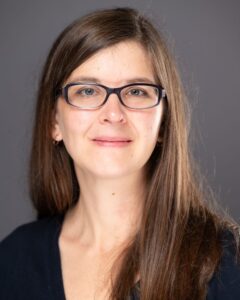
Outgoing DEDE Chair-Elect (2024-2026), Incoming DEDE Chair (2026-2028): Cynthia Downs
- Current position: Associate Professor at SUNY College of Environmental Science and Forestry
- How long have you been a member of SICB? Since 2006
- Tell the SICB community about your research: My research program aims to understand the integrative physiological, ecological, and evolutionary factors that shape immune defenses and the consequences of investment in defenses for individual fitness, population dynamics, and disease ecology. I ask questions across levels of biological organization in two primary areas: 1) the role of body size shaping immune architecture across species and 2) the ecological and integrative physiological factors contributing to interindividual variation in immune defenses. .
- What advice would you give to students attending the SICB meeting for the first time? Introduce yourself to the person you’re sitting next to at a talk or standing next to in a coffee line. Ask them about their research. It’s a great way to network casually, and you never know where the conversation will lead. It’s how I first met many of my collaborators.
- What are you looking forward to the most at SICB2026? Catching up with conference friends and hearing about what they’ve been doing for the past year.
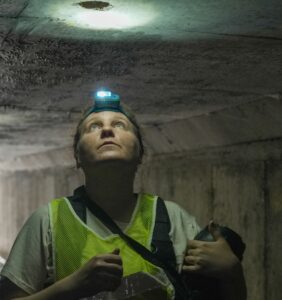
Outgoing SPDAC (2024-2026), Incoming DEDE Program Officer Elect (2026-2028): Molly Simonis
- Current position: Assistant Professor at Auburn University
- How long have you been a member of SICB? I have been a member of SICB since 2021.
- Tell the SICB community about your research: My research focuses on wildlife health by investigating pathogen and immunity dynamics of North American bats.
- What advice would you give to students attending the SICB meeting for the first time? Engage with folks in SPDAC and the programs they offer, and engage with folks within and outside of your home division. SICB is so full of integrated scientists that you are sure to find research topics that interest you across multiple groups. Also, if offered, participate in mentor meets-ups within your home division. It is an easy way to meet someone senior to you in your field and interact with others at your similar career stage in a smaller setting. Finally, don’t forget to take a break!
- What are you looking forward to the most at SICB2026? Since I just started my lab at Auburn University, I am really excited to see student presentations this year. I am really looking forward to seeing the student research that is up and coming in the fields of disease ecology and ecoimmunology!
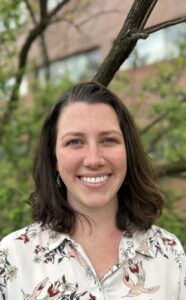
Incoming DEDE Secretary-Elect (2026-2028): Jennifer Houtz
- Current position: Assistant Professor of Biology at Allegheny College
- How long have you been a member of SICB? 8 years
- Tell the SICB community about your research: My research focuses on the physiological mediators of stress resilience in wild birds. My students and I study how hormones and the gut microbiome change in response to environmental challenges.
- What advice would you give to students attending the SICB meeting for the first time? Try to network as much as possible! One conversation could lead to a collaborative research project or a graduate school position.
- What are you looking forward to the most at SICB2026? I am looking forward to catching up with colleagues and watching my students present their posters!
Featured Early Career Members – Q&A!
The following early career members (in alphabetical order) will be presenting their work at SICB 2026. Please stop by their talk or poster and say hello!
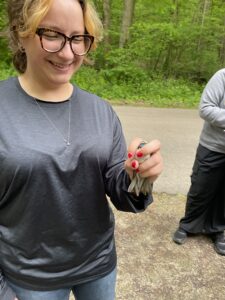
Alizabeth Atkison
Undergraduate student in Dr. Jennifer Houtz’s lab at Allegheny College
- How long have you been a SICB member? I have just recently become a member of SICB.
- Describe the research that you are presenting at SICB 2026: I will be presenting about the maternal effects on nestling Tree Swallow innate immunity.
- What are you most looking forward to at SICB 2026? I am most looking forward to meeting other undergraduate researchers, as well as connecting with aspiring and current field or forensic ecologists!
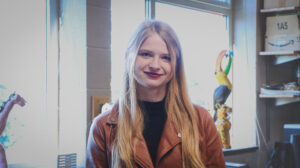
Ava Hendrix
Undergraduate student in the Field and Reeder lab at Bucknell University
How long have you been a SICB member? I joined SICB this year.
Describe the research that you are presenting at SICB 2026: While assembling the genome of a male epauletted fruit bat (Epomophorus labiatus), we discovered it lacked a Y chromosome. We will identify the genes under selection that facilitate this XO sex determination using our chromosome-level assembly.
What are you most looking forward to at SICB 2026? I am looking forward to connecting our research with other work in genomics and evolutionary biology.
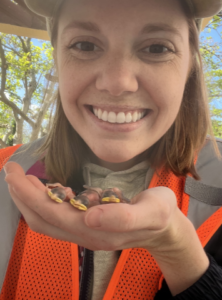
Kristen Rosamond
PhD student in the Parker and Chubiz labs at the University of Missouri-St. Louis
- How long have you been a SICB member? I have been a member since 2024.
- Describe the research that you are presenting at SICB 2026: I will present data from a field experiment in which I manipulated nestling sparrows’ microbiomes to explore how gut bacteria influence growth, immunity, and health in early life.
- What are you most looking forward to at SICB 2026? I am excited to learn about new research in my field and to have an excuse to visit the Pacific Northwest, including a highly anticipated stop at Salt & Straw!
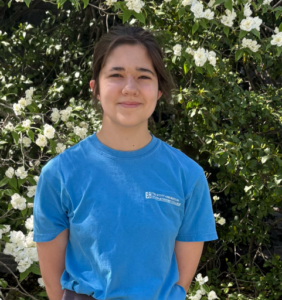
Margalit Mauricio
Undergraduate student at Swarthmore College, and an REU participant of the RESCoPE at Georgia Southern in Dr. Lisa Brown’s lab.
- How long have you been a SICB member? I am not currently a SICB member, but will probably be one before the conference!
- Describe the research that you are presenting at SICB 2026: I will be presenting work exploring the immune response of female cat fleas (Ctenocephalides felis) against an infection of E.coli, specifically looking at how infection load corresponded to survival and time of death.
- What are you most looking forward to at SICB 2026? I’m really looking forward to seeing all of the research that’s being presented at my poster session and talk to the scientists behind it!

Syeda Mehreen Tahir
PhD candidate in the Global Locust Initiative Lab at Arizona State University, working with Dr. Arianne Cease and Dr. Jon Harrison.
- How long have you been a SICB member? I have been a SICB member for two years.
- Describe the research that you are presenting at SICB 2026: My research shows that protein-rich diets make locusts more vulnerable to fungal infection, offering new insights into nutrition, immunity, and sustainable pest control strategies.
- What are you most looking forward to at SICB 2026? I am eager to share my research, engage with innovative science, build collaborations, and explore potential postdoctoral opportunities. Please let me know if you are looking for a postdoc with a broad biochemistry, nutrition, immunology, and molecular biology background!
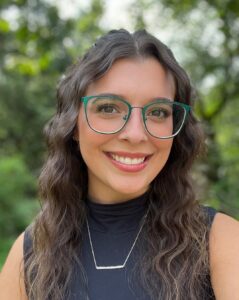
Rosemary Wescott
PhD candidate in Dr. Sarah Woodley’s lab at Duquesne University in Pittsburgh, PA.
- How long have you been a SICB member? I have been a SICB member since 2024.
- Describe the research that you are presenting at SICB 2026:I’m very excited to share my research on the effects of the microbial environment on the gut microbiome, development, and baseline immune gene expression in tadpoles.
- What are you most looking forward to at SICB 2026? I’m looking forward to getting inspired about my own research by watching talks and posters from fellow SICB members!
Paddling Together: Navigating the Crosscurrents of Plant and Animal Biology to Explore Uncharted Waters in Disease Ecology (S2).
Organizers: Kevin Matson (Wageningen University), Michelle Hersh (Sarah Lawrence College), Jim Adelman (The University of Memphis).
- Kevin D Matson, Liesje Mommer, James S Adelman, Michelle H Hersh, Paddling Together: Navigating the Crosscurrents of Plant and Animal Biology to Explore Uncharted Waters in Disease Ecology, Integrative and Comparative Biology, Volume 65, Issue 2, August 2025, Pages 354–361, https://doi.org/10.1093/icb/icaf097
- Andrea Swei, Heather Broughton, Arielle Crews, Marie Lilly, Grace Shaw, Shannon Summers, Exploring Metrics of Biological Diversity to Better Predict and Respond to Emerging Diseases, Integrative and Comparative Biology, Volume 65, Issue 2, August 2025, Pages 376–391, https://doi.org/10.1093/icb/icaf064
- Yingying X G Wang, Kevin D Matson, Willem Frederik de Boer, Beyond Species Richness: The Importance of Phylogenetic Dimensions of Biodiversity in Disease Ecology, Integrative and Comparative Biology, Volume 65, Issue 2, August 2025, Pages 392–402, https://doi.org/10.1093/icb/icaf093
- Daniel C Suh, Katie Schroeder, Emily F Landolt, Jenavier Tejada, Alexander T Strauss, A legacy of competitive exclusion: Host demography and amplified disease, Integrative and Comparative Biology, Volume 65, Issue 2, August 2025, Pages 403–414, https://doi.org/10.1093/icb/icaf035
- C D Collins, L E Bizzari, M H Hersh, Viewing Fragmentation through the Disease Triangle: Implications for Pathogen Pressure on Seeds, Integrative and Comparative Biology, Volume 65, Issue 2, August 2025, Pages 415–429, https://doi.org/10.1093/icb/icaf095
- Kristen M Rosamond, Helen Joan Esser, Rebekka B Assink, Laura Jaramillo-Ortiz, Melissah Rowe, Ellie C Kirke, Kevin D Matson, Host–Microbiome Interactions as Moderators of Host Quality and Biodiversity–Disease Relationships, Integrative and Comparative Biology, Volume 65, Issue 2, August 2025, Pages 430–444,https://doi.org/10.1093/icb/icaf091
- James D Bever, James S Adelman, Maarten B Eppinga, Elizabeth A Archie, Vanessa O Ezenwa, Application of Microbiome Feedback Theory to Animals: Can Parasites Drive Coexistence in Ungulate Communities?, Integrative and Comparative Biology, Volume 65, Issue 2, August 2025, Pages 445–460,https://doi.org/10.1093/icb/icaf087
Applied Ecoimmunology in Wildlife Health and Conservation (S8)
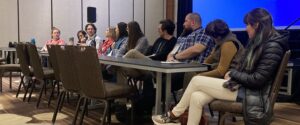
Organizers: Molly Simonis (University of Oklahoma), Amanda Vicente-Santos (University of Oklahoma), Daniel Becker (University of Oklahoma)
- Jennifer Terry, Isabella V Davis, Virginie Rolland, Lorin A Neuman-Lee, Characterizing Primary Immune Responses Against Three Antigens in a Reptile, Integrative and Comparative Biology, 2025;, icaf053,https://doi.org/10.1093/icb/icaf053
- Anna C Fagre, Daniel J Becker, Laura A Pulscher, Molly C Simonis, Colleen G Duncan, Understanding Climate Change Threats to Vertebrate Wildlife by Studying Ecoimmunology Across Biological Scales, Integrative and Comparative Biology, 2025;, icaf150, https://doi.org/10.1093/icb/icaf150
- Stokes S Baker, Victor Carmona-Galindo, Miftaul Hoque, Fatima Ali Edriss, Amani Alrayyashi, Alhamzah Al-Shaghdari, Abdullah Al-wakeel, Noor Ali, Ali Alkuhali, Abby Allen, Sheku Bangurah, Walaa Bazoun, Hannah Benford, Daniel Doss, Adrienne Eady, Malak Dourra, Helen Guirgis, Imad Hamade, Rama Hamo, Jana Jamal Iddin, Jason Jarbo, Sarah Kawtharani, Katherine Kunnummyalil, Brandon Markos, Roxana Nistor, Hadi Obeid, Raquel Sema, Semaj Shelton, Luciana Riachi, Jude Rodriguez, Tynetta Saahir, Suzanne Sareini, Caleb Scheys, Xavier Sterling, Gacia Vosbigian, Advancing Integrative Pollinator Biology Education With Course-Based Undergraduate Research Experiences, Integrative and Comparative Biology, 2025;, icaf145,https://doi.org/10.1093/icb/icaf145
- Amanda Vicente-Santos, Natalia Sandoval-Herrera, Gábor Á Czirják, Benjamin A Neely, Daniel J Becker, Proteomics Approaches to Ecoimmunology: New Insights into Wildlife Immunity and Disease, Integrative and Comparative Biology, 2025;, icaf044, https://doi.org/10.1093/icb/icaf044
- Alicia Roistacher, Bret Demory, Daniel J Becker, The Effect of Venipuncture Site on Hematology of Bats: Implications for Comparative Analyses, Integrative and Comparative Biology, 2025;, icaf026,https://doi.org/10.1093/icb/icaf026
- Carolyn Miller, Kevin L Monteith, Tayler N LaSharr, Jonathan B Cohen, Cynthia J Downs, No Single Association of Constitutive Immune Defenses with Fat Condition or Protein Content, Integrative and Comparative Biology, 2025;, icaf114, https://doi.org/10.1093/icb/icaf114
- Vania Regina Assis, Stefanny Christie Monteiro Titon, Understanding Stress and Immunity in Amphibians: Corticosterone, Hormonal Interactions, and Conservation Implications, Integrative and Comparative Biology, 2025;, icaf089, https://doi.org/10.1093/icb/icaf089
- Natalia Sandoval-Herrera, Linda Lara-Jacobo, Paul A Faure, Denina Simmons, Kenneth Welch, Systemic Effects of Pesticides on Insectivorous Bats: A Proteomics Approach, Integrative and Comparative Biology, 2025;, icaf121, https://doi.org/10.1093/icb/icaf121
- Molly C Simonis, Sarah Ciarrachi, Kristin E Dyer, Meagan Allira, Bret Demory, Jaleel Zubayr, Dakota Van Parys, Kimberlee Whitmore, Katie Fitzgerald, Kevin T Castle, Tanya A Dewey, Joy M O’Keefe, Riley F Bernard, Matthew M Chumchal, Catherine G Haase, Jeffrey T Foster, Daniel J Becker, A Collaborative Multiple Stressor Approach for Identifying Spatial Heterogeneities in Wildlife Health and Conservation Priorities, Integrative and Comparative Biology, 2025;, icaf123, https://doi.org/10.1093/icb/icaf123
s8 Complimentary sessions
- Jennifer Terry, Isabella V Davis, Virginie Rolland, Lorin A Neuman-Lee, An Exploratory Look at Functional Responses to a Second Antigen Injection in a Freshwater Turtle, Integrative and Comparative Biology, 2025;, icaf132, https://doi.org/10.1093/icb/
icaf132 - Isabella V Davis, Jennifer Terry, Lorin A Neuman-Lee, Comparing Functional Immune Responses in Three Aquatic Turtle Species, Integrative and Comparative Biology, 2025;, icaf088, https://doi.org/10.1093/icb/
icaf088 - Daniel J Becker, Amanda Vicente-Santos, Ariadna E Morales, Kristin E Dyer, Beckett L Olbrys, Lauren R Lock, Michael S Smotherman, Sonja C Vernes, Michael Hiller, Amanda M Adams, Brett S Phinney, Winifred F Frick, Jeffrey S Hall, Proteomic Signatures of SARS-CoV-2 Susceptibility in Mexican Free-tailed Bats and Their Application to Viral Surveillance, Integrative and Comparative Biology, 2025;, icaf148, https://doi.org/10.1093/icb/
icaf148
Microbes Matter: Phenotypic Effects of Microbiota on Wild Animal Hosts (S10)
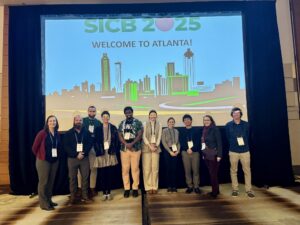
Organizers: Brian Trevelline (Kent State University), Kaitlyn Murphy (Auburn University)
- Kevin D Kohl, Through the microbial looking glass: our shifting understanding of the holobiont and microbes as mediators of organismal biology, Integrative and Comparative Biology, Volume 65, Issue 3, September 2025, Pages 727–735, https://doi.org/10.1093/icb/icaf059
- Julian Urrutia-Carter, Joseph D Madison, John Adam Frederick, Carly R Muletz Wolz, Skin Defenses and Host-Environment Microbiome Interactions in Spotted Salamanders, Integrative and Comparative Biology, Volume 65, Issue 3, September 2025, Pages 736–746, https://doi.org/10.1093/icb/icaf098
- Timothy J Colston, Frederico G R França, Brice P Noonan, Colin R Jackson, Gut Microbiome Community Assembly Across Three Snake Communities., Integrative and Comparative Biology, Volume 65, Issue 3, September 2025, Pages 747–759, https://doi.org/10.1093/icb/icaf136
- Korin R Jones, Tiffany Duong, Olivia Sacci, Casey Gregory, Lisa K Belden, Amphibian Bacterial Communities Assemble Variably Among Host Species, Across Development, and Between Similar Habitats, Integrative and Comparative Biology, Volume 65, Issue 3, September 2025, Pages 760–771, https://doi.org/10.1093/icb/icaf014
- Robin W Warne, Lucas J Kirschman, Microbiomes in Animal Ecology: Advances, Assumptions, and Opportunities, Integrative and Comparative Biology, Volume 65, Issue 3, September 2025, Pages 772–782,https://doi.org/10.1093/icb/icaf112
- Kyle J Emerson, Safoorah S Shaikh, Damiana P Bradley-Slagle, Sarah K Woodley, The Aquatic Microbial Environment Shapes the Tadpole Microbiome and Antipredator Behavior, Integrative and Comparative Biology, Volume 65, Issue 3, September 2025, Pages 783–795, https://doi.org/10.1093/icb/icaf009
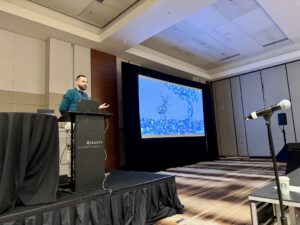
Looking beyond SICB 2026
Please send Emily Le Sage (secretary.dede@sicb.org) your SICB 2026 pictures because we want to feature YOU in the Spring 2026 newsletter. We will remind you to send photos after the conference.