DCB Officers
As of January 2025, your DCB officers are:
Chair: Misty Paig-Tran, chair.dcb@sicb.org ; Chair-elect: Jake Socha chairelect.dcb@sicb.org; Program Officer: Glenna Clifton dpo.dcb@sicb.org; Secretary: Cassandra Donatelli secretary.dcb@sicb.org; Student and Postdoctoral Representative: Melody W. Young melody.young@duke.edu
Following our in-person SICB 2025 meeting in Atlanta, we want to thank our departing officers and welcome our incoming officers! Brooke Flammang is ending her term as DCB Chair and Misty Paig-Tran is ending her term as Chair-Elect. Thank you both for everything you have done for our division and SICB as a whole! Stepping into the roles are Misty Paig-Tran as Chair and Jake Socha as Chair-Elect. Welcome!
We also want to thank all DCB who participated in committees and events throughout the year including the Gans committee, BSP judges, Symposia organizers, and regional meeting organizers! Thanks so much for your service to DCB and SICB!
Carl Gans Awards
The Carl Gans Award was established to recognize Carl Gans’ contributions to animal morphology, biomechanics, and functional biology and to honor investigators who work in this field. The Gans Award is given to (1) an outstanding young investigator in the field of comparative biomechanics and/or (2) an investigator at any career stage for a significant contribution to the literature of comparative biomechanics published in the preceding five calendar years. Each year we solicit nominations; please consider nominating yourself or other outstanding researchers in the field by emailing chair.dcb@sicb.org and secretary.dcb@sicb.org. All materials will be due on August 30, 2025. More information and nominiations requirements can be found here: https://sicb.org/awards/the-carl-gans-award/. Feel free to reach out as well if you have any questions.
The Gans Award was sponsored this year by The Gans Trust and The Journal of Experimental Biology, published by The Company of Biologists (CoB). We want to thank CoB for their continuing support! Thank you to the Gans Award Committee (Rita Mehta (chair), Talia Moore, Cinnamon Pace, Rosalee Elting, and Samantha Gartne) for reviewing these applications!
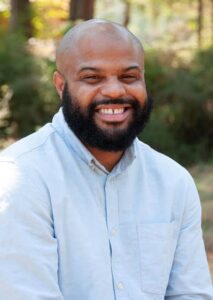
The Carl Gans Young Investigator Award was awarded to Dr. Kory Evans! The Evans lab at Rice University is interested in the evolution of phenotypic diversity, specifically multivariate trait evolution in fishes. The Gans Award Committee summarized the highlights of the winner in their recommendation with this statement: “[Dr. Evans] showed exceptional research vision which is broadly applicable to the field of comparative biomechanics and beyond, as well as impressive contributions to outreach, mentorship, and DEI efforts”.
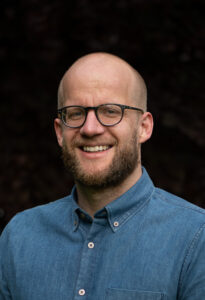
The Carl Gans Significant Contribution Award was awarded to David Labonte! The Evolutionary Biomechanics lab at Imperial College London integrates engineering and biology to study performance, behavior, and evolution. The Gans Award Committee summarized their decision saying: “Labonte’s single contribution introduced us to the concept of effective inertia, a dimensionless number that determines maximum muscle output. The paper pushed our thinking of muscle physiology in new directions and we all thought the paper would make an impact in the field in years to come.”
Best Student Paper Competition
The DCB Best Student Presentation session featured amazing presentations by students in the field of comparative biomechanics. We appreciate all of the students who submitted their application for consideration; all who competed were truly outstanding! We are grateful to the DCB BSP judging committee: Nicole Danos, Valentina DiSanto, Jacob Harrison, Alexus Roberts Hugghis, Hungtang Ko, Armita Manafzadeh, Monica Dailey, Misty Paig-Tran, Bill Ryerson, Jake Socha, and Ted Uyeno.
This year’s winner of The Mimi A. R. Koehl and Stephen A. Wainwright Award for the Best Student Talk in Biomechanics was Olivia Walthus whose talk was titled: “The allometry of cutting efficiency in Atta cephalotes leaf-cutter ants.” This year’s winner of The Stephen Vogel Award for Best Student Poster in Biomechanics was Heiko Kabutz for “The control of shape during laterally confined locomotion of Araneae, Hogna carolinensis.”
Congratulations to you both! We are excited to receive new applications for SICB 2026. Please feel free to contact us (chair.dcb@sicb.org, dpo.dcb@sicb.org, and secretary.dcb@sicb.org) if you have any questions!

The allometry of cutting efficiency in Atta cephalotes leaf-cutter ants – Olivia Walthus
Leaf-cutter ants are true ecosystem engineers and the principal pest species of the Neotropics, causing 15% of the total defoliation in the region. Thought to be key to their herbivory success is their highly polymorphic workforce and associated task specialisation, thought to increase foraging efficiency. At the heart of leaf-cutter ant foraging sits cutting which is both mechanically demanding and energetically costly. The ratio between the mechanical work output and the metabolic expenditure defines the efficiency of the behaviour. Are all worker sizes equally efficient leaf cutters? To answer this question, we measured mechanical power output and metabolic power demand associated with leaf-cutting across the polymorphic work force in Atta cephalotesleaf-cutter ants. Metabolic power increased with size, while mechanical power initially increased but plateaued at larger sizes, leading to peak cutting efficiency at intermediate worker sizes.
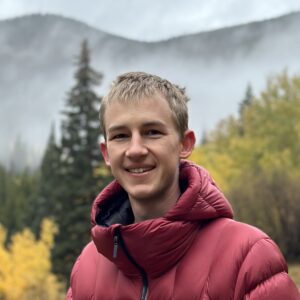
The control of shape during laterally confined locomotion of Araneae, Hogna carolinensis – Heiko Kabutz
Heiko Kabutz is a PhD student at the University of Colorado Boulder researching how terrain confinement, such as lateral constraints, affect the locomotion of ground running spiders in cluttered environments. Using high-speed videography, they quantified kinematic metrics across varying lateral constraint levels. Results showed that spiders maintain leg cycling frequency and sagittal plane motion but exhibit increased lateral center of mass fluctuations under higher constraints. Analysis revealed adaptive shape changes in body-appendage coordination, offering a novel framework to compare biological and robotic systems.
Members’ Meeting Minutes
The minutes from our latest meeting can be found here.
Social Media
The social media landscape is ever changing. Though our Twitter and Facebook pages are still live, we are actively exploring new ways to keep in contact with our members. Please join our Linkedin page (https://www.linkedin.com/groups/12952547/).
Elections
This year, we have two positions to elect, Division Program Officer and Division Secretary. This task is overseen by our 2024 Election Nominating Committee: Monica Daley, Eric Tytell, and Craig McGowan. Thanks to the committee and to the candidates for their support of DCB! Candidates’ biographies for both positions are listed below. Please click here to vote!
DCB Program Officer Candidates
Dr. Christopher V. Anderson: Associate Professor, Department of Biology, University of South Dakota

Education: B.S., Animal Science, Cornell University (2006); Ph.D., Biology (Physiology & Morphology), University of South Florida (2013)
Professional Experience: Associate Professor, University of South Dakota (2023-present); Assistant Professor, University of South Dakota (2016-2023); Postdoctoral Research and Teaching Associate, Brown University (2013-2016)
SICB Activities: DCB Nominating Committee (2023)
Other Memberships: Herpetological Association of Africa (HHA); International Society of Vertebrate Morphology (ISVM); Society for the Study of Amphibians and Reptiles (SSAR)
Research Interests: My research is broadly focused on understanding physiological and biomechanical systems in an ecological and evolutionary context. In my lab we examine the morphological, biomechanical and physiological mechanisms underlying animal movement in general, and how these mechanisms change through evolution and vary across environments. We apply an integrative approach, often combining laboratory and field studies, to elucidate interactions between an organism’s physiology and their performance, reveal how organisms perform in their natural surroundings, and improve our understanding of the evolution of form and function.
Goals Statement: SICB has been my “home society” since I first attended in 2008 and over the years I have found the communities from DCB and DVM in particular to represent some of the most supportive and inspiring corners of academia. Serving at the Program Officer for DCB would be an honor and I am excited about the potential opportunity to give back to the society and division that has been so influential in shaping my academic career. In particular, I am excited about working closely with the program officers from other divisions and SICB in general to organize a schedule of compelling sessions highlighting the incredible work of our membership. The challenge of organizing logical and balanced sessions and placing them into a broader schedule is one all SICB members have undoubtedly contemplated as we create our schedules of talks and posters to attend at each SICB meeting, and I am excited to learn how this works and help contribute to developing these meeting schedules.
Dr. Cassandra M. Donatelli: Assistant Professor, University of Washington Tacoma, School of Engineering and Technology
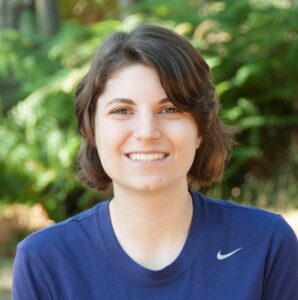
Education: BA in Archaeology Technology and Historical Structures (University of Rochester), PhD in Biology (Tufts University)
Professional Experience: DCB Secretary (2023-Present), Assistant Professor, Chapman University, Fowler School of Engineering (2022-2024), Visiting instructor, UW-Friday Harbor Laboratories (2020, 2022, 2024), Postdoctoral Research Fellow, University of Ottawa (2019-2022)
SICB Activities: DCB Secretary (2023-Present), SICB Code of Conduct Ally (since 2020), Gans Committee Member (2023)
Other Memberships: International Society for Vertebrate Morphology, American Association for Anatomy, Institute of Electrical and Electronics Engineers
Research Interests: I am interested in how animals move, from locomotion to scale-scale interactions. In my lab, we characterize the anatomical shapes that allow these movements to understand animal behavior and evolution and inspire bioinspired materials and systems. We integrate methods from biology and engineering, combining laboratory experiments, field studies, and physical modeling to describe the interactions between an organism’s form, function, and environment. With students from both biology and engineering, my lab fosters an interdisciplinary environment where we tackle biological problems from multiple angles, bridging disciplines to better understand how animals work.
Goals Statement: SICB has been an important part of my academic journey, and I hope to contribute to its continued success as DCB Program Officer. One of the society’s greatest strengths is its supportive and inclusive environment, especially for students and early-career researchers. Since my first SICB presentation, I have been committed to fostering that welcoming atmosphere and making our division more accessible. Throughout my career, I have worked closely with both biologists and engineers, and this interdisciplinary perspective will help me strengthen collaborations within DCB as well as with potential industry sponsors. As DCB Program Officer, I hope to expand engagement in our social events, ensuring they are welcoming and beneficial for all members. I also aim to update and enhance the division website by adding open-source resources for members. Finally, having organized a SICB symposium myself, I know how challenging the process can be. As DCB Program Officer, I will support DCB symposium organizers at every stage, helping them navigate not only the lead-up to the conference but also the post-conference writing period. I hope this involvement will strengthen connections between DCB symposia and promote cross-disciplinary discussions.
DCB Secretary Candidates
Dr. Karly E. Cohen: FHL Researcher and Lecturer, FHL Postdoctoral Fellow
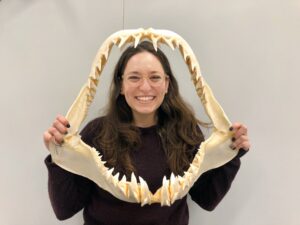
Education: B.S., The George Washington University, M.S., The George Washington University, Ph.D., University of Washington
Professional Experience: Postdoctoral Research: University of Florida (with Dr. Gareth Fraser) and California State University (with Dr. Misty Paig-Tran)
SICB Activities: Broadening Participation Committee Member (since 2022), SICB Code of Conduct Ally (since 2020)
Other Memberships: International Congress of Vertebrate Morphology, American Association of Anatomists, American Microscopical Society, American Society of Ichthyology and Herpetology (Board of Governors, 2024–2029), Gilbert Ichthyology Society
Research Interests: My research integrates biomechanics and developmental genetics to investigate how skeletal structures evolve and function across vertebrates. Focusing on dentition in fishes, I examine how developmental constraints and ecological pressures shape phenotypic diversity. Using high-resolution imaging, RNA sequencing, and biomechanical modeling, I analyze the mechanical properties and functional diversity of teeth and odontodes. My work challenges traditional classifications of dental morphology and explores the evolutionary origins of skeletal adaptations. By combining fieldwork with advanced analytical tools, I aim to bridge gaps between biomechanics and development, providing insights into the relationships between form, function, and evolutionary history.
Goals Statement: SICB has been a vital part of my academic journey, providing an inclusive and supportive platform for organismal researchers at all career stages. Since first presenting as a student, I have valued the society’s commitment to fostering student participation and interdisciplinary research. I am eager to contribute to SICB leadership and ensure that this welcoming environment continues to grow. As DCB Secretary, I would be committed to keeping detailed records, contributing to the newsletter, and facilitating communication within the division. This role is not only essential to the society’s operations but also an opportunity to deepen my engagement with SICB leadership. My interdisciplinary background, spanning biomechanics, bioinspired design, and developmental biology, aligns with the division’s expanding focus on engineering and functional morphology. Additionally, I am passionate about enhancing student and early-career researcher support, making SICB meetings even more accessible to scientists from diverse backgrounds. If elected, I look forward to strengthening our division’s outreach, promoting inclusivity, and giving back to a society that has significantly shaped my professional development.
Dr. Jenna Monroy: Associate Professor of Biology in the Natural Sciences Department, Scripps College, CA
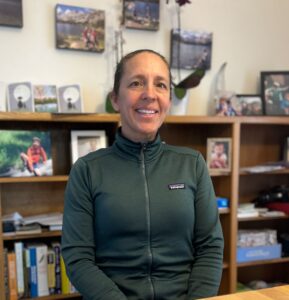
Education: Postdoctoral Fellow, Northern Arizona University, Flagstaff, AZ (2006-2013), Postdoctoral Fellow, University of Washington, Seattle, WA (2004-2006); Ph.D. Northern Arizona University (1998-2004; B.S. University of Massachusetts, Amherst, MA (1993-1997)
Professional Experience: Assistant (2016-2022) and Associate (2022-present) Professor, Claremont Colleges, Claremont, CA; Assistant Professor (2013-2016), Denison University, Granville, OH
SICB Activities: Member of DVM since 1998. Judge, student awards in Divisions of Comparative Biomechanics, Vertebrate Morphology, and Comparative Physiology and Biochemistry (2005-2013).
Other Memberships: American Physiological Society, California Society of Physiologists
Research Interests: I am broadly interested in the mechanisms underlying muscle function and movement. Our lab integrates aspects of muscle physiology, biomechanics, neurobiology, and animal behavior to study how intrinsic properties of muscle contribute to movement from the single cell to the whole organism. Our current work focuses on how variation in the sarcomeric protein, titin, leads to differences in muscle function.
Goals Statement – I am honored to be considered for the role of DCB Secretary and excited for the opportunity to give back to SICB. I have been a member of SICB since I was an undergraduate, and like so many others, have benefited greatly from the Society’s supportive environment. I believe my role is to provide a welcoming environment for DCB and all SICB members by promoting diversity and inclusivity. As DCB Secretary, I will work to enhance the visibility of important opportunities, including symposia, collaborations, and professional development resources, ensuring that all members—especially students and early-career scientists—can take full advantage of what SICB has to offer. I also consider highlighting regional SICB meetings as a valuable way to further strengthen and expand our community. I promise to continue fostering SICB’s welcoming and inclusive atmosphere while facilitating meaningful connections and access to resources that benefit our members at all stages of their careers.