Andie Ward, Chair (chair.dvm@sicb.org); Lara Ferry, Past Chair (Lara.Ferry@asu.edu); Marguerite Butler, Program Officer (dpo.dvm@sicb.org); Crystal Reynaga, Secretary (secretary-elect.dvm@sicb.org); Teri Orr, Secretary-Elect (TeriOrr@nmsu.edu); Emily McParland, SPDAC Representative (emily_mcparland@brown.edu)
SICB Annual Meeting Recap
It was fantastic to return to the annual SICB meeting, this time to a vibrant but chilly Atlanta! We hope attendees had the chance to explore some of Atlanta’s gems– including a visit to the Amphibian Foundation or the Georgia Aquarium. After all, what better way to celebrate vertebrate morphology than with some of nature’s most remarkable vertebrates?
DVM maintained a strong presence, with 475 abstracts submitted under our division– 304 of which were co-organized with oral presentations. We are also proud to collaborate with DCB DPO to showcase outstanding research spanning vertebrate morphology and beyond.
Changes to the Best Student Presentation Awards
Last year we voted at the member’s meeting to limit the number of posters that are eligible for the Liem award, due to the increasingly large number of posters that have to be judged at the annual meeting. The limit for the number of posters, as decided upon at the members meeting, will be eight, which is the same as for the Dwight Davis competition.
Students wishing to compete for both awards need to remember to submit their one-page summary on or before the SICB-wide deadline for abstracts. Details regarding the one-pager, and a complete summary of the guidelines for the competition, can be found on the SICB society website under Summary of BSP Divisional Guidelines (link is:https://sicb.org/awards/best-student-presentation-bsp-program/summary-of-bsp-divisional-guidelines/#bspdvm)
Best Student Presentation Awards
This year’s Best Student Presentation sessions highlighted exceptional early-career talent. This year, four students competed for the D. Dwight Davis Award, while nine students showcased their work in the Best Student Poster Competition. Congratulations to all participants and their impressive work!
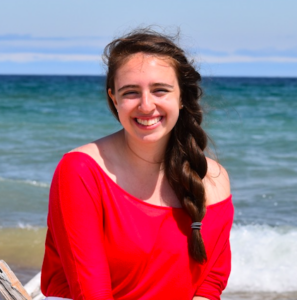
The winner of the D. Dwight Davis Award for oral presentations was Karinne Tennenbaum(Junior Undergraduate at Yale University), for the talk “Microfossil spiraling teeth reveal paleocene origin of cyclothone (bristlemouths)”.
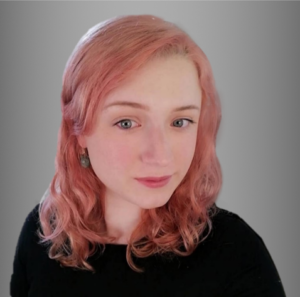
The honorable mention of the D. Dwight Davis Award for oral presentations was Savannah Cobb (PhD student at the Johns Hopkins School of Medicine), for the talk “Affiliative behavior and adaptation: the link between primate incisor form and grooming activity”.
For the Karel Liem Poster Award, we had a tie for first place! Congratulations to Riley Sombathy (PhD Candidate at Ohio University) and Ada Forester (Undergraduate at Auburn University) for their outstanding posters: “The effects of accelerated growth on the vascular histology of hind limbs in Meleagris gallopavo” and “Reduced pore area in zebra finch eggs leads to dark heart coloration regardless of sex,” respectively.
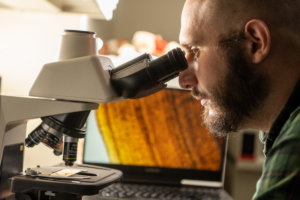
The honorable mention of the Karel Liem Poster Award was Jordan Miller (Fourth-year Undergraduate at the University of Chicago), for the poster “Visualizing the anatomy of imperfect tail regeneration in Sphenodon punctatus using DiceµCT”.
Big congratulations to our winners! Thank you to all the students who participated and represented DVM with their outstanding research.
DVM Mentorship Award
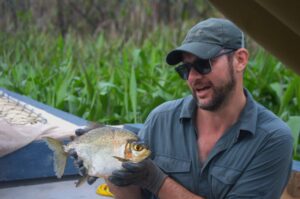
This year we were thrilled to recognize Matt Kolmann, an Assistant Professor at the University of Louisville for his exemplary mentorship. Matt fosters an inclusive and supportive environment, empowering students and colleagues through thoughtful guidance, hands-on research opportunities, and a commitment to accessibility in science. Congratulations to Matt for his inspiring leadership and unwavering commitment to mentorship within the DVM community!
If you have benefitted from the efforts of an outstanding mentor, please consider nominating them for this award. Additional information on award guidelines and the nomination process can be found on the DVM webpage (url: https://sicb.org/divisions/vertebrate-morphology/). The next target review date is November 1, 2025. Stay tuned for the opening of nominations in the fall!
Community Announcements
PALNI to Release Open Textbook: Comparative Vertebrate and Human Anatomy
The Private Academic Library Network of Indiana (PALNI) will release a new peer-reviewed open textbook in 2025: Comparative Vertebrate and Human Anatomy: Ecology, Evolution, and Function. Developed and edited by faculty authors Vanessa Hilliard (Saint Mary’s College), Lisa Whitenack (Allegheny College), and Bill Ryerson (Cornell University), with illustrations by Amy Cheu, Kerry Stricker, and Allison Buck, this book takes an ecology- and function-oriented approach to vertebrate structure and evolution.
Designed with a modular format, the textbook offers flexibility for diverse course structures, including human-specific modules for institutions that integrate comparative and human anatomy.
This project was made possible by a Textbook Creation Grant from PALSave: PALNI Affordable Learning, the Gans Foundation, and the Saint Mary’s College Center for Women’s Intercultural Leadership. As an open educational resource (OER), it will be free and accessible to readers worldwide. More details will be announced closer to publication. To receive updates, watch the PALSave website or scan the QR code to sign up for email notifications.
Please complete this form if you are interested in receiving email updates about the status of the book and its release.
DVM Support & Announcements
Shaping DVM’s Strategic Priorities
To shape DVM’s strategic goals, we encouraged participation through Zoom feedback sessions and a member survey last summer. Thank you everyone who contributed! Your input helped identify key areas to focus on including mentoring, continued engagement, PUI faculty support, undergraduate training, and demographic data collection– some of which SICB has embraced as broader society-wide initiatives (see DVM meeting minutes for more information, url: https://sicb.burkclients.com/divnew/DVM/DVM%20Jan%202025%20Annual%20Member%20Meeting%20Minutes.pdf).
This year at SICB, we introduced more structured feedback for student presenters, and are excited to expand mentoring initiatives, such as peer mentoring groups. We are also exploring year-round engagement opportunities like professional development, research discussions, and networking. We look forward to moving these priorities forward and welcome your support in shaping these efforts!
Support for OA Publication Fees for IOB
DVM offers up to $1,000 to support Open Access fees for papers submitted to Integrative Organismal Biology (IOB)—covering ~75% of the $1,355 SICB member rate. These funds prioritize authors with limited OA support, including students, postdocs, and PUI faculty. Applications can be submitted before manuscript submission, but reimbursements are only issued after acceptance and payment. Awardees must submit to IOB within one month of notification.
Learn more on the DVM webpage (url: https://sicb.org/divisions/vertebrate-morphology/) and apply via the google form (url: https://forms.gle/3CA7AmpvnxteyYph9).
Upcoming SICB Symposia – 2026 and beyond
Consider contributing to DVM by hosting a symposium! Symposia offer DVM members a platform to showcase innovative and forward-thinking research to the wider scientific community, including through publication in Integrative and Comparative Biology.
If you’re inspired to organize a symposium, SICB provides support and incentives for symposium organizers. Guidelines for preparing a symposium proposal can be found on the SICB meetings page (url: https://sicb.org/events/). Proposals are welcome from SICB members at any career stage. Applications for the 2027 meeting are due in August 2025. For questions and feedback on your symposium ideas, please reach out to our Program Officer, Marguerite Butler (dpo.dvm@sicb.org). We are eagerly awaiting your symposia contributions!
Regional SICB Meetings – This Could Be You!
Thinking about organizing a meeting in your region? Summer is a great time to start planning! DVM members can request up to $500 in support for their organized meetings. If you’re interested, please reach out to the DVM Chair, Andie Ward (chair.dvm@sicb.org) for more details.
Regional meetings provide excellent opportunities for student presentations and idea-sharing ahead of the national meeting, and many regions have successfully hosted these events over the years. A special thank you to the 2024 Regional Meeting Organizers for their efforts in fostering these valuable gatherings: Jeff Olberding (Cal State Fullerton, Southwest Regional Meeting of Organismal Biology), Emily Naylor & Roshna Wunderlich (James Madison University, Southeast Regional SICB Meeting), and Tracy Barbaro & Stephanie Pierce (Harvard University, Northeast Regional SICB).
Social Media
Connect and follow us on social media! As we continue to explore the best platforms to engage with our community, we currently have a presence via Facebook (url: https://m.facebook.com/groups/273882346051007/), LinkedIn (url:https://www.linkedin.com/groups/12952547/), and BlueSky (url: https://bsky.app/profile/sicb-dcb-dvm.bsky.social) groups. Please join, follow and contribute updates, discussions, and announcements.
Spring 2025 Elections
It’s election season! We will be selecting a new Chair-Elect and Program Officer-Elect for the division in this year’s spring elections. Many thanks to the Nominating Committee, Noah Bressman and Armita Manafzadeh, for their efforts assembling a fantastic slate of candidates. We have excellent candidates running for each position, and we are grateful for their willingness to serve DVM.
Your voice matters! Please take a moment to review the candidate bios below and cast your vote here. Remember, if your SICB membership was active at the time of the 2025 meeting, you are eligible to vote—including student members. Participate, make your voice heard, and help shape the future of our division!
DVM Chair-Elect Candidates
Name: Casey M Holliday
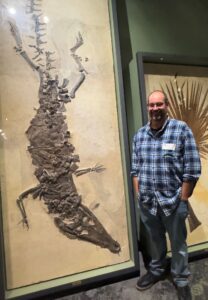
Current Position: Associate Professor of Anatomy, University of Missouri
Education: PhD, Ecology & Evolutionary Biology, Ohio University (2006); BS, Zoology, University of Florida (1997)
Professional Experience: 2009-present: Asst/Associate Professor with Tenure, Department of Pathology and Anatomical Sciences, University of Missouri School of Medicine; 2007-2009: Assistant Professor, Department of Anatomy and Pathology, JCESOM, Marshall University; 2005-2007: Post-doctoral Researcher/Instructor of Anatomical Sciences, College of Osteopathic Medicine, Dept. of Biomedical Sciences, Ohio University.
SICB Activities: SICB member since 2000; 2013-2016 Secretary: SICB DVM. Host: 2018 Midwest Regional SICB Meeting, University of Missouri.
Other Memberships: International Society of Vertebrate Morphology; American Association for Anatomy; Society of Vertebrate Paleontology, The Paleontological Society
Research Interests: morphology, biomechanics, development, and evolution of the heads of vertebrates; contrast imaging; fossil record; 3D data visualization.
Goals Statement: I’m writing this atop a seemingly crumbling precipice looking out over a great unknown here in February 2025. I really have no idea what our research and education landscape might look like in the coming years or even when you read this. I don’t think any of us think it will be good and typical platitudes you might read in this space ring hollow. Regardless, it’s our scientific community here that should help navigate us through the coming years, to help hold our fabric of scientific network together, to train our inspired yet disenfranchised students, and to educate the disinformed public. SICB and DVM have been a home for me for 25yrs. Morphology is where I dwell. Little in biology makes sense except in the light of morphology. It is necessary for the study of biomechanics, of behavior, of evolution. As chair of DVM, a foundation of SICB, the best I can offer is to work with you all, alongside you all, and strive to rebuild our science and maintain a beacon of vertebrate morphology through our shadowy future.
Name: Tim Higham
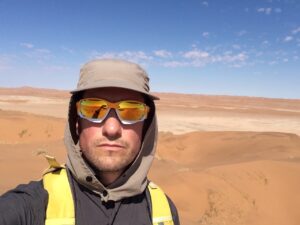
Current Position: Professor in the Department of Evolution, Ecology, and Organismal Biology at the University of California, Riverside
Education: PhD: University of California, Davis (with Peter Wainwright); MSc: University of Cincinnati (with Bruce Jayne); BSc: University of Calgary
Professional Experience: Postdoc: Harvard (With Andy Biewener); Alexander von Humboldt Fellow, University of Freiburg and Museum Koenig, Germany
SICB Activities: Member since 2000; Attended over 20 annual meetings; Organized symposia in 2007, 2014, 2015, and 2019; Former secretary of the Division of Comparative Biomechanics; Organized regional SICB meeting in 2013 at UC Riverside; Poster and oral presentation judge for multiple Divisions
Other memberships: Society for Experimental Biology, Canadian Society of Zoologists (including being the past Chair of the Comparative Morphology & Development section)
Research Interests: My interdisciplinary research in functional morphology and biomechanics examines the intricate relationships between animals and their environment, from habitat micro/nano structure to changes in ambient temperature and light. My approach integrates across sophisticated measurements of animal and habitat structure (CT scanning, SEM, and confocal microscopy), animal movement in nature (high-speed videography and wireless accelerometry), and the mechanics of locomotion and feeding. In addition to studying a wide range of vertebrate groups including geckos, snakes, small mammals, and fishes, my work incorporates museum collections and field sites around the world, from Sub-Saharan Africa to South America.
Goals Statement: The yearly SICB meeting is always the highlight of my year, and I have always considered the Division of Vertebrate Morphology my home in the Society. I have attended the annual meetings since 2001, and the interactions with DVM peers and mentors have greatly impacted my career. I will continue to make DVM a welcoming environment for undergraduates, graduate students, postdocs, and faculty. I will encourage students and faculty to submit symposium proposals that cover the growing areas included in the field of vertebrate morphology. I will continue to obtain feedback from members about how we can improve the Division, especially ways in which we can assist early career scientists (such as expanding the mentor-mentee program). Unfortunately, we are currently experiencing a turbulent time in science. Attacks on scientific research funding and DEI initiatives are threatening our strong community. I will make sure that the support from DVM is strong and unwavering. I will do whatever I can as Chair to strengthen our stance, work with other Divisions, and encourage the participation of our members.
DVM Program Officer-Elect Candidates
Name: Kelly Diamond
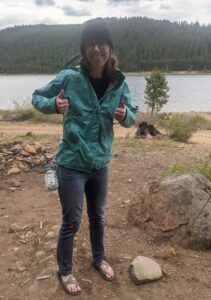
Current Position: Assistant professor of biology, Rhodes College, Memphis, TN
Education: BS in Biology from University of Central Florida (2013), MS (2015) and PhD (2019) in Biological Sciences from Clemson University
Professional Experience: Postdoc at Seattle Children’s Research Institute (2019-2022)
SICB Activities: Member since 2013, Assistant Editor for Integrative and Comparative Biology – Non divisional and DEE (2021-present), student support committee (2023-present), DVM mentorship award committee (2023-2024), symposia participant (2024), outreach associate for Integrative Organismal Biology (2019-2022), panelists for ‘writing a competitive travel grant’ workshop (2018)
Other Memberships: International Society of Vertebrate Morphology, Sigma Xi
Research Interests: The shape and scales lab uses geometric morphometrics and machine learning tools to study factors that influence how animals are shaped and how these shapes influence animal interactions with their environment. Current systems include goby fishes, Canids, dusky gopher frogs, and captive mammals, such as meerkats and red pandas.
Goals Statement: The SICB community and specifically the DVM community have provided a sense of academic invigoration and belonging for myself and my mentees for the past 12 years. It has been one of my most rewarding professional experiences getting to introduce mentees to this community, and I am grateful to be nominated to run for DVM program officer. As a graduate student I was fortunate to receive mentorship and funding from this society, which enabled me to contribute my ideas to the field. I have enjoyed serving on the student support committee, DVM mentorship award committee, IOB outreach group, and ICB editorial board as ways to give back to the society and to help the diversity of our members pursue their own questions. These experiences, along with my research background have prepared me to work with the other DVM and SICB officers to create a program that will continue to improve the quality of the meetings and enable members from all backgrounds to feel welcome in our spaces and excited about our science.
If elected, my goals as DVM program officer would be to work with the other DVM and SICB officers to ensure that:
- Our meeting programs continue to help to create an environment where people from all backgrounds, identities, and cultures feel safe and welcome to ask questions, work together to search for answers, and present their findings.
- We are listening to the membership, promoting open communication, and making space for members, especially for students, new members, and members from underrepresented groups to improve the quality of the meeting program.
- We continue to improve the quality control of the meeting program so that concerns raised by previous meetings are addressed to the best of our ability in future meetings.
Name: Nicolai Konow
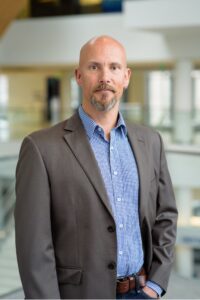
Current Position: Associate Professor, Department of Biological Sciences. UMass Lowell, Lowell MA.
Education: BS/MS. U. Copenhagen (DK), PhD. James Cook University (AU).
Professional Experience: Postdocs; 2006-2008 Hofstra University, 2008-2009 Johns Hopkins University, 2009-2014 Brown University. Research Associate; 2014-2016 Brown University, 2015-2016 Harvard University. 2017-present Associate (Harvard MCZ, CFS).
SICB Activities: Member of SICB and DVM (since 2006). Co-organizer of the late-breaking symposium, “Electromyography: Interpretation and Limitations in Functional Analyses of Musculoskeletal Systems, 2008; Organizer of regional DVM at UMass Lowell in 2017. DVM Chair nominating committee 2016, 2019. Best student paper/poster judge (ad hoc).
Other Memberships: Society for Experimental Biology (Biomechanics interest group Convener, 2019-2024).
Research Interests: Comparative morphology, ecomorphology, muscle-tendon mechanics.
Goals Statement: I am excited to accept the nomination to run for the position as DVM Program Officer. I have honed my skills as conference programmer over the past 5 years during my service as Convener of General Biomechanics for the Society for Experimental Biology. I also programmed a couple of DVM North-East regional meetings and organized the 2017 meeting at UMass Lowell. It is wonderful to be in the running to serve my favorite society and division, and I am confident that I have the organizational skills and disciplinary overview to make the program “click”. At SICB 2025 I had a great discussion with Matt McHenry, our SICB-wide PO, about leveraging AI for doing the “heavy-lifting” of initial sorting of abstract submissions. I am convinced that this approach will leave the DVM-DCB PO-team with enough headspace to make nuanced decisions that in my experience are critical to forging a truly great program.
The event organizing side of the PO charge is also something I am quite confident about taking on. There is a resurgence of openness within the SICB upper administration about once again taking our popular social event off-site. As past co-organizer of our popular DVM-DCB social events, it will be critical to me that these events are staged and managed so as to be inclusive, responsible, and safe. I will devote attention and imagination to making it so. I also appreciate the diverse needs of our membership and will devote equal focus to providing alternatives that enable more sedate socializing.
Another goal of mine is to promote very early-career scientists and underrepresented groups in our division. Acting as section Convener for the SEB, I grew the ECR participation by 32% and within SICB, my intended avenues for continuing this mission include the Dwight D Davis session, but also in general by connecting individuals of all kinds that ought to be connected.