Bob Podolsky, Chair (chair.diz@sicb.org); Adam Reitzel, Program Officer (dpo.diz@sicb.org); Kevin Kocot, Secretary (secretary.diz@sicb.org); Will Ballentine, Student-Postdoc Representative (spdac@SICB.org); Abigail Cahill, Libbie Hyman Memorial Scholarship Committee Chair
DIZ Student Awards
Congratulations to the student award winners from SICB 2025 in Atlanta!
The winner of the Mary Rice Best Oral Contribution is Julian Katzke for “Predation and multifunctionality in the macroevolution of ant mandibles.”
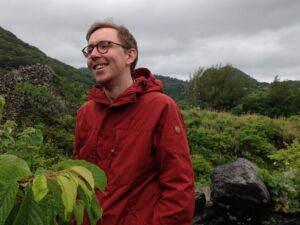
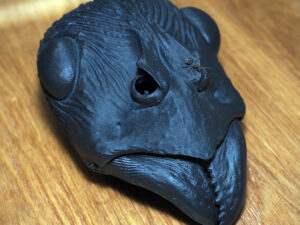
Research summary: At the Okinawa Institute of Science and Technology in Japan, I’m a PhD student in the Economo lab studying the evolution of ant mandibles, focusing on the stunning morphological diversification of those primary tools that ant workers use in their day-to-day activities. Based on a large comparative 3D dataset of mandible shapes, I found that across ants, edges of the morphospace are explored by predatory ants and major workers of polymorphic ants, while intriguingly, ants overall retain a distinct ant-like ground plan whose form-function relationships I would like to explore more in future research.
The runner-up for the Mary Rice Best Oral Contribution is Md Shazid Hasan for “Opsin localization using HCR-FISH in scallop larvae provide new insights into larval photoreception.”
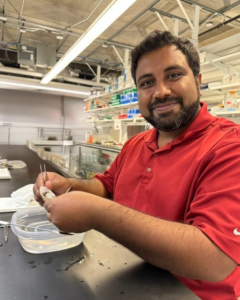
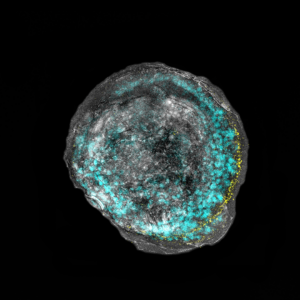
Research summary: Hi, I’m Md Shazid Hasan, a third-year Ph.D. student in the SERB LAB at Iowa State University. My research aims to investigate the diversity and expression patterns of opsins, photoreceptor molecules, in the larvae of pteriomorphian bivalves, exploring their potential roles in detecting environmental cues during development. Specifically, my research tried to identify how many opsins are expressed during different larval stages, where they are expressed, and how they contribute to key processes such as metamorphosis.
The winner of the Alan Kohn Best Student Poster is Katherine Kohn for “Hydrodynamics of larval urchins: ontogenetic changes and tracer influence.”
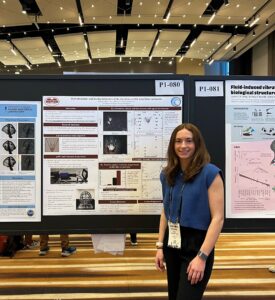
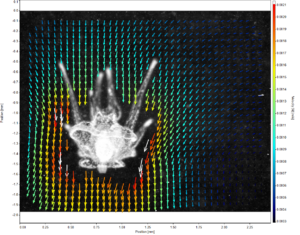
Research summary: I am a senior at Swarthmore College double majoring in Biology and Mathematics with an emphasis in Statistics. I am interested in addressing biological questions through quantitative methods and am working in Karen Chan’s lab studying the hydrodynamics and feeding behaviors of the larval sea urchin.
The runner-up for the Alan Kohn Best Student Poster is Clara DiVincenzo for “Symbiotic plasticity in a temperate coral is connected to environment, physiology, and genetics.”
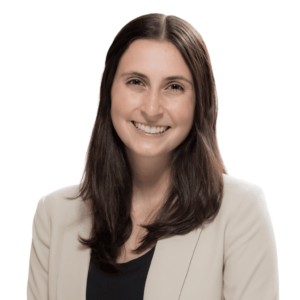
Research summary: My name is Clara DiVincenzo and I am an undergraduate junior studying biology and statistics at the University of North Carolina at Chapel Hill. My research in the Castillo Lab investigates the establishment and breakdown of symbioses in temperate corals.
Message from the Chair
Bob Podolsky, Chair.DIZ@sicb.org
Dear DIZ,
It was inspiring as always to see great invertebrate science in Atlanta. The student talk session was excellent and well attended, and the posters were diverse and high-quality. Many thanks to the 25 members who judged talks and posters and all students who presented, and congratulations to the award winners described in this newsletter. I also appreciated good attendance at our members’ meeting and hope we can continue to attract more members, and especially students, to come and talk about issues of importance to them.
Election! Please see the bios for our DIZ Program Officer candidates in this newsletter and cast your vote! I want to thank the nominations committee—Emily Carrington, Beth Davis-Berg, and Justin McAlister—for their work in securing our two excellent candidates.
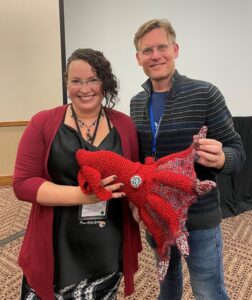
Fundraising. One important issue we discussed at the member meeting is where newly-raised funds should be directed. With the Libbie Hyman fund in strong financial shape, we discussed targeting support to graduate student research, postdoc support, student mentoring, and possibly other uses. I will be sending out a survey to get DIZ member input about uses and fundraising models so please look out for that survey link and contribute further to this discussion.
Auction. Speaking of fundraising, we are making plans for the next DIZ auction to take place in Portland! Andy Mahon has generously agreed to take on chairing the auction committee, and Anna Klompen, who chaired the previous committee (thank you Anna!) has graciously offered to help set Andy up for success. Please start selecting/creating/procuring items for the auction, and if you have interest in helping, let us know–we would especially benefit from someone within driving distance to Portland.
Social media. SICB is beginning a more organized approach to social media. Anna Klompen—who initiated in 2021 and has been managing our Twitter/X (@SICB_DIZ ) feed—and I met with Suzanne Miller, Managing Editor for the SICB Journals, who has taken on a new role as SICB’s Social Media Manager. In this role Suzanne will help to coordinate social content and standards across divisions. She plans to meet regularly with a representative from each division to determine which platforms are being used, which to emphasize, and what content to promote. I am appointing Anna as our first DIZ representative, and there will be opportunities for DIZ members to provide feedback on the direction of our division’s social media presence.
Other leadership. (1) Kelly Dorgan has rotated off as DIZ secretary after 3 years of excellent service (thank you Kelly!) and Kevin Kocot is now serving. (2) Our SPDAC representative Will Ballantine, who has done an amazing job for our division (thank you Will!), will finish his term in Portland. If you are or have a postdoc or grad student who would be outstanding in this role, please contact me. (3) In recognition of the ways that Andy Mahon is continuing to contribute to our division, I am appointing him as DIZ’s first “Participation Czar,” where he will help to drum up and organize participation in division functions.
As the enterprise of science faces a challenging period, it is important that we continue to build and strengthen science through our professional societies. I hope you will contribute your time and expertise to DIZ and let us know if there are ways we can help to support and publicize your work.
I hope you will keep in touch (chair.diz@sicb.org) with your ideas and look for ways to contribute to DIZ.
Message from the Program Officer
Adam Reitzel, DPO.DIZ@sicb.org
Unfortunately I was unable to attend this year due to health reasons. By all accounts it was a wonderful meeting with great invertebrate science! I would like to highlight the amazing student contestants in this year’s best student presentations and thank the judges for volunteering their time and expertise. You can learn more about the winners’ work in this newsletter. Congratulations to all!
We were proud to support two society-wide symposia in Atlanta. These were“Integrative Organismal Biology at HBCUs: Highlighting the effectiveness of HBCUs in training the next generation of organismal biologists” and “Cnidarian sensory systems as comparative models for the evolution of complexity.” DIZ also supported two additional symposia on “Pollinator-plant interactions in a changing landscape: embracing integrative approaches across scales” and “Fleshing it out: recent advances in form, function and motor control of biological hydrostats.”
We have an excellent lineup of exciting symposia planned for SICB 2026 in Portland (never too early to get excited!). We are supporting five symposia. These are “Inverts at the interface: locomotion, sensing, and behavior between air and water”, “The evolutionary consequences of metamorphosis in metazoans”, “Needle in the haystack: Finding tools to study puncture and injection mechanisms in parasites”, “Sex across origins: Questioning animal-centric assumptions and developing integrative frameworks”, and “Holobionts across phylogeny.” The DIZ Auction will also return at the Portland conference!!
If you are interested in organizing a symposium for the 2027 meeting in Pittsburgh, the proposals are usually due in late summer. Keep an eye on the SICB website. As a former symposium organizer, it is a great experience and I highly encourage it! I am happy to talk to you and guide you through this process. It is a wonderful opportunity to meet new colleagues, synergize a field of study, and to support your research community. I look forward to seeing you in Portland in January. Until then, continue doing what you do and taking care of yourself.
Message from the Secretary
Kevin Kocot, secretary.diz@sicb.org
Greetings DIZ!
I’m excited to be taking over as the DIZ Secretary and have big shoes to fill. I want to sincerely thank my predecessor, Kelly Dorgan, for her service in this role and helping me settle into it.
SICB 2025 may have been my favorite SICB yet! There was a diversity of excellent presentations on cool organisms being presented by our membership (and congratulations to the student presentation winners and all that participated!). For me, the opportunity to meet face-to-face with colleagues of all career stages (and talk about our favorite weird invertebrates) is one of the best parts of SICB. Special thanks to those who participated in the mentoring program – both as mentors and mentees. We had 29 mentees and 24 mentors this year. Thanks to Andy Mahon and Kelly Dorgan for organizing it!
I would also like to extend my thanks to Anna Klompen for taking on the role of DIZ Social Media Representative. DIZ’s primary social media presence has been through Twitter/X (@SICB_DIZ ), started by Anna in 2021, and Facebook (facebook.com/SICBDIZ ), which has been managed by Sammi Smoot and Beth Davis-Berg. Please contact me or message one of those accounts if you have any news or cool invertebrate photos to share. Thanks again to Anna and also to Sammi and Beth!
This year we will hold elections for our next DIZ Program Officer (PO). We have two excellent candidates: Dr. Adam Reitzel, who is running for re-election, and Dr. Mike Nishizaki. Please read their candidate statements below and vote in the election!
Please also start thinking about the SICB 2026 auction. This is an important DIZ fundraiser and lots of fun. Andy Mahon has generously volunteered to help organize. He asked me to say “get ready to be inundated with emails from me starting in the summer.” Making and contributing some sea spider-themed art would be a great way to thank him for volunteering, don’t you think?
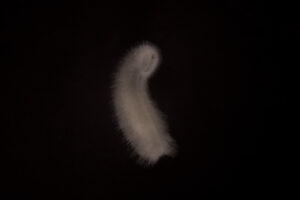
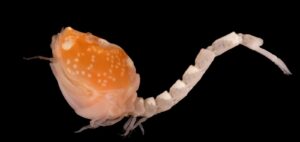
I’m currently writing this message from aboard the RVIB Nathaniel B. Palmer in Antarctica where I’m part of the IcyInverts team (www.icyinverts.com) sampling benthic marine invertebrates, especially peracarid crustaceans, like the comma shrimp (Cumacea) shown below, and aplacophoran molluscs, like the minute little pruvotinid shown below. Yesterday we got some glorious Cephalodiscus hodgsoni (pterobranch hemichordates) I haven’t even had a chance to photograph yet. Keep an eye on DIZ’s and SICB’s social media (including the new SICB Instagram account, @sicbmedia), for some more Antarctic critter pics and other content from members like you.
Message from the Student and Postdoctoral Affairs Committee (SPDAC) Representative
Will Ballentine, Student-Postdoc Representative (spdac@SICB.org)
It was great to see everyone in Atlanta at a really great meeting. SPDAC is taking a more active role in improving the student and postdoc experience at SICB to reach the goals laid out in our strategic plan. As such, we planned several student / postdoc events at this year’s meeting including a non-academic career workshop, student and postdoc focus groups, and for the first time a SPDAC booth at the poster sessions.
Non-academic careers workshop
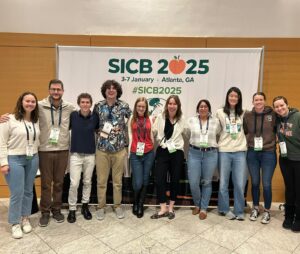
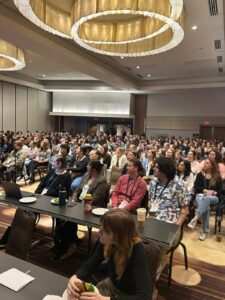
Our non-academic career workshop had a record turn out this year (see photo) as we heard career advice from a diverse panel of scientists. Our panel included a research scientist from the CDC, a botanist from the Atlanta Botanical Gardens, a US Fish and Wildlife Scientist, and a representative from a biotech startup. These panelists discussed the pros and cons of leaving academia, and the best way for academics to enter the government and private sectors.
Student and postdoc focus groups
To better understand the needs of the student and postdoc communities at SICB, SPDAC held several focus groups targeting undergraduate students, graduate students, and postdocs. We polled groups on their experience at SICB, what they enjoyed most about the meeting, and what made attending or presenting at the meeting challenging. The results of these focus groups will be compiled and posted to the SPDAC webpage soon.
SPDAC Booth
For the first time, SPDAC hosted its own booth at the SICB poster sessions where we handed out candy, info cards, and general information. Throughout the conference we had a steady flow of students and postdocs asking about everything from career advice, to where the ready room was located. We received a lot of great feedback from our time chatting with members at the booth, and look forward to making it a staple at SICB poster sessions.
As always, if you know of any DIZ students who have any questions about SPDAC or how to get more involved at SICB, please send them my way!
Message from the Libbie Hyman Scholarship Selection Committee
Abigail Cahill, Libbie Hyman Memorial Scholarship Committee Chair
Hello to all on behalf of the Libbie H. Hyman Memorial Scholarship committee. We have made a few changes to the eligibility for the scholarship following a large influx in funds (first field station experiences are now prioritized rather than required, as well as prioritizing senior undergraduates or early graduate students). In addition to more aggressive advertising both within SICB and externally, we are seeing a noticeable increase in our applicant pool. Our deadline this year was February 15, and we got over thirty applications for the second year in a row. Once again, I was thrilled to see applications representing a diversity of institutions, field stations, invertebrate taxa, biomes, habitats, and countries.
A huge thank you to Erika Iyengar and Bruno Pernet, who heroically reviewed these applications – and another one to ICB Webmaster Ruedi Birenheide. We had a larger-than-usual number of technical challenges with the applications this year (due in part to some SICB-wide website changes) and his help was really important.
This newsletter update will be pretty brief: the larger applicant pool and slightly later deadline, instituted to better align with students’ summer planning, have combined and mean that we are still in the process of awarding funds at the time of this writing. Please stay tuned for the fall newsletter to learn what the recipients have done with their funds.
Thank you to all of you for your continued support of the fund – by donating, by contributing to the Libbie Hyman auction that has supported the fund for many years, and by sending your students our way. Look for news of our next auction, expected at the upcoming Portland meeting.
The Libbie H. Hyman Award provides funding to support a field station experience for advanced undergraduates or early career graduate students pursuing coursework or research on invertebrates. To make a contribution to the fund, click on ‘Donate to SICB’ on the SICB home page (http://sicb.org) or send a check to the address below.
SICB Business Office
Libbie H. Hyman Memorial Scholarship Fund
950 Herndon Parkway
Suite 450
Herndon, VA 20170 USA
Checks should be made payable to SICB and marked as a “Contribution to the Libbie H. Hyman Memorial Scholarship Fund.” All contributions are tax deductible.
DIZ 2025 Elections
The ballot for our annual elections is now open, and it is available here . Please vote!
Candidates for DIZ Program Officer
Adam Reitzel, areitze2@charlotte.edu

Current Position: Professor, Department of Biological Sciences, University of North Carolina at Charlotte
Education: B.A. Illinois Wesleyan University (1999); M.S. University of Florida (2002); Ph.D. Boston University (2008); Postdoctoral Scholar Woods Hole Oceanographic Institution (2008-2012)
Professional Experience: Assistant Professor, University of North Carolina at Charlotte (2012-2016); Associate Professor, University of North Carolina at Charlotte (2016-2020); Full Professor, University of North Carolina at Charlotte (2020-Present), Co-Director, Center for Computational Intelligence to Predict Health and Environmental Risks (CIPHER), University of North Carolina at Charlotte (2022-Present)
SICB Activities: Member since 2000, Poster and Oral Contributions Judge for DIZ at annual conferences, Co-Organizer for 2013 Symposium “Keeping time during animal evolution: conservation and innovation of the circadian clock“ (DCPB, DEE, DNB, DIZ, AMS). DIZ Program Officer (2003-present). Other Memberships: Sigma Xi, Society of Molecular Biology and Evolution (SMBE), Society for the Advancement of Chicanos/Hispanics and Native Americans in Science (SACNAS)
Research Interests: Mechanisms of environmental response in marine invertebrates; comparative genomics; animal-microbe interactions
Statement of Goals: I am interested in continuing to serve as the Program Officer for DIZ to promote the love for invertebrates that is embraced by the Division and DIZ’s role in promoting the interdisciplinary research integral to the Society. Invertebrates are incredibly diverse and thrive in all parts of the world. I have enjoyed representing DIZ at programming events and conferences as well as looking for ways to unite DIZ with other Divisions to increase interdisciplinary training and research. DIZ has an important role in supporting and promoting the work on these endlessly fascinating organisms. SICB broadly and DIZ specifically have been my society “home” for 25 years (yes, I’m old!). I continue to appreciate the focus on students and for research from all places. The annual conference is the place where so many invertebrate enthusiasts share their ideas and research, build connections, and plan new projects. As Program Officer for DIZ I would look forward to continuing to work with the rest of the executive committee and the community to continue the support of unique, engaging symposia at the annual conference. I would also like to continue the conversations to increase opportunities for funded research to students and postdocs to pursue unique research experiences.
Mike Nishizaki, mikenish@carleton.edu
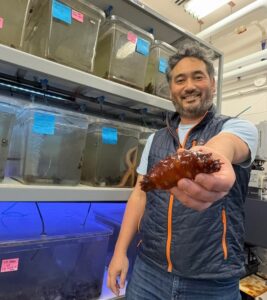
Current Position Assistant Professor of Biology, Carleton College
Education: BSc, University of Northern British Columbia (1998); MSc, University of Northern British Columbia (2002); MSc, University of Washington (2009); PhD, University of Washington (2013); Post-doc, University of Guelph (2013-2015)
Professional Experience: Visiting Professor, Bowdoin College (2012-2013); Visiting Professor, Williams College (2015-2017); Assistant Professor, Carleton College (2018-present); Assistant Professor, College of the Holy Cross (starting 2025); REU Mentor, Friday Harbor Laboratories (2020-2024)
SICB activities: I attended my first SICB annual meeting as a graduate student in 2009, and my lab continues to maintain its connection to the society by contributing student research posters each year.
Other Memberships: American Society of Limnology and Oceanography, Ecological Society of America, Western Society of Naturalists
Research Interests: Our lab investigates the ecological physiology of aquatic invertebrates and their responses to environmental change (e.g., temperature, pH, hydrodynamics). We focus on marine and freshwater invertebrates, including mussels, sea urchins, and barnacles. We employ a combination of lab, field, and modeling experiments to examine changes in behavior, physiological performance, and gene expression.
Statement of Goals: I would work with members to continue attracting junior scientists to our meetings, social media, and to the division, while always seeking ways to expand efforts to recruit from across society. Given the current uncertainty surrounding federal agencies and universities, I would be particularly interested in ways that the Division may support current members, and particularly early-career scientists, as they navigate a shifting scientific landscape.