Megan Gall, Chair (chair.dnnsb@sicb.org); Jamie Theobald, Program Officer (dpo.dnnsb@sicb.org); Rachelle Belanger, Program Officer-elect; Dan Speiser, Secretary (secretary.dnnsb@sicb.org); Amy Street, Student-Postdoc Representative (axs2909@case.edu)
Chair’s Update
Megan Gall, Vassar College
After a long, cold winter in the Northeast, we are finally seeing signs of spring. No sign is better than the SICB spring newsletter!
I am thrilled to welcome Rachelle Belanger to the DNNSB executive team (officially) this February as Program Officer-elect. Dan Speiser has completed his Secretary-elect year and is now officially the DNNSB Secretary. Thanks to Jessica Fox, our departing Secretary for all her work for the division. We’re also happy to have Amy Street join us as our SPDAC representative, as the incomparable Loranzie Rogers steps down from that position. Thanks for sharing the SPDAC stickers with us, Loranzie! I’d also like to thank everyone that participated in the 2025 meeting in Atlanta, GA. We had a great showing in our joint divisional social and a huge slate of posters and talks for our best student poster and presentation awards. Congratulations to our winners and a truly enormous thanks to everyone that volunteered to help us judge!
We also had strong attendance at our DNNSB Members Meeting, where we discussed the state of the division and our plans for the future. If you missed the meeting, you can find the minutes on our divisional website. At the meeting we shared our strategic plan for our division and the progress we have made towards our initial goals. Our members offered lots of great suggestions for how to improve in the future (particularly around the best student poster and talk presentations), and the executive committee has been hard at work implementing those ideas. One of those ideas is to offer a poster award for both undergraduate and graduate students, to encourage retention within the division (see proposed amendment to our bylaws). We always welcome thoughts and suggestions from our members. You can reach me through my SICB email address (chair.DNNSB@sicb.org).
In this year’s election, we will be voting for one DNNSB Executive Officer position. We voted in a previous year to add Elect positions to our Executive Committee. This year we will be voting for a Chair-Elect, who will work with me beginning in February of 2026 and will take over as Chair in 2027. Please plan to vote in the upcoming elections! Also, do not hesitate to reach out to the DNNSB executive team if you are interested in getting involved in the future. Finally, we had stickers and magnets to hand out to members at the 2025 meeting and we’d like to have more cool DNNSB items to let members show their support. If you have a design idea you’d like to share, please send it our way!
Program Officer Report
Jamie Theobald, Florida International University
We want to thank everyone who helped organize the symposia co-sponsored by DNNSB in Atlanta, 2025: “Cities as a natural experiment: how organisms are finding different solutions to the same urban problems”, hosted by Valentina Alaasam, Anthony Snead, and Kristin Winchell; “Pollinator-plant interactions in a changing landscape: embracing integrative approaches across scales” hosted by Jordanna Sprayberry, James Crall, and Erica Westerman; and “Cnidarian sensory systems as comparative models for the evolution of complexity”, hosted by Kyle McCulloch and Aide Macias-Muñoz. We would also like to thank the organizers of the special session “Sensory biology and behavioral endocrinology of fishes: a special session honoring the work of Karen Maruska” that was co-sponsored by DNNSB.
DSSSB-affiliated symposia at SICB 2026 in Portland, OR will include: “Animal collective movement in complex environments”, “Behavioral and environmental monitoring with open-source low-cost tools”, “Disabled and neurodivergent perception, community, and identity in the biosciences”, and “Inverts at the interface: locomotion, sensing, and behavior between air and water. Would you like to propose a symposium for the 2027 meeting in Pittsburgh? There are many good reasons for doing so! If you have questions about proposing symposia, please reach out to DNNSB leadership. We will be happy to help guide you through the process.
Message from the Secretary
Dan Speiser, University of South Carolina
It’s a real honor to be the new Secretary for DNNSB! Thank you to everyone for trusting me with this new role. It looks like 2025 is shaping up to be a challenging year for science. As biologists, we know that responses to declining resources can take a couple of diverging paths. One involves increased competition, which is enhanced by social isolation and distrust. The other involves increased cooperation, which is enhanced by strong social ties and a culture of reciprocity. Sticking together and supporting each other is a choice we can make and I hope it is the choice we do make. SICB and other professional societies have an important role to play here and I suggest we have conversations in the coming months about practical steps we can take to enhance communication and resource-sharing between labs.
DNNSB Student Awards
Congratulations to the student award winners from SICB 2025 in Atlanta!
Best student talk: Denise Yamhure Ramirez
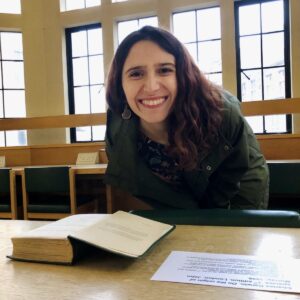
Talk title: Dimorphic niches explain sexual dimorphism in the morphology and integration of an orchid bee brain
Research description: “I am a Colombian biologist and a current fourth year PhD candidate in the Ramirez Lab, at the University of California, Davis. Since my undergraduate degree, I became fascinated by the relationship between the brain and behaviour. I work with insects, given their relatively simple brains that can produce a wide repertoire of fascinating complex behaviours. Currently, my work uses a combination of state-of-the-art imaging techniques, field work and behavioural experiments to study the neuroethology of the orchid bee Euglossa dilemma.”
Best student talk honorable mention: Russell Husted Ward

Talk title: Opsin-expressing cells in the skin of the summer flounder (Paralichthys dentatus)
Research description: “I am a PhD student in Integrative, Comparative, and Marine Biology working under Dr. Lorian Schweikert at the University of North Carolina Wilmington. My research investigates dermal photoreception, or the ability of the skin to detect light, in color-changing fishes. Specifically, I seek to identify photoreceptors (light-detecting cells) within the skin, describe their physiology, and determine the functional significance of this system in the context of color change and other light-informed behaviors.”
Best student poster – graduate student: Sara Citron
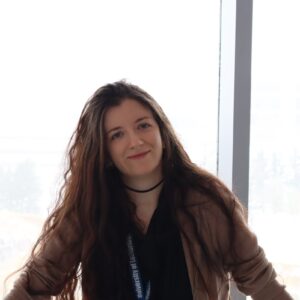
Talk title: The evolution of an owl-like auditory system in harriers
Research description: “I am a PhD student at the University of Lethbridge, Canada, under the supervision of Dr. Andrew Iwaniuk. My research explores the evolution of the brain and sensory systems in birds. This field fascinates me because sensory systems serve as the filter through which animals perceive and interact with their reality, and my goal is to study both extant and extinct species. These systems, along with the brain regions that process the sensory information, are profoundly influenced by a species’ evolutionary history and environment. This complex dynamic leads to both extreme adaptations as well as to overarching patterns, such as the one I presented at SICB 2025. Using a combination of histology, micro-CT scanning, and 3D reconstruction, our study highlighted the convergent evolution between harriers and owls, two groups specialized for hunting through sound.”
Best student poster – undergraduate student: Jeremy Daniel Levin
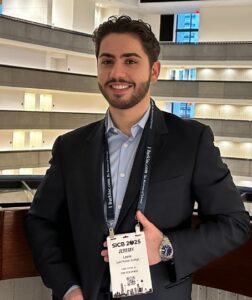
Talk title: The role of vision and the lateral line system in the jumping behavior of silver hatchetfish
Research description: “I am a third-year undergraduate studying Biology, Neuroscience and Chemistry at Lake Forest College. My research involves the study of sensory mechanisms underlying ballistic jumping behavior in silver hatchetfish (Gasteropelecus sp.) in Dr. Margot Schwalbe’s lab. Using fluorescent microscopy, I analyze the distribution of the lateral line system, particularly its concentration on the skull and ventral keel. Through high-speed behavioral trials, I investigate how vibrational stimuli trigger jumping responses under varying sensory conditions, including light, darkness, and lateral line ablation. My research aims to uncover the contributions of multiple sensory modalities to fish escape behaviors.”
2025 Elections
The ballot can be found here.
Candidates for DNNSB Chair-Elect
James Alan Murray (james.murray@csueastbay.edu)
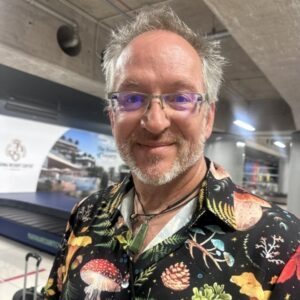
Current Position: Professor of Biology at Cal State East Bay, and member of the Public Affairs Committee
Education: Ph.D, University of Washington; B.S, Cornell University
Professional Experience: Postdoc, UCSD (4 years); Visiting Professor, Colby College (1 year); Professor, University of Central Arkansas (8 years); Professor, Cal State East Bay (17 years)
SICB Activities: Co-organized three symposia, former chair of DNB, former chair of PAC, former member of the Education Council. Attended most meetings since 1989 and helped develop the program one year. Organized workshops on decolonization of science (two in-person, one online).
Other Memberships: International Society of Neuroethology; Society for Neuroscience; Faculty for Undergraduate Neuroscience
Research Interests: neuroethology, ecophysiology, and chemical ecology of sea slugs
Goals Statement: My goal for the division is to foster development of attractive symposia, to recruit new young scientists to our division, and to foster collaboration between DNSSB and the other divisions. As a reach goal I would like to identify new possible donors to establish more prize money for presentations to encourage membership and attendance. Furthermore, I will continue to pursue the goal of decolonization of science, as well as improve a welcoming culture for diverse members.
Lorian E. Schweikert (schweikertl@uncw.edu)
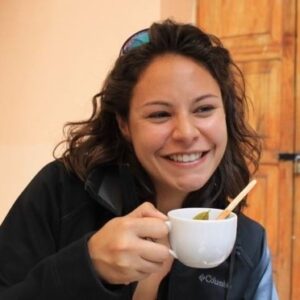
Current Position: Assistant Professor of Biology and Marine Biology, University of North Carolina Wilmington (UNCW)
Education: Ph.D, Florida Institute of Technology (2016); B.S, University of Tampa (2009)
Professional Experience: Postdoc, Duke University (2016-2018); Postdoc, Max Planck Institute for Chemical Ecology (2018); Postdoc, Florida International University (2019-2021); Assistant Professor, UNCW (2021-present)
SICB Activities: Member since 2015; Broadening participation mentorship program; DNNSB presentation judge; DNNSB session chair; Author for IOB
Other Memberships: International Society for Vertebrate Morphology
Research Interests: Sensory ecology and visual neurobiology of marine vertebrates
Goals Statement: I have been a proud member of SICB since 2015, attending the annual meeting as a graduate student, a postdoc, and now as a PI. Throughout, SICB has been instrumental in my professional development, providing training resources, early-career mentorship, and networking opportunities that have transformed my career. My major goal in serving the society is to ensure that those opportunities are made available to all students for years to come. Further, I hope to increase student engagement in DNNSB, increase DNNSB representation in the society journals (i.e., ICB and IOB), and (in the spirit of elevating integrative biology) increase opportunities for interaction between DNNSB and the other divisions. I would be honored to serve as the Chair for the Division of Neurobiology, Neuroethology, and Sensory Biology.