Jason Podrabsky, Chair (chair.dcpb@sicb.org); Wendy Hood, Chair-Elect (chairelect.dcpb@sicb.org); Jon Harrison, Past Chair (past-chair.dcpb@sicb.org); Danielle Levesque, Program Officer (dpo.dcpb@sicb.org); Kate Wilsterman, Secretary (secretary.dcpb@sicb.org); Jessica Karr, Student-Postdoc Representative (karrj@oregonstate.edu)
Updates from the DCPB Leadership
As of the time of writing, it’s full-on spring in Colorado – the daffodils are up and all the deciduous plants are starting to poke out new leaves after their winter slumber. Hopefully you are also enjoying some spring or summer weather, and all the sunshine that comes with it.
Unlike all the local plants, DCPB leadership has had a busy busy winter! Many thanks to those of you that completed our survey for feedback on strategic planning for the division; we were able to use some of this feedback to help direct immediate efforts in the division. One of these efforts included a new DCPB mentoring meet-up at the annual meeting, spear-headed by our SPDAC rep, Jessie Karr. This was a great success with 39 participants! We were also able to collect feedback from about 50% of the participants that we will be using to make some improvements and suggestions for next year’s iteration.
The biggest news to come from leadership’s work across the year has been the potential merger with the Division of Comparative Endocrinology (DCE). We’ve had both on-line and off-line discussions about the why’s and how’s of the merger, in addition to collecting significant in-person feedback at the annual meeting. DCPB Chair Jason Podrabsky and DCE Chair Jamie Cornelius, along with considerable help from the DCE Secretary Ryan Paitz, have been working diligently to turn these discussions into action. Conversations are on-going around the merger, and we continue to encourage feedback and input from members. Please reach out directly to us via email with your thoughts, questions, and concerns!
Future of Physiology at SICB
Divisional Merger between DCPB and DCE
As hopefully many of you are aware, DCE and DCPB have been exploring a merger of our divisions into a broader physiology-focused division. The proposal to merge divisions grew out of independent conversations in both DCE and DCPB as we took part in the SICB-wide strategic planning process last year. The goals of merging divisions are to: have the structure of SICB better represent and serve our communities, embrace the Integration in SICB, create a more inclusive, welcoming, and collaborative training environment for early career scientists, and reinvigorate physiology research within the society through fostering interdisciplinary work.
To solicit input as the merger proceeds, we have sent out surveys to the membership of both divisions on this topic, and we held a discussion at the annual meeting in Atlanta to consider the opportunities and challenges of merging divisions. The overall feedback has been extremely positive, and at this point it is looking highly likely that we will work to merge divisions over the next year.
A current working-draft of by-laws can be viewed here. The most salient points of on-going discussions are provided below for your further consideration. Please submit any feedback to chair.dcpb@sicb.org and secretary.dcpb@sicb.org.
- What should the new divisional name be? This name is important because it plays a major factor in who joins the division, and it will help solidify the overarching identity of the division. Previous discussions have raised concerns about the opacity of divisional abbreviations like DCPB in naming conventions, and so a more transparent abbreviation (i.e., DPHYS or PHYS) could be used in combination with a simple divisional name like Division of Physiology. Alternative suggestions have included more creative acronyms including DOPE that might garner more attention and allow for more creative naming.
- What positions should be retained as part of the divisional board? DCPB and DCE differ in their use of “past” positions or “incoming” positions, which both divisions feel are important for preserving continuity. Most leadership are currently in favor of moving towards a system that uses more incoming leadership positions (e.g., chair-elect) and phases out past- positions. This will also help transition between leaderships with the merger.
- How should the new division handle journal affiliations? DCPB currently has formal affiliations with two journals that are included in our by-laws. We aim to be intentional in maintaining these relationships with careful attention to the service commitments we make in revised versions of our by-laws. The current affiliations are well-suited to DCE membership as well and thus are likely to be a good fit for a broader Division of Physiology membership.
- How should the merged division preserve the independence and culture of the Bart and Bern lectures?These two feature lectures are important cornerstones of the annual meeting, and both divisions and SICB leadership are in agreement that these lectures should continue. Historically, DCPB has used a specially-selected committee for deciding the Bart Award recipient annually, and leadership has generally agreed that each award should have its own selection committee each year, selected by the executive board, moving forward.
- How should the new division handle the historic precedent of multi-division socials (DCE) versus a division-specific social (DCPB) associated with each cornerstone lecture? Traditionally, each division hosts a social after the Bart or Bern lectures. We have discussed transitioning to a single, larger social each year to be hosted after the second of the two cornerstone lectures (which will likely alternate in order each year), and we would leave the door open to potentials for other divisions to join in. We believe this would encourage engagement in the new, merged division and promote the integrative interactions that the socials are intended to support.
- How can we best recognize and support students through Best Student Presentations in our merged division? Student support and mentorship are important to both divisions, and thus we are highly interested in maintaining the opportunities to recognize and support trainees through the division. One major concern with the merger is the halving of student awards made in this area. Some possible suggestions have included (a) maintaining two sets of student award competitions, one for organismal physiology and one for molecular and cellular physiology, (b) maintaining two sets of student award competitions with taxonomic groupings, or (c) formalizing awards for first prize and honorable mention for both poster and talk categories to ensure a greater number of total awardees. We have also discussed introducing a post-doctoral researcher award competition to increase the breadth of trainees the new division will support.
We are aiming to present a more final version of the bylaws for feedback later this summer for discussion at the Portland meeting prior to a spring 2026 vote to adopt the by-laws and officially merge divisions. We hope you will continue to engage with us in this process and we are especially interested in hearing from early career scientists on how this merger can best support the future of physiology at SICB!
SICB 2025
Our Atlanta meeting was truly a whirlwind experience, but in the best way possible! The Program Officers used a new AI-based tool to help structure the program, and we heard lots of positive feedback on the quality and integration of sessions at this meeting. We look forward to additional feedback or thoughts on the use of this tool, but we are excited about the additional processing power that’s helping us to increase comparative and integrative conversations across SICB membership at the meeting. The division is now using a simplified approach to submission of symposia proposals, so it is easier than ever to submit your ideas! We encourage interested organizers to reach out to our divisional PO (dpo.dcpb@sicb.org) for further support in preparing symposia.
George A. Bartholomew Award 2025
The Bartholomew Award for 2025 was awarded to Dr. Kathryn Wilsterman (our very own secretary!). Dr. Wilsterman is currently an Assistant Professor in Biology at Colorado State University. Her talk, entitled “A missing piece of the whole: Reproductive traits and local adaptation”, focused on the importance of reproductive physiology and the exciting discoveries yet to be made about how reproductive function constrains where mammals persist and how they adapt. Dr. Wilsterman’s research program leverages a model mammal, the North American deer mouse, to start exploring some of these questions in a rodent that seems to make things work just about everywhere.
Best Student Presentations
The 2025 DCPB Best Student Presentations went off without a hitch – thank you to all of the participants for sharing their amazing science with us!
Our Best Talk award went to Emily Lau for her research on the repeated co-option of dehalogenases for bioluminescence in brittle stars and octocorals. This research was conducted at UC Santa Barbara, and Emily has since moved on to a post-doctoral position at University of Chicago.
Stefane Saruhashi from Cornell University was awarded first place among our poster presentations for her poster investigating how frozen crickets maintain mitochondrial function. In addition to exciting science, Stefane received high praise for her attention to graphic design and science communication. Mary Gabrielle from Davidson College was awarded Honorable Mention for her research, which was conducted at Colorado State University through an NSF Research Experience for Undergraduates program, studying metabolic fuel shifts in ground squirrels preparing for hibernation.
You can learn more about the research done by student winners here. Many thanks to our engaged and responsive judges and we look forward to seeing many of you at SICB 2026 in Portland! Remember that our recently-modified by-laws allow for individuals to compete and win both the poster and talk awards across their careers.
DCPB Leadership transitions
DCPB thanks our leadership for their service and welcomes new leaders to the committee!
DCPB Leadership welcomed Wendy Hood as our new chair-elect and Danielle Levesque as our new program officers for DCPB, as of February 2025. Wendy and Danielle will be helping to continue to strengthen DCPB programming at the annual meeting and help the division through the complex process of the potential merger with DCE. Many thanks to our out-going program officer, Alex Gerson, who did a lot of great work to get DCPB into the position it is today.
Request for Nominations for the 2026 George A. Bartholomew Award
Each year the Division of Comparative Physiology and Biochemistry recognizes a young investigator for distinguished contributions to comparative physiology and biochemistry or to related fields of functional and integrative biology. The award offers the awardee a fantastic opportunity to communicate this research via a large lecture at this year’s SICB conference. The person chosen as the recipient of this award will be invited to present a special address at the upcoming SICB annual meeting. In addition to a cash prize, the recipient will be reimbursed for the expenses incurred to attend the meeting. Candidates may apply directly or be nominated throughout the year, with an annual deadline of August 15th. We encourage nominations of individuals from under-represented groups in science, including women. More information on the application process can be found at https://sicb.org/awards/george-a-bartholomew-award/ or by contacting the current DCPB Chair (chair.dcpb@sicb.edu)
Elections
DCPB is electing a new secretary and voting on proposed bylaws to combine DCE and DCPB. The proposed bylaws for the new division can be found here. Please see the link to the ballot here.
Candidate for Secretary
Name: Dr. Lisa Treidel
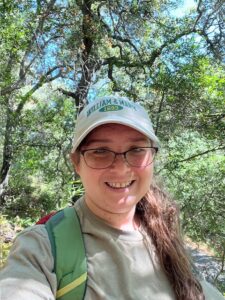
Current Position: Assistant Professor of Biology at William & Mary
Education: Ph.D. in Integrative Biology, University of California, Berkeley (2021); M.S. in Biology, Illinois State University (2015); B.A. in Biology and Psychology, Bucknell University (2012)
Professional Experience: Assistant Professor, Biology Department, College of William & Mary (2024-Current); NSF & PoE Postdoctoral Research Fellow, University of Nebraska Lincoln (Advisors: Dr. Kristi Montooth, Dr. Colin Meiklejohn, Dr. John DeLong) (2021-2024)
SICB Activities: SICB Member (2012-current), DCPB representative on the Student and Postdoctoral Affairs Committee (SPDAC) (2023- 2024), co-organized a symposium for the 2024 SICB Annual Meeting on the physiology, biomechanics and evolution of insect flight with Drs. Jon Harrison and Caroline Williams,
Other Memberships: American Physiological Society, Society for the Study of Evolution
Research Interests: I’m an integrative organismal physiologist with broad research interests lying at the interface of physiology, ecology and evolution. The two main research focuses of my current lab are 1) the physiological basis and mechanisms of flight-reproduction trade-offs in insects, with a focus on energetics and oxidative stress, and 2) the genetic and environmental factors underpinning the evolution of insect flight and wing polymorphisms.
Statement of Goals: I would be honored and excited to serve as the next divisional secretary for the Division of Comparative Physiology and Biochemistry (DCPB). In my capacity as secretary, my main goal will be to contribute actively to the continued growth and development of the division. Specifically, I will work alongside the DCPB and DCE executive committees to see a smooth transition and merger of the divisions. Additionally, as SICB has played a formative role in my own training and professional development, I see the future of the division and society depending on our student (undergraduate & graduate), postdoctoral, and early career members. Thus, as secretary I will also prioritize efforts that expand divisional support and opportunities for trainee involvement and strengthen the DCPB community. This will be accomplished, in part through 1) outreach to students that participate in the divisional competitions and the mentoring program that started last year at the annual meeting, 2) continuing to highlight student accomplishments in the division newsletters, and 3) working to develop new lines of communication lines within the division that connect mentees with potential mentors and facilitate network building. These efforts will expand on initiatives started by the current secretary (Kate Wilsterman). I hope to collaborate with the current DCPB SPDAC representative (Jessie Karr) on efforts to enhance student and postdoc engagement in the division during my term, as well. Having served briefly on SPDAC and in prior elected leadership positions as a graduate student (UC Berkeley Graduate Assembly, Rules Officer) and postdoc (University of Nebraska, Lincoln Postdoctoral Association, Secretary & Vice President), I feel prepared to fulfill all duties and responsibilities of the secretary position for DCPB. I look forward to having an opportunity to provide service and give back to SICB in this role.
Spring 2025 Mentoring Corner
This section of our biannual newsletter spotlights mentoring excellence and advice from and for our DCPB members. If you want to contribute or nominate an excellent mentor for future newsletters, feel free to reach out to the DCPB Secretary (secretary.dcpb@sicb.org)!
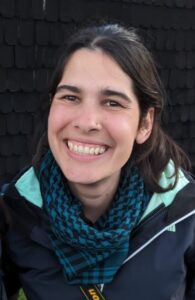
Mentor Spotlight: Dr. Catherine Ivy (Univ. of Saskatchewan)
Nominated by Jessie Karr (BSP winner, 2024)
Dr. Catherine Ivy, featured in the DCPB Mentor Spotlight
A Little More About Dr. Ivy: I’m a new assistant professor in the department of Biology at the University of Saskatchewan! My research focuses on breathing and oxygen sensing in a variety of organisms, and is currently exploring how wildfire smoke impacts oxygen uptake in songbirds. As a mentor, I aim to create a supportive and collaborative environment, and promote individual growth that is based on personal interests!
What Dr. Ivy makes a great mentor: “…I feel lucky to have so many mentors within my field. However, as I approach a transition from graduate student to potential post-doc, I have leaned heavily on early career academics who have recently made this transition– One of which is Dr. Catherine Ivy. I met Catie at SICB 2024 in Seattle, WA, and Catie has been so kind in providing advice and reassurance as I traverse this transition. It has been so helpful to know that many people experience the uncertainty of these transitions and the ability to talk about these challenges has strengthened my mindset about the future.” – Jessie Karr