Message from the President
Michele ‘Nish’ Nishiguchi, President (president@sicb.org)

Spring has sprung so to speak, and our annual meeting in Portland was a great way to start the new year, especially when science has been under the scrutiny of multiple lenses. Having attended many talks and the opportunity to chat with many of our members (especially our students) during the poster session reminded me of why I am committed to this society and its goals and visions for integrative biology. Many of you have brought to our (executive committee) attention the changing needs of our members, and our executive officers have brainstormed with many of our committees to better support those needs. Thus, it is so important for us to hear from our “boots on the ground” members as to how we can provide resources that will help maintain the integrity of our scientific society, as well as always being a platform to share ideas, train and promote our younger members, and create a safe and inclusive environment to broaden our perspectives within the biological sciences. I would also like to remind our members that individually we can all express our support for science and how imperative continued funding for basic research benefits everyone in society. With reinstated partial funding from our NSF BIO-LEAPs grant and support from SICB, we were able to have one full day of leadership training after our annual meeting for our executive committee, facilitated by Dr. Wynne Chinn, who is our assessment person for BIO-LEAPs. We hope that we can begin to develop division specific tools for our leadership to be more efficient and effective in addressing the needs within and between our divisions. Given that our society is becoming quite broad in scope, it is imperative to maintain both the individuality of all the disciplines and divisions, yet also ensure that the integration among fields is what makes SICB so unique and innovative in our science and within our membership.
Message from the President-Elect
Rick Blob, President-Elect (president.elect@sicb.org)

As biologists, we are acutely aware that we live in a continually changing world. The landscape of science and education was already experiencing major disruptions in the lead up to our wonderful meeting in Portland, which have continued since January with the added framing and uncertainty of dramatic world events. More than ever, our goal is for SICB to provide a setting and resources that help our members continue to advance their science and sustain the integrative biology community. We have worked hard to build wider participation in SICB, and are eager for members to get involved – check the range committees and roles where you can participate, and sign up on our volunteer sheet or contact me directly (president.elect@sicb.org) to let us know your interest. Also keep an eye out for upcoming announcements about award applications and nominations that can recognize outstanding work and support the efforts of the next generation of SICB scientists.
SICB is also seeking to strengthen science by engaging with other Scientific Societies. We are all stronger working together, and have begun new coordination with societies including The Society for the Advancement of Biology Education Research (SABER) and the Society of Vertebrate Paleontology (SVP), including SICB members being able to register for the 2026 annual SVP meeting in Cleveland, OH at SVP member rates. In this context, if you enjoy SICB, we encourage you to share your experience with colleagues you think might be interested and invite them to join. Wider participation makes SICB stronger, so spread the word about what SICB has to offer!
Message from the Program Officer and Program Officer-Elect
Matt McHenry, Program Officer (programofficer@sicb.org) and Britt Heidinger, Program Officer – Elect (programofficer.elect@sicb.org)
It was great to see so many of you recently in Portland for SICB 2026. At 1,800 presentations, the Portland meeting was a slight correction in size from our peak from the prior year’s Atlanta meeting. One benefit of this size was the flexibility it afforded our scheduling; we were able to transition back to a shortened final day. This allowed for our traditional streamlined final day, while maintaining SICB’s usual depth of scientific exchange.
I am honored to have officially stepped into the role of Program Officer. My focus is already shifting toward our upcoming annual meetings, as we prepare to head to Pittsburgh, Pennsylvania, for SICB 2027 and then to Los Angeles, California, in 2028. It is also a pleasure to welcome Britt Heidinger as our Program Officer-Elect. Britt is already hard at work shepherding a strong crop of symposia for the Pittsburg meeting. I look forward to collaborating with her to build the programs for our upcoming meetings.
These meetings will continue to rely on the vision of our members to define the frontiers of organismal science. The symposia you organize remain the backbone of the meeting and provide the high-impact content for our journal, Integrative and Comparative Biology. We will be issuing a formal call for symposia over the summer, but I encourage you to begin discussing your ideas now.
If you have concepts for a symposium or are looking for feedback on a proposal, please feel free to reach out to Britt at programofficer.elect@sicb.org. For any other questions or concerns regarding meeting programming, you can contact me directly at programofficer@sicb.org.
Thank you for your continued dedication to the society, and I look forward to working with all of you as we plan for Pittsburgh.
Message from the Secretary and Secretary-Elect
Vanessa Hilliard, Secretary (secretary@sicb.org) and Caitlin Gabor, Secretary-Elect (secretary.elect@sicb.org)

The 2026 meeting was a success! Thank you again to all the SICB volunteers who work to keep this society running and welcome to everyone who started new positions after the conference ended. Congratulations to all the students winners in the Best Student Presentation contents. You can learn more about their work here.
The ballots are now open for the society wide and divisional elections. We have 15 officer positions open and we want to thank all the candidates for being willing to serve SICB. At the end of this newsletter, you will find the candidate statements for the society-wide positions of President-Elect, Treasurer-Elect, and Member-At-Large. The candidate statements for each divisional position are found at the end of the divisional newsletters. Please also read your divisional newsletters to see more about proposed amendments to bylaws that are also being voted on in this election.
We would like to give an extra special thanks to our outgoing secretary, Marianne Porter. During her time in office, she contributed to the development of the SICB Strategic Plan and provided valuable insights to guide SICB communication and policies during these turbulent times. Marianne also edited a number of society-wide bylaws changes, guided divisional leadership through major changes (such as the merging of DCE and DCPB into the new Division of Physiology [DPhys]), and made the annual officer transitions easier. Caitlin and I are continuing her work by updating ‘user guides’ for each officer position, serving as a resource for DPhys as it emerges, and reassessing election timing.
Thank you to everyone who contributed to this newsletter and we hope you enjoy it. Please remember to vote – and remind your friends and colleagues to vote too!! – and let us know if you have any questions or suggestions about the governance of our society.
Message from the Treasurer
Brian Tsukimura, Treasurer (treasurer@sicb.org)

Even in uncertain times, there are encouraging signs—and SICB’s financial outlook is one of them. Following a highly successful Portland meeting, the Society is in a strong position. Attendance exceeded expectations, and expenses have come in below budget, putting us on track to close the 2025–2026 fiscal year in the black. While final numbers for the Portland conference are still being finalized this month, the overall picture is very positive. Timing also worked in our favor, as recent market volatility occurred after much of our annual activity had concluded.
Our investment performance has been solid throughout the fiscal year as well. Because divisional budgets for annual meetings are based on a three-year average, we do not anticipate significant impacts on divisional funding for the 2027 Pittsburgh meeting.
We are especially pleased to see continued growth in our food insecurity program, which will return in Pittsburgh. Thanks to donor support, we were able to provide direct assistance to students during the conference. If you are interested in helping sustain or expand this effort, please feel free to reach out.
Planning for Pittsburgh is well underway. While some traditional funding sources remain constrained, the strong showing in Portland gives us confidence that the upcoming meeting will be another success.
Looking ahead, maintaining stable membership—particularly at the full membership level—remains critical. Prompt renewals will help the Finance Committee and Executive Officers continue to assess our financial position and sustain the high level of support we provide to students and members. We are also exploring additional strategies to strengthen long-term financial stability.
This year, we are again committing approximately $90,000 to student housing support. Currently, the Mangum Fund covers only a portion of these costs. A key priority of the SICB President is to grow the Mangum Fund so that it can take on a larger share of student support, reducing reliance on general operating funds.
If you are in a position to do so, we encourage you to consider making a donation to support these important efforts.
Code of Conduct Transparency Report
SICB has had an Annual Meeting Code of Conduct since the 2017 meeting and a Code of Conduct with investigation procedures and listed disciplinary actions since the 2018 meeting.
Beginning in 2020, following the last in-person annual meeting, and going forward, SICB will release a “Transparency Report” summarizing incidents, outcomes, and related actions from the Annual Meeting. This Transparency Report aims to inform the SICB community about the number and types of reported Code of Conduct violations at the annual meeting and to give a sense of how the Code of Conduct functions. This is the sixth year that SICB has compiled and released a transparency report. Conduct-related issues, particularly as they relate to inclusion, are a rapidly evolving area for SICB.
Building trust within the SICB community that the member who is found to have engaged in conduct violations will receive consequences proportional to the offenses is important. This reassures SICB members that the Code of Conduct effectively protects our community from harassment and enhances the inclusivity of our meetings.
SICB has contracted with Paula Brantner of Accountability Ignited to provide virtual meeting safety services and ongoing support for enforcing the SICB Annual Conference Code of Conduct and Harassment Policy.
From the 2026 SICB meeting, SICB received no reports.
Update from the Communications Editor
Molly Jacobs, SICB Communications Editor (comm.editor@sicb.org)
SICB is committed to social responsibility and opportunities for all of its members, through multiple structural and programmatic actions. In response to requests from members, this spring SICB has issued a statement on Leadership and Sustainability that details these actions and commitments, and can be used by symposium organizers, members applying for institutional support for SICB activities, and other purposes. The statement can be found here.
Keep an eye on SICB communications for more from the society! Newsletters like this one are the place for longer, detailed updates and summaries of SICB’s work. Member updates are short, one page bulleted lists that highlight important SICB deadlines, opportunities, and news from our journals. SICB also has thriving social media accounts (see below) and blogs associated with the journal.
Update from SICB Media
Suzanne Miller, SICB Media Manager (media@sicb.org)
I’m happy to announce that we have these reps in place after less than a year of focusing on SICB media’s fostering and supporting our community online.:
-
-
-
- DAB- Lisa Surber-Cunningham and Brett Hodinka
- DCE – Samuel Lane
- DCB -Melody Young
- DCPB – Jessica Rose Karr
- DEE- Camille Boucad
- DIZ -Anna Klompen
- DNNSB -Tanner Mierow
- DVM Emily McParland
- DPCB – Tony Zhou
-
-
Reps received a monthly newsletter on how to promote what’s happening in divisions. If you’d like to submit social posts (or divisional newsletters they may have) to your divisions, do reach out to your divisional reps.
If you don’t see your division represented here, they do not have a rep yet, and if you’re social platform savvy, you might like to volunteer to post weekly or even bimonthly for them.
We have been hosting talks that are then posted on our YouTube for nearly a year now. Be sure to check out the Minorities in Shark Science authors and allies talk, as well as Emma Rhodes discussion on bird banding and more! It’s our goal to have a digital library focused on SICB scientists and followers of SICB content as well.
Do be sure to mark your calendars for our latest coming up and follow us to see what’s coming next and email sicbmedia@sicb.org to join the monthly talks email list.
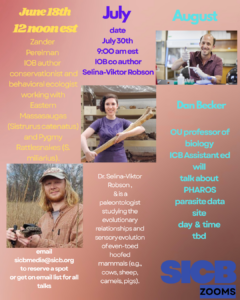
We’ll be hosting more talks every month and looking into having two or three volunteers to take video clips in Pittsburgh.
@sicbmedia on Insta
@sicbjournals.bsky.social on Blue Sky
YouTube(Shared with SICB)
Update from the Editor, Integrative and Comparative Biology
Ulrike Muller, ICB Editor (editor.ICB@sicb.org)
Thank you to ICB editorial board members

ICB would like to thank the incoming editorial board members for joining our team.
Joining as associate editors and associate guest editors are: Dr. Noah Ashley, Dr. Chris Clark, Dr. Jenny Ouyang, Dr. Mike Rosario, Dr. Thom Sanger, Dr. Brett Seymoure, Dr. Dan Speiser, Dr. Brian Walker. Joining as divisional assistant editors are: Dr. Christian Brown (DCB), Dr. Austin Garner (DVM), Dr. Mariana Rodriguez Santiago (DNNSB), Dr. Alison Welch (DAB)
Joining as assistant editor representing Black in Environment: Dr. Timnit Kefela. Joining as assistant editor representing Women in Ocean Science: Dr. Valentina Di Santo. Joining as non-divisional editors are: Dr. Sara Asadi, Dr. Karly Cohen, Dr. Kassandra Ford, Dr. Caitlin Gabor, Dr. Melanie Kimball, Dr. Tony Lapsansky, Dr. Keegan Stansberry.
ICB would like to thank our outgoing editors for their dedicated service. Associate editors rotating off: Dr. Alejo Rico-Guevara, Dr. Liz Addis, Dr. Andrea Liebl. Assistant editors rotating off: Dr. Janneke Schwaner (DVM), Dr. Jerry Mekdara (DNNSB), Dr. Matthew Kolmann, Dr. Sina Rometsch, Dr. Mahaut Sorlin.
ICB highlights
ICB would like to thank Women in Ocean Science for collaborating with ICB to create a special issue with ten manuscripts already submitted. Within this special issue, we would like to highlight Justifying, creating and legalising a framework for the protection of sharks in Bahraini waters by Jenny Elliott-Bennett (https://doi.org/10.1093/icb/icag008).
ICB would like to express the deep loss felt by our community by the passing of Dr. Michaela Hau (Obituary – Michaela Hau, https://doi.org/10.1093/icb/icag001).
Update from the Editor, Integrative Organismal Biology
Ignacio Moore, IOB Editor (editor.oib@sicb.org)

IOB has started the year with a record number of submissions. Many of these are the result of a new collaboration with the Society for the Advancement of Biology Education Research. The first paper is already out (see below). Hopefully this grouping of papers will serve our members (and others) to advance their effectiveness in the classroom.
Introducing a Novel Course-Based Undergraduate Research Experience Using Duckweed as a Model System
J Daniels and others
Integrative Organismal Biology, Volume 8, Issue 1, 2026, obaf049, https://doi.org/10.1093/iob/obaf049 & this blog about it.
We would also like announce best student paper awardee Tucker Heptinstall. This is a new award that we intend to announce every year at SICB. If you would like to be considered, please let us know when your paper is accepted that you would like to be considered.


Finally, IOB would like to thank David Blackburn’s service as an associate editor and welcome Maria Thaker and D. André Green as new associate editors for the journal.
Report from the Broadening Participation Committee
Susan Williams, Chair (chair.bpc@sicb.org)
Happy Spring from the Broadening Participation Committee (BPC)! It is hard to believe that SICB 2026 in Portland was already five months ago. I am pleased to report that the BPC was able to support 31 individuals – from undergraduate students to early-career scientists – with Professional Development Travel Awards. All awardees received $500 to attend the 2026 annual meeting and were recognized at the Broadening Participation Social. These travel awards were made possible by a generous donation from The Gans Collections and Charitable Fund.
At the social, we also honored the winners of the SICB Leadership Awards, which recognize SICB members who have demonstrated a commitment to promoting broadening participation in integrative biology. The 2026 awardees were Isabella Changsut, Dr. Luis Hernandez-Nunez, and Dr. Andrea Liebl. More information about these awardees can be found here.
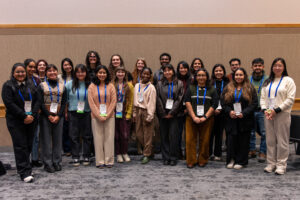
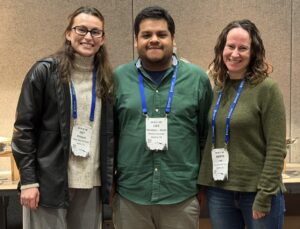
For the annual meeting Broadening Participation workshop, we collaborated with Dr. Shayle Matsuda to sponsor an interactive panel exploring how LGBTQ+ scholars navigate shifting institutional climates while cultivating community and support. Panelists shared experiences across gender, sexuality, career stage, and institutional type, and engaged attendees in a broader conversation on collective care, advocacy, and belonging in academia. Many thanks to panelists Drs. Molly Benitez, Ryan Hulett, Shayle Matsuda, and Kate Otter!
As we move forward with planning for upcoming awards and meeting events for 2027, we will be considering several important issues raised at our committee meeting in January. One point of discussion was the potential value of having graduate student and/or postdoctoral representatives on the committee, either representatives from SPDAC or from the membership at large. With rapid changes occurring across academia and other science sectors, expanding our membership to include students and postdocs would provide a direct connection to early-career perspectives on broadening participation. Stay tuned for updates as we explore formal opportunities to engage students and postdocs in the BPC. We also discussed how we can better support and coordinate with affinity groups developing within SICB. If you are part of an affinity group planning to meet at SICB, we encourage you to reach out to Chair.BPC@sicb.org with information about your group.
The topic of evaluation criteria for the BP Professional Development Travel Awards was also raised. We are committed to ensuring that application instructions and award criteria are clear and will be updating these this summer. Finally, we discussed the sustainability of Broadening Participation funding and opportunities for focused fundraising. The BPC currently does not have a named fund that can receive direct donations through the website. If you would like to support Broadening Participation events, please reach out to Brett Burk (execdir@SICB.org), Executive Director of SICB. We would be thrilled with additional support for our programs and to support members of the society!
Report from the Educational Council
Bill Ryerson, Chair (chair.EdCouncil@sicb.org)
At SICB 2026, the Educational Council was honored to welcome Jenni Momsen (North Dakota State University) as the plenary speaker for the John A. Moore Lecture. Jenni’s presentation highlighted the use of systems thinking to unify biology education. Jenni presented a trove of fascinating ideas and data on how integrating systems at different organizational levels and then viewing to the overarching system as a whole spurred better understanding of biological concepts in the classroom.
Sarah L. Eddy (University of Minnesota-Twin Cities), Megan G. Massa (Emory University), Karen Warkentin (Boston University and the Smithsonian Tropical Research Institute), Jay Falk (Smithsonian Tropical Research Institute), and Aramati Casper (Colorado State University) organized and lead the Teaching and Learning X (TAL-X) workshop, “From ‘complete erasure’ to ‘there is a place for us here’: Teaching accurate and socially just sex-related biology content.” This interactive workshop led attendees through the experiences of trans, non-binary, gender non-conforming, and intersex students with sex-related content in biology using case study activities. A highly engaging and thought-provoking workshop for all in attendance!
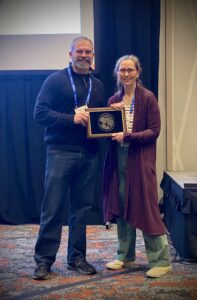
We were pleased to award this year’s M. Patricia Morse Award for Excellence and Innovation in Science Education to Gregory Pask (Middlebury College). Greg also presented a highly engaging talk on how to choose your own adventure in the classroom!
Finally, Ed Council’s Table Topics offered time for members to visit with Ed Council reps and time to engage with some STEM education presenters on a variety of topics including using AI in the classroom, submitting to SICB’s BEARR for education research, and lessons learned about writing a textbook. Additionally, we walked Jaime Jensen (President, Society for the Advancement of Biology Education Research) to speak with attendees about getting involved in education research.
It’s not too early to nominate folks for the 2027 Moore Lecturer and Morse Award! You can find information for both of these awards on the SICB website, under Resources (Awards). Please also note that you can self-nominate for the Morse Award! Nominations and supporting materials are due on August 1, 2026.
Do you have a great idea for an education-related workshop that you’d like to lead? Proposals for the TAL-X workshops are due August 1, 2026 to the Ed Council chair via email. If you have questions or want to run ideas past us before submitting a proposal, please email Veronica Martinez Acosta (chair.edcouncil@sicb.org). Also If you are considering submitting a proposal for an education-based symposium for SICB 2028, please reach out to us! We may be able to partner with you or even just talk through your ideas with you.
And last, but not least, the BEARR (Biology Education, Assessment, & Research Resources) library is open for submission. BEARR will serve as an online resource hub for innovative and peer reviewed educational tools/activities that all SICB members will have available for download. If you have a classroom activity that you think is ready for prime time, and you want to share it with other SICB members, we encourage your submission to BEARR. Once approved, your classroom tools will become available to SICB members for download. SICB Ed Council will send out a social media alert once BEARR is officially online!
Finally, we welcome our newest Ed Council members, Phil Anderson, Joseph Covi, and Hilary Katz. If you would like to be nominated for service on Ed Council, we will be looking for 1-2 members in the coming year. Please send an email to chair.EdCouncil@sicb.org.
Report from the Public Affairs Committee
Phoebe Edwards, Chair (chair.PAC@sicb.org)
Committee members: Victoria Farrar, Austin Garner, Jordan Glass, Nicholai Hensley, Lynn Martin, Robert Podolsky
At SICB 2026, the PAC was extremely excited to host the “Multi-Media Science Communication Workshop” featuring experts on different modes of science communication. Our panelists included book author Sönke Johnson, social media creator Brooke Fitzwater, science journalist Virginia Gewin, and Big Biology podcast hosts Lynn Martin and Cameron Ghalambor. Thank you to PAC member Austin Garner for planning and organizing, and to our engaged audience for coming with great questions!
The 2026 cohort of student journalists have been at work interviewing annual meeting presenters to be featured on the SICB website. Check out their work here, with more coming soon.
Report from the Student-Postdoctoral Affairs Committee (SPDAC)
Christine Lattin, SPDAC Chair (chair.spdac@sicb.org)

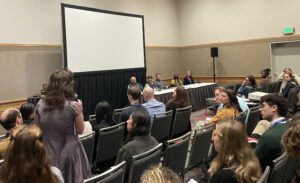
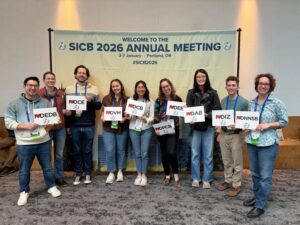
The SPDAC consists of faculty member Chair Christine Lattin (who began her term in January 2024) and Student-Postdoc Representatives from each of the 12 divisions. Current members are listed here. After the 2026 meeting, we have new Student-Postdoc Reps for DEDB (Evolutionary Developmental Biology; new rep is Emily Setton), DIZ (Invertebrate Zoology; new rep is Kyle Davis), DAB (Animal Behavior; new rep is Makenzie Reed) and DEE (Ecology & Evolution; new rep is Princeton Vaughn).
The committee held monthly Zoom meetings in 2025, and received a $5000 budget from the SICB Executive Committee to support its efforts (increased over 2024’s $2000 budget).
The top priority of the committee in 2025 was preparing for the January 2026 meeting in Portland, OR. The following SPDAC events were planned:
-
- Saturday 3 January – Student & First Timers’ Orientation – This session trained students who support the sessions in exchange for Charlotte Mangum funding, and was mandatory for these recipients. It also covered how to get the most out of a SICB meeting. Will Ballentine (DIZ) and David Chang van Oordt (DEDE) led this orientation.
- Saturday 3 January – General SPDAC Member Meeting – This meeting was immediately after the orientation, and was new for 2026. We decided to schedule a general members’ meeting after several students and postdocs asked us about this at the 2025 meeting. Jessie Karr (DCPB) and Sam Lane (DCE) led this meeting, providing information about who SPDAC is, what we do, and how to get involved with SPDAC at the meeting and beyond. We also provided a link to a survey for students and postdocs about what social media and communications tools they use, and how they would like to hear from us. The meeting closed with a Q&A session.
- Sunday 4 January – Workshop: Non-academic Scientific Careers – This lunch workshop, organized by Grace Zhong (DAB) and Will Ballentine (DIZ) featured ~3 minute lightning talks from Portland-area professionals in government, industry, and non-profit scientific careers, followed by a Q&A panel moderated by Grace Zhong (DAB). Refreshments were
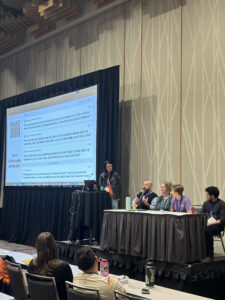
SPDAC career panel 2026 available “first come first serve”. Speakers were:
-
- Chris Marshall – Arthropod Curator, Oregon State Arthropod Museum
- Dylan Parker – R&D Scientist, Arbor Assays
- Shayle Matsuda – Research Biologist, Shedd Aquarium
- Molly Jacobs – Vice President for Environmental Education and Outreach, Manomet Conservation Sciences
-
- Saturday 3 January – Tuesday 6 January – SPDAC Booth (during SICB Poster Sessions, 3:30-5:30 pm, and intermittent other times) – Organized by Amy Streets (DNNSB) and Melody Young (DCB), the booth offered candy and prize-winning SPDAC stickers from 2024 and 2025. SPDAC Reps and/or the Chair were available for conversations around student/postdoc life & all things SICB. We also collected anonymous information about social media and communications use via survey, and had an informational poster available designed by Emily McParland (DVM). New this year, we also had “themed days” with special guest stars to address specific topics:
-
- Jan 4: Non-academic jobs – in partnership with non-academic scientists from the panel and others who will be present at the meeting
- Jan 5: PUI day – in partnership with the PUI working group
-
- Jan 6: Applying for grad school / CV workshop
Several other SPDAC initiatives took place this year as well:
Several “Special Guest Stars” from the SICB Executive Committee attended SPDAC meetings in 2025, including Program Officer Janet Steven, Secretary Marianne Porter, President-Elect Rick Blob, and Past-President Patricia Hernandez. Additionally, SPDAC members Will Ballentine (DIZ) and Morgan Muell (DEE) attended an Executive Committee meeting in December. This “cross-talk” between SPDAC and the EC has increased communication between trainees and senior SICB leadership, which was one of the major goals of the 2024 SPDAC Strategic Plan.
Amy Streets (DNNSB) and Melody Young (DCB) organized the second-annual SPDAC sticker design contest that received 13 entries from SICB student and postdoc members. SPDAC Reps and the Chair voted and selected three prize-winning designs from Eliyah Stern (first place, $100), Hanna Chow (second place, $50), and Rebecca Beneroff and Ryan Fisk (third place, $50). The stickers were printed and were available at the SPDAC booth in Portland, along with last year’s winning designs.
In 2025, Morgan Muell (DEE) worked with Jessie Karr (DCPB), Amy Streets (DNNSB), Chair Christine Lattin and the EC to finalize standardized recommendations for how to run mentoring programs where faculty meet with student and postdoc trainees. These recommendations are available & were used by Student-Postdoc reps using information from early bird registration to make mentoring programs available for all divisions at the 2026 Annual Meeting. SPDAC also created a set of recommendations for mentors and mentees on how to have a successful mentoring meeting.
One complication is that we wanted folks to select their top two divisions for mentoring, but the registration form was not set up this way and folks were able to select as many divisions as they wanted. This made things much more difficult for matching and will hopefully be fixed next year.
Tony Zhou (DPCB), and Chair Christine Lattin made several edits to the SPDAC website to update content and remove outdated information.
SPDAC social media coordinator Emily McParland (DVM) and SPDAC Chair Christine Lattin have mostly been using our new Bluesky account (@sicb-spdac.bsky.social), email, and newsletters and have moved away from using Twitter (@SICB_SPDAC) and the SPDAC Facebook account to publicize SPDAC events and initiatives. We also have a new Linkedin account.
Based on our survey results from the 2026 meeting, most SICB students and postdocs would prefer to hear from SICB via email, and not on social media.
Report from the Student Support Committee
Rachel Cohen, Chair (chair.ssc@sicb.org)

The Student Support Committee thanks all the graduate students for submitting their proposals for funding. We received 104 grant applications between the Grant-in-Aid of Research (GIAR) and the Fellowship for Graduate Student Travel (FGST). After review, there was enough funding for the top 33 applications, totaling $39,374. 21% of the funded grants were allocated to the FGST and 79% were allocated to the GIAR. We have also included a breakdown of the grants awarded by divisional affiliations.
We highly encourage graduate students to apply in Fall 2026 for next year’s funding cycle! Feel free to reach out if you have any questions about grant submission or the review process.
Report from the PUI Action Group
Eric Gangloff, Jenn Houtz, and Jenny Uehling, Action Group Co-Chairs (ejgangloff@owu.edu, jhoutz@allegheny.edu, juehling@wcupa.edu)
The PUI Action Group continues to be active and grow our programs! We would like to thank everyone who participated in our events in Portland for SICB 2026. As with the past several meetings, the PUI information booth in the poster hall offered a place for fellow PUI faculty to connect, for us to show off great research coming from PUIs, and for interested graduate students/postdocs to learn about careers at a PUI. We were also invited to spend some time at the booth of the Student & Postdoctoral Affairs Committee, where we were able to meet early-career researchers interested in PUIs. And despite the early hour, our annual Breakfast Social was attended by over 50 people who had the opportunity to make new acquaintances, chat with old friends, and build community.
We are also glad to share that the second iteration of our “mentoring villages” initiative was a huge success! We offered two different mentoring villages at the Portland conference, including one for PUI-curious graduate students and postdocs to learn about PUI careers and one for pre-tenure PUI faculty to receive advice about the tenure process at a PUI. Over 40 people attended the two sessions. We discussed a wide range of topics, including application components for PUI faculty jobs, teaching vs. research expectations, and variation in faculty responsibilities across PUI institutions.
We are also pleased to share a resource with the community: a list of current PUI faculty that are willing to review application materials for PUI positions, serve as external reviewers for tenure and promotion, and/or collaborate on grants. You can find that list here. It includes information about faculty and their institutions, research interests, and contact information.
Finally, the PUI Action Group is developing manuscripts on experiences of conducting research and working at Primarily Undergraduate Institutions. If you are a current or former faculty member at a primarily undergraduate institution, we would love to hear about your experiences at your PUI in our anonymous survey (closes 15 May): https://forms.gle/SzGmiwaj2Q4SFDmT9
Please follow us on our Bluesky account @sicb-pui.bsky.social and sign up for our mailing list (pui@sicb.org). And keep an eye out for more exciting programs from your PUI Action Group into 2026 and at SICB 2027!
2026 Elections
Please make sure you are reading your Divisional Newsletters as well to learn about proposed Bylaws amendments and Candidates for Divisional Officers. Click here to vote in the SICB 2025 elections.
Candidates for President-Elect
Name: Dave Blackburn

Current Position: Associate Director of Research & Collections, Department Chair, Curator of Amphibians and Reptiles, Florida Museum of Natural History (FLMNH), University of Florida (UF).
Education: B.A., Biology, University of Chicago (2001); Ph.D., Organismic & Evolutionary Biology, Harvard University (2008).
Professional Experience: Associate Director and Department Chair (2024–present), Associate Chair (2022–2024), Associate to Curator/Professor (2015–present), FLMNH, UF; Assistant to Associate Curator (2011–2015), California Academy of Sciences; Postdoctoral Researcher (2008–2011), University of Kansas Biodiversity Institute; Associate Editor (2024–present), Proceedings of the Royal Society B; Editorial Committee (2019–present), Herpetological Association of Africa; Senior Associate (2009–present), AmphibiaWeb.
SICB Activities: Member >20 years; Member-at-Large (2024–2027), Executive Committee; Associate Editor (2022–2026), Integrative and Organismal Biology; Chair (2018–2022) and Secretary (2014–2017), Division of Phylogenetic and Comparative Biology; best student presentations judge for DPCB and DVM; mentor of students and early career scientists at SICB annual meetings.
Other Memberships: American Association for the Advancement of Science; American Society of Ichthyologists & Herpetologists; Herpetological Association of Africa; Herpetologist’s League; International Society of Vertebrate Morphology (Executive Committee, 2023–2027); Society for the Study of Amphibians and Reptiles (Board of Directors, 2022–2026); Society of Systematic Biologists; World Congress of Herpetology (Executive Committee, 2024–2028).
Research Interests: I’m a museum-based amphibian-centric evolutionary biologist with interests spanning systematics & taxonomy, phylogenetics, comparative and functional morphology, paleontology, life history & reproduction, conservation, and natural history.
Statement of Goals: SICB has served as my “home” professional society for >20 years and across my career progression from grad student to department chair. I’ve kept coming back to annual meetings and stayed engaged in service because of SICB’s dedication to excellent science, integrative biology, collegiality, mentorship and professional development, and a love for all the leaves of the Tree of Life. As someone for whom SICB has meant having a large academic family, it’s an honor to be nominated to serve as President-Elect. If elected, I will focus my efforts on SICB’s people by (1) continuing to grow our student members as well as increasing, retaining, and welcoming back full members; (2) furthering mentorship and professional development across career spans; (3) increasing representation of and professional development for non-professorial careers; (4) working with our Development Committee to raise funds that support travel and research awards for students and postdocs; (5) supporting our editorial teams to have leading and financially healthy SICB journals; and (6) finding every opportunity to celebrate our shared joy of biology.
Name: Thomas J. Sanger

Current Position: Associate Professor, Department of Biology, Loyola University Chicago
Education: B.S. Cornell University (Ecology and Evolutionary Biology), 2001; Ph.D. Washington University in St. Louis (Ecology and Evolutionary Biology), 2007
Professional Experiences: Postdoctoral Fellow, Harvard University, 2008-2014 (Craniofacial Evo-devo); Postdoctoral Associate, University of Florida (Genital Evo-devo), 2014-2015; Assistant Professor, Loyola University Chicago (2016-2022); Editorial Board Evolution and Development, 2025-present
SICB Activities: Member since 2001; Public Affairs Committee member, 2014 – 2017; SICB Social Media Editor, 2016 – 2020; Chair of Public Affairs Committee, 2017 – 2019; Program Officer-elect, 2020 – 2022; Society-wide Program Officer, 2022 –2024; Strategic planning committee member, 2025; Organizer of workshop, Evo-devo round table and report card 2025; Speaker/facilitator, Leapfrogging for Change, 2026.
Research Interests: Vertebrate Evo-devo with a special emphasis on the diversity of reptile skulls and genitalia; the evolution of sexual differentiation mechanisms.
Goals Statement: In the face of unprecedented challenges to federal leadership and reduced funding across the sciences, SICB is likely to face unprecedented challenges during the next President’s term. Following a decade of dedicated service to SICB, I am motivated to help lead the society through these omnipresent challenges. I am committed to fortifying the foundations of SICB’s mission while enhancing what the society provides its members. There are four broad areas where I believe I can strengthen SICB and better support its members.
Increase SICB’s engagement with the public and outside bodies: A professional society has a stronger voice than any of its individual members. SICB should use that power to promote our science to policymakers and the public. The American Association for Biological Sciences, a public policy organization, has long sought a stronger relationship with SICB. I believe that SICB should explore this relationship and foster relationships with similar organizations. SICB should also support opportunities for public engagement, such as speaking fellowships, and provide public-facing information on our website, especially for topics of broad societal relevance.
Increase Training and Professional Development Opportunities: To advance integrative organismal biology, SICB’s members need opportunities to learn techniques from different fields. In the past, these opportunities have come at the generosity of volunteers willing to share their expertise. I believe SICB should proactively organize workshops to enhance the scientific and professional skills of our members. To maximize the impact of these opportunities, they should include professional organizations and facilitators with advanced knowledge of those topics.
Year-round engagement with SICB members: SICB can be more than a lively annual meeting. Networking, training, and speaking opportunities should occur throughout the year. As Program Officer, I saw incredible engagement with a series of quarterly workshops run in 2023. I believe that organized year-round activities can open the door for members to gain new skills, for students to network with potential mentors, and for members to share their research.Build a stronger and more diversified financial foundation for SICB: SICB must have the flexibility to confront new challenges. But most of SICB’s funds are locked in restricted accounts that can be used only for specific purposes. To make strategic investments that will benefit our community, we must grow the unrestricted funds. I will work with and empower our Development and Advisory Committees to raise these funds so that the society can best meet the needs of its members in the coming years.
SICB has been formative in my life and career. Some of my closest colleagues and longest collaborations have emerged from SICB. I look forward to laying the groundwork for SICB to provide these same opportunities for the SICB community in the future.
Candidates for Treasurer-Elect
Name: James Alan Murray
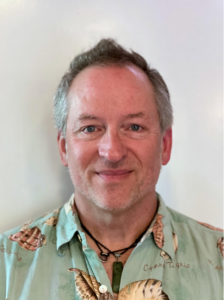
Current Position: Professor, Department of Biological Sciences, California State University, East Bay
Education: B.S., Biological Sciences, Cornell U (1988); Ph.D., Zoology, University of Washington (1994).
Professional Experience: Professor (2019–present), Associate Professor (2012 – 2019), Assistant Professor (2007 – 2012) California State University, East Bay. Associate Professor (2006 – 2007), Assistant Professor (1999 – 2006) University of Central Arkansas. Visiting Prof., Friday Harbor Laboratories, U. of Washington, Friday Harbor, WA (2005, 2006, 2007, 2010, 2012, 2017). Visiting Assistant Professor, Colby College, (1998 – Jun 1999). Postdoc/Lecturer, University of California, San Diego, (1995 – Aug 1998). Postdoctoral fellow, Scripps Institution of Oceanography (1994 – 1995).
SICB Activities: I have previously served as Chair of the Division of Neurobiology, Neuroethology, and Sensory Biology, and as Chair of the Public Affairs Committee. I have attended the meeting many times since my first attendance in Boston for the American Society of Zoologists in 1989. I have served numerous times as a judge for Best Student Paper competitions. I helped co-organized two SICB symposia (with Shaun Cain “Neural mechanisms of orientation & navigation” 2002, and with Russell Wyeth “Chemicals That Organize Ecology” 2015).
Other Memberships: Society for Neuroscience, International Society for Neuroethology; Faculty for Undergraduate Neuroscience.
Research Interests: My research has been in pursuit of the neuroethology and ecophysiology of the northeastern Pacific species of the sea slug Tritonia. As a typical SICB member, I am interested in everything…and have been pursuing projects in genetics, ecotoxicology, receptor physiology, sensorimotor processing, magnetosensation, and the adaptive functions of orientation and navigation.
Statement of Goals: I have previously served on SICB Excom as chair of the neuro-sensory division, so have some experience with budgetary planning in the society. I have also served for 3 years as the assistant treasurer of our high school performing arts foundation. My goal as treasurer of SICB would be to continue to prioritize support of students and young investigators, as well as maintaining transparency of budgeting and financial planning. As a member of the Development and the Student Support Committee, I would continue the work of seeking donations and sponsorships, and to work with student members to identify additional forms of support that would enhance their membership in our society.
Name: Lisa Whitenack
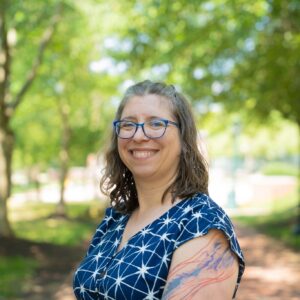
Current Position: Professor of Biology and Director of Faculty Development, Allegheny College
Education: B.S. University of Illinois at Urbana-Champaign (Geology, 1999); M.S. Michigan State University (Geological Sciences, 2001); Ph.D. University of South Florida (Integrative Biology, 2008)
Professional Experience: Assistant to Full Professor, Biology, Allegheny College (2010-present); Director of Faculty Development, Allegheny College (2024-present); Interim Chair, Biology (2024) and Geology (2021), Allegheny College; Associate Professor, Geology, Allegheny College (2017-2024, when dept. was disbanded); Postdoctoral Fellow, Geology, University of South Florida (2008-2009)
SICB Activities: Broadening Participation Committee (2023-2029); Educational Council (2015-2019, Chair 2020-2023); Executive Committee (2020-2023); established Department Chairs Meet-up (2024); Primarily Undergraduate Institution working group (2021-2023); Symposium co-organizer (2027 & 2021), DCB nominating committee (2022); DCB Gans Award committee (2019); Professional Outcomes Committee (2016).
Other Memberships: American Elasmobranch Society [Board of Directors (2024-2028 & 2015-2019); PI – NSF BIO-LEAPS grant for AES and other societies (2024-2025), Equity and Diversity Committee (2020-2022 & 2017-2018, Chair 2017-2018); Student Affairs Committee (2003-2008; chair 2006-2008)]; Professional and Organizational Development (POD) Network; Minorities in Shark Science – Friend of MISS; American Society for Ichthyology and Herpetology
Research Interests: My research falls into three general categories that interact with each other: paleobiology and biomechanics, mostly focused on sharks and their teeth; K-undergraduate STEM education, most recently co-leading an effort to determine the core competencies of comparative vertebrate anatomy and writing an open-access textbook; and broadening participation, especially belonging, in STEM.
Goals Statement: I would be honored to serve as SICB treasurer and continue to serve a society that has given so much to me. At my first SICB (2005), I was happy to find a group of scientists with diverse interests whose support of early career scientists was unmatched. Even now, SICB continues to provide me supports in the form of new opportunities, collaborators, mentors, and friends. Serving as SICB treasurer allows me two ways to contribute to these supports for others. As treasurer, I would be dedicated to transparently overseeing SICB’s finances while working toward a secure financial future. One of my other societies recently learned what happens when this fails, and before I accepted this nomination, I made sure I understood what safeguards are in place and how our finances are currently managed. As a member of the Executive Committee, I will continue to lead from the heart to ensure that SICB is a welcoming, supportive society for all with a bright future.
Candidates for Member at Large
Name: Christine Lattin
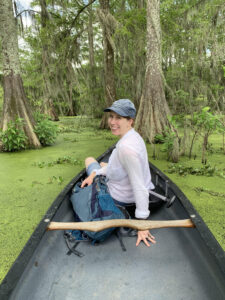
Current Position: Associate Professor, Biological Sciences, Louisiana State University.
Education: B.A. Swarthmore College, Linguistics (2001); M.S. Eastern Kentucky University, Biology (2008); Ph.D., Tufts University, Biology (2014)
Professional Experience: Howard Hughes Medical Institute Postdoctoral Fellow of the Life Sciences Research Foundation, Department of Biomedical Imaging and Radiology, Yale University, (2014-2017); Postdoctoral Researcher, Department of Biomedical Imaging and Radiology, Yale University (2017-2018); Assistant Professor, Biological Sciences, Louisiana State University (2018-2024).
SICB Activities: Member since 2011; Contributed presentations (posters and/or talks) most years between 2011 and 2025; Student/Postdoctoral Representative for the Division of Comparative Endocrinology (2015-2018). My major accomplishment in this role was starting and organizing the “Lunch with a Comparative Endocrinologist” mentoring program for DCE; Secretary for the Division of Comparative Endocrinology (2021-2023); Student/Postdoctoral Affairs Committee Chair and Broadening Participation Committee Member (2024-present). Some accomplishments of the committee during my tenure: Helped write a Strategic Plan that has been partially incorporated into the society’s broader Strategic Plan; Helped standardize and coordinate mentoring programs for all divisions in 2026 (to be continued in 2027); Started a new breakfast networking event for new faculty in 2026; Based on feedback from focus groups at the 2025 meeting, began holding a SPDAC General Members Meeting in 2026; Held two successful panel/workshop events on non-academic STEM careers at the 2025 and 2026 annual meetings; Held “themed days” at the SPDAC booth in 2026 on topics such as PUIs, Non-academic STEM jobs, and applying for postdocs; Increased “cross-talk” between the SPDAC and the Executive Committee by having Excutive Committee members attend SPDAC meetings and vice-versa.
Other Memberships: American Association for the Advancement of Science, American Ornithological Society, Graduate Women in Science, Society for Behavioral Neuroendocrinology, International Society of Wildlife Endocrinology.
Research Interests: Our lab studies how different neurotransmitters and hormones help wild animals successfully cope with environmental challenges from predators to disease. The hormone and neurotransmitter pathways we study are very similar in in all vertebrates from fish to birds to mammals, so our songbird and lizard research helps us understand how these systems work in humans and other animals. This highly integrative research program uses both field and lab-based experiments and draws upon disciplines including molecular biology, endocrinology, neurobiology, physiology, immunology, microbiology, animal behavior, ecology, and evolution.
Goals Statement: SICB is my “home society” and I have been very invested in it, as you can see from the list of activities described above. I am excited by the idea of taking on a new leadership role in the society, and if elected, I would do my best to be a dynamic, responsive, and effective Member at Large. You may wonder, as I did: what does a SICB Member at Large actually do during their three year term? The main duties of this position are to advocate for integrative biology and the membership as a whole in the Executive Committee, and to serve on the Dorothy Skinner Award committee. Those are important duties, and I think there is room for growth in how we do those things. For example, if selected, I would make sure that the Dorothy Skinner awardees are announced at the beginning of the annual meeting so that all SICB members have the chance to attend the awardee’s talk or poster and support them. I would set up a listening session at the annual meeting to ask members what they think the society is doing well, and what we could add or improve. And I would spend my first year as Member at Large thinking about how to grow this role, either by helping with existing responsibilities that currently fall too heavily on other SICB leaders, or by starting new initiatives.
Name: Prashant P. Sharma

Current position: Associate Professor of Biology, University of Wisconsin-Madison.
Education: 2012 PhD, Harvard University, Department of Organismic and Evolutionary Biology, Cambridge, MA, USA; 2006 AB, Harvard University, Department of Organismic and Evolutionary Biology, Cambridge, MA, USA
Professional experience: 2022-present Associate Professor, Department of Integrative Biology, University of Wisconsin-Madison, Madison, WI, USA; 2022-present Faculty Director, Zoological Museum, University of Wisconsin-Madison, Madison, WI, USA; 2015-2022 Assistant Professor, Department of Integrative Biology, University of Wisconsin-Madison, Madison, WI, USA; 2012-2015 NSF Postdoctoral Fellow, American Museum of Natural History, New York, NY, USA
SICB activities: Member of SICB since 2012; Secretary of DEDB 2019-2021; Chair of DEDB 2024-2026.
Other memberships: Pan-American Society for Evolutionary Developmental Biology; International Society of Arachnology; American Arachnological Society.
Research interests: I am broadly interested in the macroevolution of arthropods and the developmental basis for morphological diversity across the phylum. My laboratory focuses on generating genomic resources, functional toolkits, and phylogenomic frameworks for integrative study of chelicerate arthropods, such as arachnids and sea spiders.
Goals statement: It is my honor to be nominated for the position of Member-at-Large and I am overjoyed to bring my enthusiasm to the service of the Society once again. My candidacy for Member-at-Large emphasizes three goals. First, toward furthering SICB’s Strategic Plan, I aim to continue fostering links and exchanges of successful initiatives across the Society and its Divisions. I am constantly impressed by the richness of ideas that each Division brings to SICB, such as the ask-an-expert table of DPCB, the high-spirited auction night of DIZ, and the dinner dates program of DEDB that went on to become a Society-wide fixture. I hope to build awareness across Divisions of such programs and initiatives, so that each Division benefits from cross-pollination of ideas and strategies. I also hope to promote the co-sponsorship of symposium proposals, with emphasis on interdisciplinary topics that invite buy-in from across Divisions. I look forward to working closely with the officers of the Executive Committee in this regard.
Second, I am deeply committed to promoting the financial strength of SICB, particularly during an uncertain funding climate. My aspirations toward this goal are to promote fundraising initiatives outside the Society and begin developing a base of robust philanthropic and corporate support for SICB’s mission. As Member-at-Large, I would also undertake the charge of raising awareness of our open-access journal, Integrative Organismal Biology, outside of SICB channels, with the aim of augmenting our publication-based revenue.
Third, I hope to continue supporting student members of SICB through seeking funding for student and postdoctoral fellowships and workshops. I joined SICB as a graduate student in 2012, in pursuit of a scientific congress that broadly integrated various approaches in biology. In SICB, I found a vibrant, dynamic forum where ideas from disparate disciplines are welcomed, where academic debate is healthy and courteous, and where students and postdocs are made to feel as active participants in academic exchanges. As a potentially returning member of the Executive Committee, I would be proud to stand in service once again to the junior scientists of our Society.