Megan Gall, Chair (chair.dnnsb@sicb.org); Rachelle Belanger, Program Officer (dpo.dnnsb@sicb.org); Dan Speiser, Secretary (secretary.dnnsb@sicb.org); Lorian Schweikert, Chair-Elect (chairelect.dnnsb@sicb.org) Amy Streets, Student-Postdoc Representative (axs2909@case.edu), Tanner Mierow, Social Media Rep (ttm5619@utulsa.edu)
Chair’s Update
Megan Gall, Vassar College
It has been a long, cold winter in the Northeast this year. Thankfully, the arrival of the SICB spring newsletter is letting me know that warmer weather is just around the corner! I’d like to thank everyone that participated in the 2026 meeting in Portland, OR. We had a great showing in our divisional social and a fantastic slate of posters and talks for our best student poster and presentation awards. Congratulations to our winners and a truly enormous thanks to everyone that volunteered to help us judge!
I am thrilled to welcome Lorian Schweikert to the DNNSB executive team (officially) this February as Chair-elect. Thanks to Jamie Theobald, our departing Program Officer, for all his work for the division. We’re also happy to have Tanner Mierow join us as our social media rep. You can now follow DNNSB on instagram (@SICB_DNNSB) and bluesky (@SICB-DNNSB). If you have a new paper, talk, or announcement that might be of interest to DNNSB, Tanner would love to feature it on our socials.
We also had strong attendance at our DNNSB Members Meeting, where we discussed the state of the division and our plans for the future. If you missed the meeting, you can find the minutes on our divisional website. At the meeting, we shared our progress on our strategic plan for the division. Based on feedback at our last meeting, we offered a poster award for both undergraduate and graduate students, to encourage retention within the division. We also implemented a judging panel for the best student talks, so we could discuss and select our winner prior to the divisional social. Thanks to a generous donation from the Kavli Foundation, we were able to offer a registration voucher for the next SICB meeting to our best student talk winner. As always, we welcome thoughts and suggestions from our members on ways to improve our work at the meetings. You can reach me through my SICB email address (chair.DNNSB@sicb.org).
In this year’s election, we will be voting for one DNNSB Executive Officer position. We voted in a previous year to add Elect positions to our Executive Committee. This year we will be voting for a Secretary-Elect, who will work with Dan Speiser beginning in February of 2027 and will take over as Secretary in 2028. Please plan to vote in the upcoming elections! Also, do not hesitate to reach out to the DNNSB executive team if you are interested in getting involved in the future. Finally, we’d like to have more cool DNNSB items to let members show their support. If you have a design idea you’d like to share, please send it our way!
Program Officer Report
Rachelle Belanger, University of Detroit Mercy
For the 2026 SICB meeting in Portland, DNNSB organized (or co-organized) 74 talks across 10 concurrent sessions, 62 posters, and four Symposia. We want to thank everyone who helped organize the symposia co-sponsored by DNNSB in Portland, 2026:
- “Animals at the interface: locomotion, sensing, and behavior between air and water” organized by Chris Roh and Margaret Byron
- “Behavioral and environmental monitoring with open-source and low-cost tools” organized by Yash Sondhi, Brett Seymoure, and Thomas Franzem
- “Animal collective movement in complex environments” organized by Yangfan Zhang and Hungtang Ko
- “Disabled and neurodivergent perception, community, and identity in the biosciences” organized by Taormina (Tara) Lepore, Sarah Knutie, Brooke Fitzwater, Kevin Neumann, and Lorraine Pérez-Beauchamp.
For the upcoming 2027 SICB meeting in Pittsburgh, we look forward to the following DNNSB-supported symposia:
- Comparative Neuromechanics of Animal Sensing and Movement
- The Life Cycle of Crustaceans: Reproduction, Development, and Growth
- Decoupling Beauty and Reproduction: The Case for Understanding Animal Aesthetics Beyond Sexual Selection
- Lost and Found: How Animals Rebuild Bodies, Brains and Behaviors
- The Neuroethology of Mutualisms
- Sharks in 3D: deep-time, development, design and how shark science connects the wider community
Would you like to propose a symposium for the 2028 meeting in Los Angeles, CA? There are many good reasons for doing so! If you have questions about proposing symposia, please reach out to DNNSB leadership. We will be happy to help guide you through the process.
Message from the Secretary
Dan Speiser, University of South Carolina
Thank you to all of the students who participated (and who applied to participate) in the DNNSB Best Student Presentation competition. Choosing talks for the competition was challenging and picking a winner was more challenging still. The talks were excellent across the board and I think we have good reason to be optimistic about the future of DNNSB. Thank you also to the judges who generously donated their time to evaluate all of the posters and talks, and especially to the judges who provided detailed feedback to the presenters. Meetings like SICB are so important for practicing the social and emotional skills that help sustain research careers, particularly those associated with giving and receiving feedback constructively. These conversations can be challenging for everyone involved, but practice helps and we should all remember that neuroplasticity doesn’t end at 20 or 30 or 60. So don’t give up on a new colleague if they seem a little rough around the edges the first time you meet them. And don’t give up on yourself, at any career stage, because you think you’ve run out of time to grow.
DNNSB Mentoring Program
The 2026 conference marked the beginning of SICB-wide mentoring, including for our division. In total, our division had 10 mentors and 25 mentees. Thank you so much to all who participated! If you would like to participate in the 2027 mentoring program in Pittsburgh, you will be able to sign up for the mentoring program via early-bird registration. If you have any questions or suggestions, please contact the SPDAC rep, Amy Streets.
Also, please be on the lookout for emails to create a new DNNSB logo for stickers and magnets! We hope to send out a call for designs in the fall.
2026 Elections
The ballot can be found here, and it will be open for one month.
Candidates for DNNSB Secretary-Elect
Brad Dickerson (bdicker@princeton.edu)
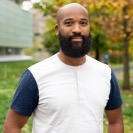
Current Position: Assistant Professor of Neuroscience, Princeton University.
Education: B.A., Swarthmore College (2008); Ph.D., University of Washington (2015).
Professional Experience: Postdoc, Caltech (2015-2019); Assistant Professor, UNC Chapel Hill (2019-2021); Assistant Professor, Princeton University (2022-present).
SICB Activities: Member since 2007; Affiliations with DNNSB, DIZ, and DCB; Author and reviewer for ICB; DNNSB presentation judge.
Other Memberships: International Society for Neuroethology.
Research Interests: Functional organization of fly flight control.
Goals Statement: I have been a member of SICB for nearly 20 years, attending the 2007 SICB meeting as an undergraduate in Phoenix. Since then, I have attended SICB at each career stage nearly every year. SICB has been critical to my professional growth throughout that entire time. I will continue to support students and early-career scientists by providing a space in which they can communicate their latest results. I am to foster communication across the broad membership of the division and society and create a welcoming space for new scientists as well as those new to integrative and comparative approaches.
Kate Feller (fellerk@union.edu)
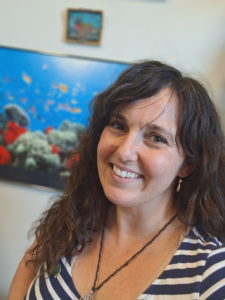
Current Position: Assistant Professor of Biology and Neuroscience, Union College.
Education: B.S., William Smith (and Hobart) College (2006); Ph.D., University of Maryland Baltimore County (UMBC, 2014).
Professional Experience: Postdoc, University of Minnesota Department of Neuroscience (2020); Postdoc, University of Minnesota Ecology, Evolution and Behavior Department (2018-2020); Grass Fellow, Marine Biological Lab (2018); Marie Sklodowska-Curie Postdoctoral Fellow, University of Cambridge (2016-2018); Postdoc, University of Bristol (2015-2016).
SICB Activities: Member since 2012, DNNSB presentation judge, DNNSB poster judge, DIZ presentation judge, custom art donor to DIZ auction, 2020 Dorothy M. Skinner Award recipient.
Other Memberships: The Crustacean Society, Nu Rho Psi National Honor Society in Neuroscience.
Research Interests: Visual ecology, neuroethology, and neuromechanics in stomatopod crustaceans, Belostomatid insects, and other arthropods.
Goals Statement: Throughout my years in graduate school, as a postdoc, and most recently as a junior faculty member, SICB remains a constant, annual recharge for my scientific battery. The collaborations, professional networks, mentors, and scientific inspiration SICB provides have profoundly shaped my career and made me part of a much larger and vibrant scientific community. I would like to start giving back to this community to help it maintain the same level of training and support for students, trainees, and scientists in years to come. As a PUI faculty member, I am particularly interested in creating more opportunities for undergraduate researchers from all backgrounds to present at SICB so they may form connections with training opportunities to launch their careers. My grander goal is to facilitate recruitment and retention of new researchers to the DNNSB community so that we may grow and push our science in new directions. I will be honored to work towards these goals as the secretary of the division of Neurobiology, Neuroethology and Sensory Biology.
DNNSB Student Awards
Congratulations to the student award winners from SICB 2026 in Portland!
Best student talk: Alex Gurgis
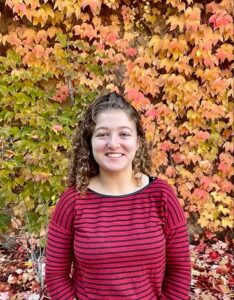
Talk title: Ostracod brain anatomy: evidence for ancestral mushroom body and central complex in Pancrustacea
Research description: As a PhD candidate in the Wolff Lab at Case Western Reserve University, I study the evolution of arthropod brains to better understand common patterns in neural circuitry, as well as how changes in the brain can support species-specific behaviors. My current research focuses on learning and memory structures called mushroom bodies. I am studying their neuroanatomy in ostracods, a taxon sister to all other crustaceans and insects, to determine their evolutionary origins in Pancrustacea, as well as comparing their morphology across snapping shrimp with a diversity of social behaviors to examine the relationship between mushroom body complexity and sociality.
Best student talk honorable mention: Dana Lim
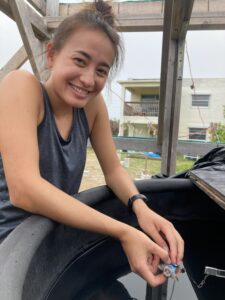
Talk title: Can the sea turtle magnetic map sense detect magnetic field polarity?
Research description: I am a Biology PhD candidate in the Lohmann Lab at the University of North Carolina at Chapel Hill. My research studies magnetic sensing in young loggerhead sea turtles. Specifically, my work uses behavioral assays to investigate questions around the physical bases of magnetoreception, the functional capabilities of this sensory system, and the development of adaptive responses to magnetic field cues.
Best student poster – graduate student: Nichole Procter
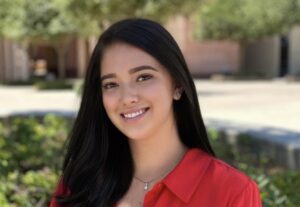
Poster title: Season and social cues influence patterns of circadian gene expression in green treefrogs
Research description: I am a PhD candidate working with Deborah Lutterschmidt at the University of California, Irvine and am planning to pursue a teaching and research-focused career. My research examines how non-light environmental cues, such as social signals, including reproductive communication, interact to influence circadian gene expression in green treefrogs. Using an integrative framework that combines behavioral, molecular, and physiological approaches, my work aims to understand how internal biological clocks are aligned with reproductive timing and dynamic environmental conditions.
Best student poster – undergraduate student: Madeline Nobert
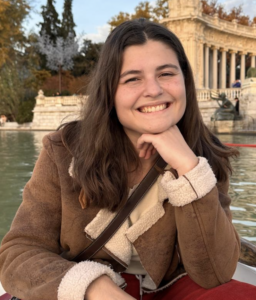
Poster Title: Wind gusts impact the phase selectivity of insect wing mechanosensory neurons
Research description: I am a senior Biology undergraduate at Bryn Mawr College focusing on animal behavior and neurobiology. My current research in the Weber Lab focuses on the neurological mechanics of flight in the Carolina Sphynx hawkmoth, Manduca sexta. I use an intracellular probe to record neural activity directly from the wing nerve of moths while manually moving the wings to simulate flight. Our aim is to understand how wing surface strain sensors react to flapping movement, and the mechanisms behind movement as complex as flight.