
Cynthia Downs, Chair (chair.dede@sicb.org); Chair-Elect: Election occurring now; Robin Warne Program Officer (dpo.dede@sicb.org); Molly Simonis, Program Officer Elect; Emily Le Sage, Secretary (secretary.dede@sicb.org); Jennifer Houtz, Secretary-Elect; David Chang van Oodrt, Student/ Postdoctoral Affairs Committee Representative
Message from DEDE Leadership
SICB 2026 Meeting highlights
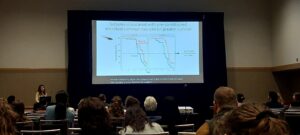
SICB had a great turnout in Portland, OR. With 12 symposia and 18 workshops held across five days, there were many opportunities to learn and connect.
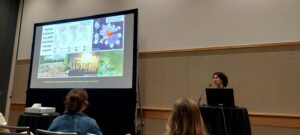
We had three incredible talks in our annual DEDE Best Student Oral Presentation Competition. In addition, 9 students competed in the DEDE Best Student Poster. A special thanks to those who volunteered to judge student presentations, your participation and enthusiasm for judging our students makes this a seamless process and we couldn’t do it without you!
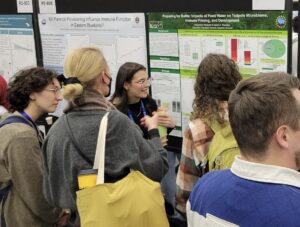
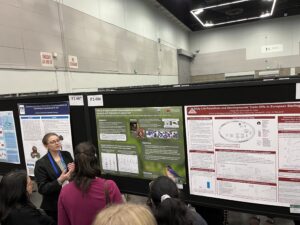
Best Student Presentation Awards
The winner of the DEDE Best Student Oral Presentation was: Syeda Mehreen Tahir
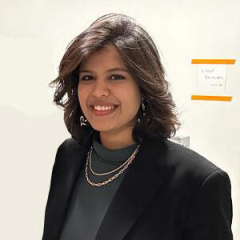
Talk Title: High protein diet increases susceptibility of Desert Locust, Schistocerca gregaria to Metarhizium biopesticide infection
Syeda Mehreen Tahir is a 5th year Ph.D. candidate in Environmental Biology at Arizona State University working with Dr. Jon Harrison and Dr. Arianne Cease. Her research focuses on nutritional immunology, examining how dietary protein-to-carbohydrate ratios shape immune function and disease outcomes. Using a multi-omics approach that integrates physiological assays, transcriptomics, and metabolomics, her work explores trade-offs between immune investment and pathogen susceptibility, with broader implications for host–pathogen interactions in variable nutritional environments. Mehreen is currently seeking postdoctoral opportunities and would be delighted to hear from potential collaborators or mentors.
The winner of the DEDE Best Student Poster Presentation was: Rosemary Westcott
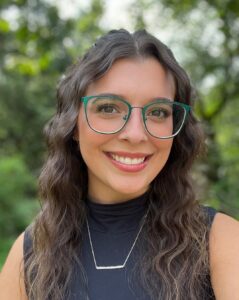
Poster Title: Preparing for Battle: Impacts of Pond Water on Tadpole Microbiome, Immune Priming, and Development
I am a 3rd-year PhD candidate in Dr. Sarah Woodley’s lab at Duquesne University studying the gut microbiome and its impact on host immune function and development in tadpoles. At SICB 2026, I presented some exciting results that showed altered baseline immune gene expression in the guts of tadpoles raised in autoclaved (microbially depleted) or natural (microbially rich) pond water that correlated with measures of gut alpha diversity, suggesting differential immune priming by these two microbial communities. I also found that tadpoles raised in autoclaved pond water had more severe scoliosis than those raised in natural pond water, which was a surprise result that sparked a lot of conversation during the poster session!
BSP Runner-ups
Runner-up for DEDE Best Student Oral Presentation:Kristen Rosamond
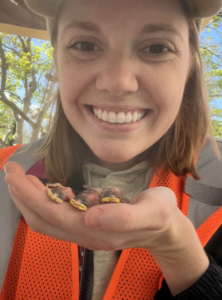
Talk Title: Impact of gut microbiome modulation on nestling house sparrow physiology
I am a Ph.D. candidate in the Biology Department at the University of Missouri-St. Louis. My dissertation research incorporates both field and laboratory experiments with wild sparrow nestlings to investigate how disruptions to the gut microbiome and immune system affect host physiology.
Runner-up for DEDE Best Student Poster: Chloe Poenisch
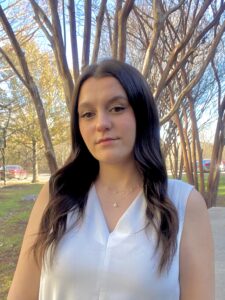
Poster Title: A new method to assess host-pathogen dynamics in Astrangia poculata
Chloe Poenisch is a first-generation college student from Portland, Texas, and an undergraduate at Texas State University. She plans to graduate in December 2026 with a B.S. in Aquatic Biology and a minor in Horticulture. In Dr. Fuess’s lab, her research centers on host immunity and symbiosis in Astrangia poculata, where she contributes to efforts to better understand how shifts in algal symbiont density influence coral responses to pathogenic stress. Her work involves supporting the design and implementation of experimental pathogen challenges and assisting with the development of methods that improve reproducibility to assess coral immune function. She currently supports the lab as an aquatic husbandrist by maintaining stable conditions for coral and other cnidarian cultures used in ongoing experiments. She hopes to apply her research experience to future work on cnidarians, porifera, and host–microbe dynamics, eventually pursuing a Ph.D. after gaining experience as a laboratory technician. Outside of academics, Chloe enjoys reading, traveling, and freshwater aquarium care.
Lochmiller Young Investigator Award
Congrats to the annual Robert Lochmiller Young Investigator Awardee! Named in honor of this seminal figure in ecoimmunology, this award recognizes distinguished contributions to the fields of ecological immunology and disease ecology. The depth and breadth of the nominees’ contributions were outstanding, highlighting an extraordinarily bright future for our fields.
We are pleased to announce that the winner of the Lochmiller Award is: Ashley Love
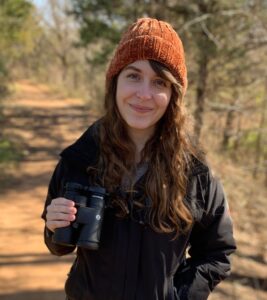
Dr. Ashley Love is an Assistant Professor in the Department of Biology at Miami University. Her research focuses on understanding why hosts vary in how they respond to and transmit infections. She is specifically interested in how social and environmental factors shape avian behavioral and immune defensive strategies against parasites. Dr. Love is also passionate about mentoring the next generation of disease ecologists and has guided over 30 undergraduate students in independent research. To read more about her work visit: https://www.avian-disease-ecology.com
Are you the next Lochmiller Young Investigator?
We will accept applications starting in October. The awardee will be announced at the 2027 SICB meeting in Pittsburgh, PA during the DEDE business meeting. Please encourage anyone who qualifies to apply and stay tuned for an e-mail with more information. Please e-mail dpo.dede@sicb.org for more information. https://sicb.org/divisions/division-of-ecoimmunology-disease-ecology/
Looking ahead to SICB 2027
As we look forward to the SICB 2027 meeting in Pittsburgh, PA it is shaping up to be another outstanding meeting. We are excited to announce that DEDE will be co-sponsoring four symposia:
- Feedback between host phenotypes and the microbiome: Physiological mechanisms and behavioral outcomes
- Using evolution and development to predict phenotypic response to climate change
- From diapause to torpor: Integrative approaches to understanding periods of low metabolic activity across taxa
- Lost and Found: How Animals Rebuild Bodies, Brains and Behaviors
To ensure that DEDE continues to grow and thrive, it is important that DEDE members continue to host ecoimmunology/disease-related symposia. We are now soliciting proposals for symposia for the SICB 2028 meeting in Los Angeles, CA (January 3-7, 2028). If you have an idea, email our DEDE Program Officer at dpo.dede@sicb.org or SICB program officer at programofficer@sicb.org for more details or information. We also have sample grant proposals that we can share. We highly encourage senior graduate students and post-docs to submit proposals, as a symposium is an excellent way to network with researchers in your field, to highlight a research area you think is exciting, and to help shape future programming at SICB.
Thank you for your ongoing participation and support of DEDE events, and thanks again to all who volunteered to judge student presentations. We sincerely hope to see you all in person next January!
Upcoming events
Don’t miss the upcoming annual Ecology and Evolution of Infectious Diseases meeting at Virginia Tech. The welcome reception will be held on the evening of June 1st and the conference will span three full days from June 2-4, 2026. Find out more on their site: https://cpe.vt.edu/eeid2026.html
Vote in the Upcoming SICB Election
Please vote for Chair-Elect in the upcoming election. Thank you to our nominating committee!
Candidates for Chair-Elect
Candidate 1: Vania Assis
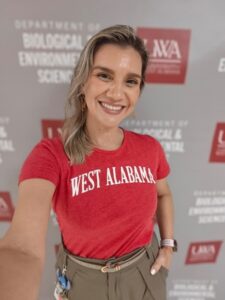
Current Position: Assistant Professor, Dept. of Biological and Environmental Sciences, University of West Alabama
Education: Ph.D., General Physiology (Ecoimmunology), University of São Paulo, SP, Brazil; M.Sc., General Physiology (Endocrinology), University of São Paulo, SP, Brazil; B.S., Biology, São Paulo State University, SP, Brazil.
Professional Experience: Assistant Professor, University of West Alabama (2025-present); Postdoctoral Researcher, University of South Florida (2023-2025); Postdoctoral Researcher, University of São Paulo (2016-2020)
SICB Activities: Member of DEDE (2017–present); “Meet an Ecoimmunologist” mentee (2018–2025) and mentor (2026); Session Chair (2021); Symposium Co-organizer, “Ecoimmunology: What Unconventional Organisms Tell Us After Two Decades” (2022); DEDE Student Presentation Judge; Professional Development Award (2021); Audience Choice Award (2021). Other Memberships: Herpetologists’ League; Brazilian Society of Herpetology.
Research Interests: My research examines how endocrine mediators shape immune function and disease outcomes across ecological contexts. I focus on stress physiology, particularly glucocorticoids and their interactions with other endocrine signals, using amphibians as a comparative vertebrate model. Through experimental manipulations and molecular approaches, I investigate the mechanisms linking hormonal signaling to immune responses and examine endocrine–immune trade-offs across populations and years, asking how environmental stressors shape amphibian health and disease susceptibility.
Goals Statement: DEDE has been my scientific home since 2018. I have grown within this division, from mentee to symposium organizer and mentor, and I am deeply committed to its continued evolution. As DEDE enters its next phase, including the potential expansion to formally include symbiosis, we have an opportunity to clarify our identity and broaden our community. As Chair, I will reinforce DEDE’s role as an integrative division across study systems and taxa. Although ecoimmunology and disease ecology were historically centered on birds and mammals, our fields now span invertebrates, plants, and diverse vertebrates. I will strengthen connections across SICB divisions by highlighting the shared scientific questions that unite our work. Through symposia and programming that showcase diverse model systems and approaches, we can enhance both our representation and visibility within the society. At a teaching-focused institution, I see how transformative early inclusion in a scientific community can be. I will prioritize opportunities for undergraduates to present, connect with mentors, and build networks so they see DEDE as their scientific home from the start. I will also continue strengthening mentoring networks, expanding international participation, and preserving the collaborative culture that defines DEDE(S) as we guide the division through this period of growth.
Candidate 2: Ken Field
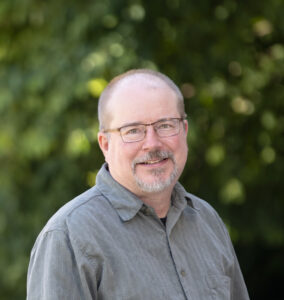
Current Position: Professor, Dept. of Biology, Bucknell University
Education: B.S. University of Vermont (1990), Ph.D. Cornell University (1997)
Professional Experience: Professor, Bucknell University (2002 – present), Postdoctoral Research, University of California, San Francisco (2009-2016)
SICB Activities: Member of DEDE (2014-present); DEDE Divisional Secretary (2018-2021); Integrative and Comparative Biology editorial board DEDE representative (2014-2020); SICB Session Chair (2016); DEDE “Meet an Ecoimmunologist” mentor (2016, 2020, 2021, 2024, 2026); DEDE Best Student Paper Judge (2019, 2020, 2021, 2023, 2024, 2026); NSF-RCN Refining and Diversifying Ecoimmunology Meeting Participant, Woods Hole, MA (2014); NSF-RCN Refining and Diversifying Ecoimmunology meeting Participant, Ann Arbor, MI (2012)
Research Interests: My current and future work focuses on the host-pathogen interactions of bats and RNA viruses. While my background is as a traditionally trained immunologist and cell biologist, I have considered myself an ecoimmunologist since beginning work on bat immune responses during white-nose syndrome about 14 years ago. Together with collaborators at Bucknell University and Muni University (Arua, Uganda), I study interactions between pathogen and host under the ecological conditions where spillover events are likely to occur.
Goals Statement: I would be honored to serve as Chair for DEDE, a division that has been my primary scientific home since its inception. I was proud to participate in the NSF-funded Research Coordination Networks at Ann Arbor and Woods Hole that led to DEDE’s creation within SICB, and I have remained an active participant and advocate for the division ever since.
Our division is currently at a pivotal stage of growth. I fully support the proposed change of our name to the Division of Ecoimmunology, Disease Ecology, and Symbiosis (DEDES). This change is an important step in formally welcoming colleagues who have long been adjacent to our research but not had a home when it comes to SICB divisions. As Chair, I would look forward to the opportunity to shape this expansion and contribute to a strategic development plan that ensures the long-term sustainability of DEDE(S).
My goals as Chair are to maintain our collaborative environment while specifically expanding participation among students and junior scientists. I am also committed to ensuring that our division remains inclusive and accessible for all members. While the specific challenges of the past few years have highlighted the burdens on those in our field, I want to explore broader ways we can provide peer support for one another. This includes discussing how to better support colleagues with chronic illnesses or other accessibility concerns to ensure that our public meeting spaces are truly welcoming for everyone. I want to ensure that as DEDE(S) grows, it continues to be a supportive community where all researchers feel they belong.