Bob Podolsky, College of Charleston, Chair.DIZ@sicb.org; Michael T. Nishizaki, College of Charleston, DPO.DIZ@sicb.org; Kevin Kocot, University of Alabama, Secretary.DIZ@sicb.org; Kyle Davis, Michigan State University, davis605@msu.edu; Abigail Cahill, Albion College, acahill@albion.edu
Message from the Chair
Bob Podolsky, College of Charleston, Chair.DIZ@sicb.org
Hello DIZ!
Portland was a fun meeting, and very different from the memory of everyone slip-sliding during the ice storm last time SICB met there in 2016. Our Mary Rice talk session, Alan Kohn poster session, sponsored symposia, Pearse auction, mentoring interactions, and well-attended member meeting all added to the positive experience, and I hope we can continue to build back membership and momentum for our division. Some ideas below.
Auction. An enormous round of thanks to everyone who supported our very successful auction to kick off the John and Vicki Pearse Fund—especially Andy Mahon for drumming up donations, Kevin Kocot for brilliant MCing, everyone who pitched in to set up and take down the event, Lori Strong and other Burk staff for helping with logistics, everyone who donated auction items, and all of the bidders (we see you Megan Schwartz)! We managed to raise more than $4800 at the event and also received a very generous match from Vicki!
Fundraising. I am now working with Vicki Pearse to solicit the remaining donations needed to establish the Pearse fund. I am confident that we will get there this year, with your help. The fund is now listed among the drop-down options on the donations page (https://sicb.org/donations) and we will be sending out a series of appeals to John’s family, friends, students, coauthors, and SICB members. The message to SICB membership will give me an opportunity to sell the benefits of joining our division. Stay tuned to hear about one more special auction offer from Vicki!
Judges and mentors. We had great participation in our mentoring program, with 35 mentees and 29 mentors, and plans to go bigger next year. A big thank you as well to the 20 individuals who contributed to judging talks and posters: Sam Bogan, CJ Brothers, Pamela Brannock, Abigail Cahill, Jamie Cochran, Beth Davis-Berg, Paola Lopez Duarte, Lauren Fuess, Molly Jacobs, Amy Johnson, Kelly Kissane, Kevin Kocot, Marie Nydam, Douglas Pace, Bruno Pernet, Bob Podolsky, Carolyn Tepolt, Nia Walker, Erica Westerman, and Mar Wonham. Our BSP program is successful (see results below) because of your efforts!
Leadership and election news. I really enjoyed working with Adam Reitzel in his role as our DPO (thank you Adam!) and look forward to working with Mike Nishizaki as he takes over. This year our election is for a new chair, who will take over from me one month after the 2027 meeting in Pittsburgh. I want to thank our candidates, Karen Chan and Shayle Matsuda, for stepping up to serve our division, and the nominating committee of Bruno Pernet, Molly Jacobs, and John Zardus for their diligence in finding two strong candidates. Please read the candidate bios in this newsletter and vote! Participation in elections has been shockingly low, but choosing good leadership is of course central to a well-run society.
Student Postdoctoral Affairs Committee. In another change to division leadership, Will Ballentine–who has benefited our division in so many ways, from representing the needs of young scientists to attracting greater attention to DIZ—has finished his term as our SPDAC rep. As we sincerely thank Will, we now welcome Kyle Davis into this role. Kyle is a graduate student at Michigan State University who works on the squid-Vibrio light organ system and who has been heavily engaged with SPDAC. Student and postdoc members should feel welcome to reach out to me or Kyle with ways that we can better represent your interests.
Message from the Program Officer
Michael T. Nishizaki, College of Charleston, DPO.DIZ@sicb.org
Hello DIZ!
The 2026 SICB meeting in Portland, OR was an excellent gathering for DIZ and the broad community of invertebrate biologists. It was wonderful to see such a wide range of talks and posters highlighting the diversity of research in our division, to reconnect with colleagues across SICB, and to welcome new members to our community. As always, student presentations were a highlight of the meeting. Congratulations to Caitlin BrabbleRose (UNC Charlotte; Mary Rice Award for Best Student Talk), Cailey Plainte (Simmons University & University of Washington; Alan Kohn Award for Best Student Poster), and Yoshigei Diaz Hernandez (Oregon State University; poster honorable mention). Many thanks to the judges who generously volunteered their time to support these competitions.
Preparations are already underway for the 2027 SICB meeting in Pittsburgh, PA (3–7 January). DIZ will support several exciting symposia, including Feedback between host phenotypes and the microbiome, Using evolution and development to predict phenotypic responses to climate change, The Life Cycle of Crustaceans, From diapause to torpor, Lost and Found: How Animals Rebuild Bodies, Brains and Behaviors, and The Neuroethology of Mutualisms. Together these sessions highlight the breadth of research represented within the Division of Invertebrate Zoology. I encourage members to consider organizing symposia for future meetings, and please feel free to reach out if you are interested, as I would be happy to help guide the process.
Finally, please ask your research groups to tag our DIZ social accounts on any invertebrate-related posts (@sicb_diz on Instagram and @sicb-diz.bsky.social on Bluesky). Use these platforms to highlight and amplify the exciting research being done across our community of invertebrate biologists by sharing field and lab work throughout the year.
Message from the Secretary
Kevin Kocot, University of Alabama, Secretary.DIZ@sicb.org
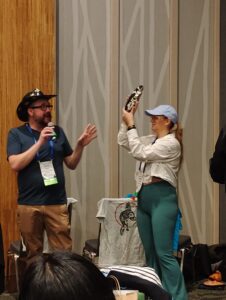
SICB 2026 was a blast! If you attended the DIZ Auction, you might have noticed I really enjoyed being an auctioneer. The lineup featured incredible items—from fine art and rare books to vintage T-shirts—and the energy in the room made it even more special. It was great to see so many DIZ members come together to have fun and support the division. Andy Mahon worked his opisthosoma off organizing the auction and thanks to his efforts, and everyone’s enthusiasm and generosity, we raised over $4,800! Please join me in giving our Participation Czar the Andy Mahon Cheer: Andy Mayhon clap, clap, clap-clap-clap. Special thanks also to my assistants/handlers Rebecca Varney and Stormie Collins, Beth Davis-Berg for loaning me her reading glasses, the many volunteers who helped with auction set-up and take-down, and DIZ members who were incredibly generous with their donations and bids. It’s never too early to start squirreling away invertebrate treasures to donate for the 2029 auction…
The mentoring program also continues to be a highlight of the meeting, with strong participation from both students and mentors. I had a lot of fun playing academic matchmaker and we received overwhelmingly positive feedback from both mentees and mentors. Several mentees new to SICB noted that their one-on-one interactions with a more established DIZ member made the meeting feel much less intimidating and worthwhile. Huge thanks to Will Ballentine, who is stepping down as SPDAC representative, and the SPDAC leadership for their hard work on the mentoring program. Mentoring doesn’t need to end with the conference, though, and I encourage SICB 2026 mentors to follow up with your mentee(s) now and occasionally in the coming months to sustain the connections you have made and support early-career folks in our field. Look for the opportunity to sign up as a mentor/mentee when you register for SICB 2027.
Lastly, one issue that came up several times throughout the meeting was the low voter turnout in recent SICB elections. These elections are super important for the direction of the society and I implore our members to take a few minutes to engage with them. One suggestion that I liked (and plan to try myself) is to set aside a bit of time during a lab meeting to review the candidate roster together. It’s a nice way to demystify what service in a scientific society looks like and it has the added benefit of gently forcing everyone to actually read the candidate statements. It should lead to a more informed vote and possibly some good discussion about where DIZ (and SICB more broadly) are and should be headed. We have two excellent candidates for DIZ chair so be sure to read their bios at the end of this newsletter and vote!
Message from the SPDAC Representative
Kyle Davis, Michigan State University, davis605@msu.edu
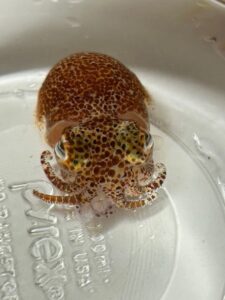
Hello there! My name is Kyle Davis, and I am your new DIZ Student and Postdoctoral Affairs Committee representative. I am taking over for Will Ballentine. I am a PhD student in Elizabeth Heath-Heckman’s Lab, which is part of the Integrative Biology Program at Michigan State University. Our lab is studying the mutualistic symbiosis between the Hawaiian Bobtailed Squid and its bacterial symbiont Vibrio fischeri. I am interested in how mutualistic interactions are facilitated and have been studying how symbionts communicate with and are recognized by their host. Before starting my PhD, I completed a master’s degree at the University of Utah, where I researched how climate change might affect ectoparasite populations on birds. I look forward to working with you all to promote our division and continue to grow student involvement in DIZ.
Message from the Hyman Scholarship Committee Chair
Abigail Cahill, Albion College, acahill@albion.edu
Hello to all on behalf of the Libbie H. Hyman Memorial Scholarship committee. We continue to have a strong applicant pool for the scholarship following changes to both our advertising strategy and eligibility guidelines. This is the third year in a row that we have received over thirty applications, representing a diversity of institutions, field stations, invertebrate taxa, biomes, habitats, and countries. Students are out there doing exciting work, and we enjoy reading about it. Once again, huge thanks are due to our committee of readers (Erika Iyengar and Bruno Pernet) and to Ruedi Birenheide, ICB webmaster.
At the time of writing, the committee has met and made our decisions, but we are still in the process of awarding funds. This means you’ll need to check the fall newsletter to see what the recipients have done – but as usual, I expect you’ll be in for an exciting update.
Thank you to all of you for your continued support of the fund, both by donating and by sending students our way. With the Hyman fund in solid financial shape, DIZ is starting to raise money for other student-centered goals, but we certainly still welcome donations here as well.
The Libbie H. Hyman Award provides funding to support a field station experience for advanced undergraduates or early career graduate students pursuing coursework or research on invertebrates. To make a contribution to the fund, click on ‘Donate to SICB’ on the SICB home page (http://sicb.org) or send a check to the address below:
SICB Business Office
Libbie H. Hyman Memorial Scholarship Fund
950 Herndon Parkway
Suite 450
Herndon, VA 20170 USA
Checks should be made payable to SICB and marked as a “Contribution to the Libbie H. Hyman Memorial Scholarship Fund.” All contributions are tax deductible.
Follow DIZ on Social Media
If you aren’t already, be sure to follow the DIZ social accounts (@sicb_diz on Instagram and @sicb-diz.bsky.social on Bluesky) and tag away on any invertebrate-related posts.
The DIZ Social Media Rep., Anna Klompen (AKlompen@stowers.org), has created a new form is for SICB DIZ members to submit content for social media posts. We want to populate our profiles with news about your research, what your lab is working on now or is planning to work on soon, fieldwork, awards or events, or anything that would support the community of DIZ at SICB. Please don’t hesitate to submit any news or events you want to share or if you just want to share some of the wonderful world of #TeamInverts!
Interested in Organizing a Symposium for 2028?
Now is the perfect time to reach out to DPO Michael Nishizaki to discuss your ideas in advance of the September 1 deadline. If you’ve been considering organizing a symposium—or even just have a rough concept—this is a great opportunity to develop it into a competitive proposal. Early career researchers are welcome and encouraged to participate; SICB symposia are an excellent way to build visibility, shape emerging research directions, and connect with potential collaborators as co-organizers. Detailed info on the process can be found here. Mike can help you develop ideas and figure out funding plans and additional activities (companion sessions, lunches, etc.) for your symposium. A detailed SICB symposium organizer guidebook is also available.
Best Student Presentation Competitions
DIZ also wants to congratulate the amazing students who competed in the Best Student Presentation competitions this year. Thanks again to the many DIZ members who generously volunteered their time to serve as judges for these competitions. Please consider judging at future meetings. Here are the winners:
DIZ Mary Rice Best Student Presentation
Mother knows best: influence of maternal cues on embryonic development in the Atlantic fiddler crab
Caitlin BrabbleRose
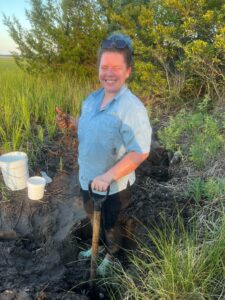
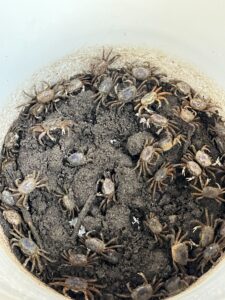
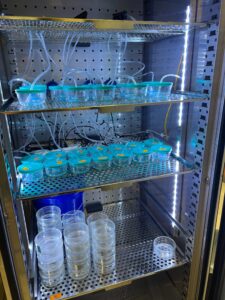
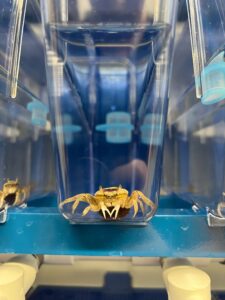
Out in the estuary, timing is everything for intertidal species such as the Atlantic sand fiddler crab (Leptuca pugliator). To give their offspring the best chance at survival, female crabs must release their larvae during the highest nocturnal tides so that zoeae can utilize ebbing currents to export out to the coast to develop. These coastal habitats provide a more stable environment with fewer predators to ensure success. Since timing is so important, my work seeks to determine who controls the timing of release — the mother, or her offspring? To make this determination, we used an embryonic isolation experiment to identify if development and hatching is intrinsic to the embryo, or if those processes rely on maternal cues. We compared three groups: embryos that remained attached to their mothers, those that were physically isolated but could receive her chemical cues, and those that received no cues at all. Our results revealed an interesting split — while embryos are capable of developing without maternal cues, hatching is an all-or-nothing response that requires maternal signaling. Embryos isolated more than 48-hr before the hatching event were not capable of successfully hatching; however, those removed within that window did hatch successfully, a finding that aligns with previous research on a few other crustaceans that live high in the intertidal zone. When we introduced previously identified enzymes found within the egg masses of blue crabs, we learned that these specific mimics were incapable of triggering the hatching program in L. pugilator despite working successfully in isolated blue crab embryos. These findings suggest that L. pugilator may be using a more species-specific chemical cue. As intertidal species rely on the highest of high tides (such as those associated with new and full moons) to release their larvae, our findings suggest that mother crabs know best, meaning that they control the timing of larval release to ensure the success of their offspring.
DIZ Alan Kohn Best Student Poster
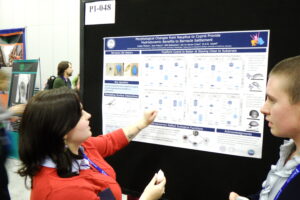
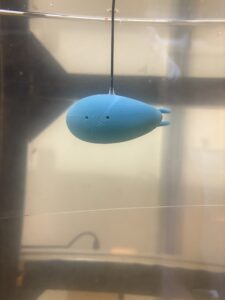
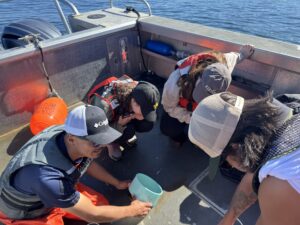
Morphological changes from nauplius to cyprid provide hydrodynamic benefits to barnacle settlement
Cailey Plainte
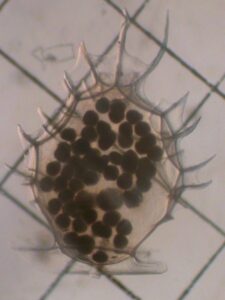
Barnacle larvae undergo significant morphological changes as they transition from the free-swimming nauplius stage, which has limbs and body extensions, to the fusiform cyprid stage specialized for settlement. Using dynamically-scaled models of Tetraclita japonica nauplius and cyprid, we tested whether these developmental shifts result in hydrodynamic differences during settlement in different marine environments. We found that naupliar morphology experiences significantly higher forces and torques in higher flow environments. This implies that they are more prone to being pushed, peeled, or twisted off surfaces. These results suggest that cypris morphology provides a clear hydrodynamic benefit for settlement, while naupliar instability likely supports dispersal in the water column, reflecting the functions of each life stage.
DIZ Alan Kohn Best Student Poster Runner Up
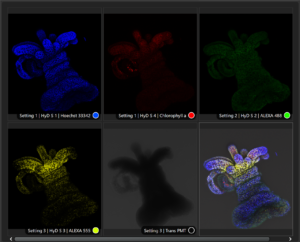
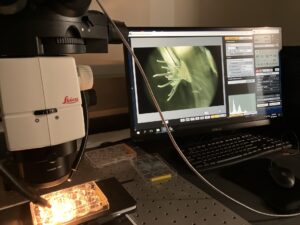
Thermal and symbiotic regulation of pedal lacerate development in Exaiptasia diaphana
Yoshigei Diaz Hernandez
My poster depicts our study on the thermal and symbiotic regulation of pedal lacerate development in Exaiptasia diaphana. Our work helps us better understand how global climate change, such as rising temperatures, impacts the health of ocean ecosystems and symbiosis maintenance. Groups of symbiotic, aposymbiotic, and algal inoculated pedal lacerates were placed in either ambient (25℃) or heat stress (32℃) temperatures and animal health metric data was collected, including tentacle count, mortality rate, and pedal disk size. Our next steps are to complete our immunofluorescence microscopy work to quantify the rates of host cell proliferation, apoptosis, and algal density among our different experimental groups to quantify the extent to which cnidarian-algal symbiosis is impacted.
Candidates for 2026 Election
Candidates for Chair
The ballot can be found here, and it will be open for one month.
Dr. Karen Chan
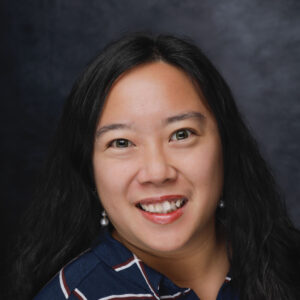
Current Position: Assistant Professor, School of Oceanography, University of Washington
Education: BSc (Hon) Environmental Life Science, The University of Hong Kong (2006); MSc Oceanography, University of Washington (2009); PhD Oceanography, University of Washington (2012)
Professional Experience: Assistant Professor, Biology Department, Swarthmore College (2019-2024); Assistant Professor, Division of Life Sciences, Hong Kong University of Science and Technology (2014-2018); Coastal Ocean Institute Postdoctoral Scholar, Woods Hole Oceanographic Institution (2012-2014)
SICB Activities: Chair of Nominating Committee (2025-2026); Member at Large (2023-2026); Associate Editor of Integrative Organismal Biology (2022 – present); Divisional Program Officer for Division of Invertebrate Zoology (DIZ, 2020-2023); Society-wide Symposium Organizer “Large-scale biological phenomena arising from small-scale biophysical processes” (2023); Organizer of Special Contributed Session ““Honoring the Life and Legacy of Dr. John Pearse: Marine Ecology and Evolutionary Biology” (2022); Ad-hoc Program Officer (2024-present) and Member at Large (2020-2024) for American Microscopical Society, a co-sponsoring society for SICB Meetings; Student Representative for DIZ to the Student and Postdoctoral Affairs Committee (2013-2016); Judge for Best Student Presentations for DIZ and Division of Ecology and Evolution (DEE)
Other Memberships: Sigma Xi; America Society for Limnology and Oceanography, American Microscopical Society
Research Interests: Zooplankton ecology; Larval Biology; Functional morphology; Biophysical fluid dynamics
Goals Statement: SICB has been my home society, and DIZ has been my primary division since I was a student. My years of involvement in SICB and DIZ have prepared me to help guide the division through the next phase of the strategic plan. I deeply value the inclusive excellence of our community, both in the science we pursue and in the scientists who make it possible. As chair of DIZ, I will work collaboratively with our members to implement the society-wide strategic plan. This includes clarifying our mission and vision, developing strategies to energize member participation, and responsibly managing the generous gifts we have received to support scientists at all career stages. It is an honor to serve you all.
Dr. Shayle Matsuda
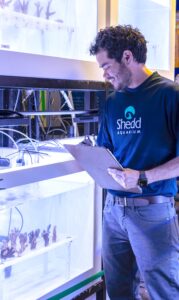
Current Position: Research Biologist, Shedd Aquarium, Chicago, IL, USA
Education: Ph.D. in Marine Biology, University of Hawaiʻi at Mānoa; M.S. in Ecology, Evolution, and Conservation Biology, San Francisco State University and the California Academy of Sciences; B.S. in Environmental Studies and Women’s Studies, University of California Santa Cruz
Professional Experience: Smith Conservation Research Postdoctoral Fellow (Shedd Aquarium and University of Miami Rosenstiel School)
SICB Activities: I attended my first SICB meeting as a master’s student in 2014 (DIZ member) and have been actively involved in the society across multiple roles over the past decade. I’ve served two terms on the Broadening Participation Committee, first as a graduate student member and later as a full committee member. I am the co-founder and co-organizer of SICB Outgroup (LGBTQ+), hosting the annual offsite Outgroup Social and the onsite Outgroup-In sober social series. I have organized and led workshops, including sessions on Sketchnoting for scientific communication, hosted panel discussions focused on diversity, equity, and inclusion in science, and served as a panelist on sessions supporting early career researchers. I have also mentored students through Meeting of the Minds (formerly Beers and Brains) for many years and co-organized the symposium track “Host–microbial interactions across biological scales in a changing world” at the 2026 SICB annual meeting.
Other Memberships: Advisory Council Member, Revive & Restore Advanced Coral Toolkit; Scientific Advisory Board Member, Wholome ARKs.
Research Interests: My research focuses on how microorganisms shape coral reef and freshwater ecosystems under climate change, with an emphasis on microbial diversity, ecology, and physiology across individual, species, and ecosystem scales. My work centers on coral reef ecology and restoration, coral-algal-microbial symbioses, microbiome dynamics, coral larval biology and settlement, and reef resilience under climate change. I integrate field experiments, larval propagation at sea, and microbiome analysis to better understand how coral-algal-bacterial partnerships influence coral survival under environmental stress and to inform more effective restoration strategies.
Goals Statement: SICB has played an important role in my scientific development and sense of community since I first attended as a master’s student in 2014, and it has been my academic home conference ever since. Over the years I have been fortunate to be involved in many parts of the society, from mentoring students and organizing workshops to helping build community spaces like Outgroup. I would be honored to give back to the division by serving in DIZ leadership. DIZ is already in a great place, with a strong and welcoming community and exciting science across invertebrate biology, and I would be excited to help continue that momentum and support the division’s growth. As Chair, I hope to strengthen mentorship and networking opportunities for students and early career scientists, support creative programming that highlights the diversity of invertebrate research, and help maintain the collaborative and inclusive community that makes SICB such a special place.