Dr. Misty Paig-Tran, Chair.DCB@sicb.org; Dr. Jake Socha Chairelect.dcb@sicb.org; Dr. Cassandra Donatelli, DPO.DCB@sicb.org; Dr. Karly Cohen, Secretary.DCB@sicb.org; Melody Young, melody.young@duke.edu Divisional SPDAC (Student Postdoctoral Affairs Committee Representative)
Message from DCB Leadership

Following our in-person SICB 2026 meeting in Portland, we want to thank our departing officers and welcome our incoming officers! Glenna Clifton is ending her term as DCB Program Officer and Cassandra Donatelli is ending her term as DCB Secretary. Thank you both for your service to our division and SICB as a whole! We greatly appreciate you! Stepping into the roles are Cassandra Donatelli as the Divisional Program Officer and Karly Cohen as the DCB Secretary. Welcome!
We thank all DCB members who participated in various committees and events throughout the year including the Gans committee, BSP judges, symposia organizers, and regional meeting organizers! We appreciate your service to DCB and SICB!
Carl Gans Awards
The Carl Gans Award was established to recognize Carl Gans’ contributions to animal morphology, biomechanics, and functional biology and to honor investigators who work in this field. The Gans Award is given to (1) an outstanding young investigator in the field of comparative biomechanics and/or (2) an investigator at any career stage for a significant contribution to the literature of comparative biomechanics published in the preceding five calendar years. Each year we solicit nominations; please consider nominating yourself or other outstanding researchers in the field by emailing chair.dcb@sicb.org and secretary.dcb@sicb.org. All materials will be due on September 10, 2026. More information and nominations requirements can be found here. Feel free to reach out as well if you have any questions.
The Gans Award was sponsored this year by The Gans Trust and The Journal of Experimental Biology, published by The Company of Biologists (CoB). We thank CoB for their continuing support! Thank you to the Gans Award Committee Talia Moore (chair), Kory Evans, and David Labonte for reviewing these applications!
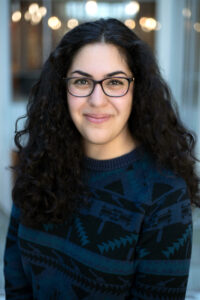
The Carl Gans Young Investigator Award was awarded to Dr. Armita Manafzadeh! The Manafzadeh lab at Georgia Tech University is interested in how joints work and where they come from—both evolutionarily and developmentally. Using X-Ray Reconstruction of Moving Morphology (XROMM) and integrative comparative approaches, the lab bridges articular form and function across the vertebrate tree, linking three-dimensional joint geometry to movement and behavior. Their research synthesizes experimental kinematics, osteological morphometrics, and developmental analysis to uncover how joints originated, diversified over deep time, and are shaped through ontogeny. The Gans Award Committee summarized the highlights of the winner in their recommendation with this statement: “We would like to award Armita with the Young Investigator Award. for exceptional creativity and originality in comparative biomechanics research as well as her strong mentoring contributions.
DCB 2026 Social
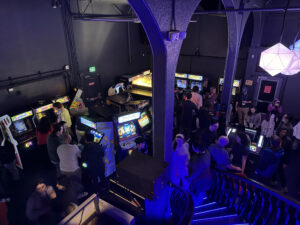
This year’s off-site social at Ground Kontrol Arcade & Bar was a great success, with an incredible 268 people joining us for a night of games and the iconic signature drink the SICB Smash. Thank you all for participating and making it such an easy, energetic, and genuinely fun evening! We would like to specifically acknowledge the outgoing DPO, Glenna Clifton, who took charge of the monumental task of planning for this off-site venue. We’re already looking ahead to the 2027 annual SICB meeting in Pittsburgh, where our new DPO, Cassandra Donatelli, will be planning the social; we can’t wait to see what she has in store!
Best Student Presentation Competitions
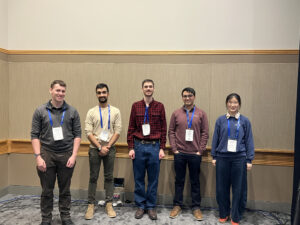
The DCB Best Student Presentation session featured outstanding presentations by students in the field of comparative biomechanics. We are grateful to the DCB BSP judging committee: Stephanie Crofts, Nicole Danos, Jacob Harrison, Tyson Hedrick, Roi Holzman, Anabela Maia, Shirel Kahane-Rapport, Bill Ryerson, Yangfan Zhang.
Vaibhav Chhaya
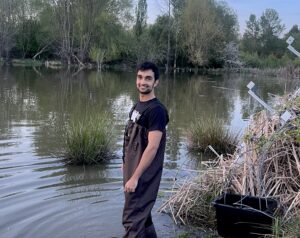
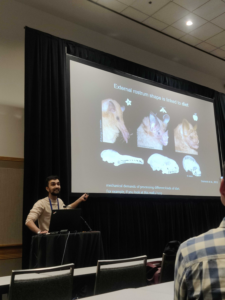
This year’s winner of The Mimi A. R. Koehl and Stephen A. Wainwright Award for the Best Student Talk in Biomechanics was awarded to Vaibhav Chhaya whose talk was titled: “Convergent anatomical mechanisms of harmonic filtering in bat echolocation.”
Convergent anatomical mechanisms of harmonic filtering in bat echolocation –Vaibhav Chhaya. I am a fourth-year PhD candidate working with Dr. Sharlene Santana at the University of Washington, Seattle. My dissertation examines multifunctional tradeoffs in the bat rostrum, with a particular focus on how internal nasal passage morphology influences both echolocation and thermoregulation. Using micro-CT scanning and computational modeling, my comparative research demonstrates how distinctive anatomical features of the bat nasal cavity, such as turbinal bones and paranasal spaces, filter outgoing sounds and potentially affect echolocation performance. At the same time, I am investigating whether these acoustic filtering properties trade off with the nasal cavity’s ability to regulate heat and moisture in respired air. To examine this tradeoff, I am quantifying nasal thermoregulatory performance across multiple, wild-caught bat species using a rapid-response thermometer that I designed and built—lovingly nicknamed the “HotBat 3.0.
Chloe Kaelin
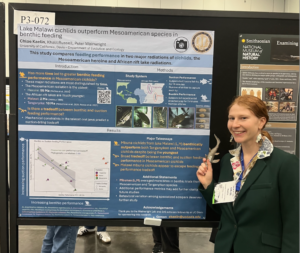
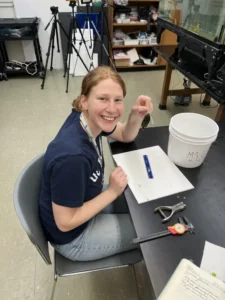
This year’s winner of The Stephen Vogel Award for Best Student Poster in Biomechanics was awarded to Chloe Kaelin for “Lake Malawi cichlids outperform neotropical species in benthic feeding.”
Lake Malawi cichlids outperform neotropical species in benthic feeding- Chloe Kaelin. I am a third-year undergraduate at UC Davis majoring in Evolution and Ecology. This summer, I studied the feeding performance of algae-scraping African Rift Lake cichlids with support from Peter Wainwright and the UC Davis EVE Scholars Fellowship. This project builds on research conducted by my graduate mentor, Khalil, who carried out the same experimental design on Neotropical cichlids over several months. Sharing the same methods allowed us to compare feeding performance between Mesoamerican and African cichlid lineages directly.
Congrats to you both! We are excited to receive new applications for SICB 2027. We encourage students to plan early for their 2027 BSP competition submissions. You can find more information on our website here. Winners in both categories receive a cash prize. Please feel free to contact us (chair.dcb@sicb.org, dpo.dcb@sicb.org, and secretary.dcb@sicb.org) if you have any questions!
Members’ Meeting Minutes
The minutes from our 2026 meeting can be found here.
Social Media
The social media landscape is ever changing. Though our Twitter and Facebook pages are still live, we are actively exploring new ways to keep in contact with our members. Please join our Linkedin page (https://www.linkedin.com/groups/12952547/).
Report from SPDAC
No updates from SPDAC but be on the lookout for upcoming emails and opportunities!
Regional Meetings
In the Fall of 2025, DCB sponsored 3 regional meetings. We thank the organizers and their teams for putting together these outstanding events!
- Northeast Regional Meeting at Rhode Island College Organized by Jason Ramsay
- Southeast Regional Meeting at Clemson University Organized by Rick Blob
- Southwest Regional Meeting (SWOB) at University of California Riverside Organized by Natalie Holt
Regional SICBs are excellent opportunities to present in-progress work and discover local collaborations. We encourage potential organizers to reach out with any questions abouthow to get started with organizing events or applying for funding. Send any questions to Chair.DCB@sicb.org and DPO.DCB@sicb.org, we are happy to help.
Please Apply for SICB Symposia and BSP
We encourage you to keep sharing your ideas for future SICB symposia! Some of our most exciting and community-shaping conversations begin with a thoughtful proposal. If you see a gap, an emerging field, or an interdisciplinary connection that deserves a spotlight, we want to hear from you! And to our students: please consider applying for a BSP presentation. It’s a supportive, high-visibility opportunity to share your science, build confidence, and connect with researchers who are excited to see your work.
Elections
This year we will vote for our newest Division Chair (elect). This task is overseen by our 2026 Election Nominating Committee: Armita Manafzadeh, Katherine Corn, and Andrew Schulz. Thank you to the committee and to the candidates for their willingness to serve in DCB! Candidates’ biographies for Division Chair (elect) are listed below. Please don’t forget to vote!
DCB Chair Candidates
Name: Dr. Simon Sponberg
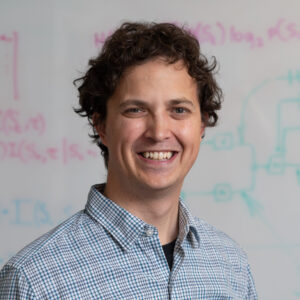
Current Position: Glen Robison Professor in Complex Systems, Schools of Physics and Biological Sciences, Georgia Institute of Technology
Education: Ph.D. in Integrative Biology, University of California, Berkeley (2002-2008); B.A. in Physics and Biology, Lewis and Clark College (1998-2002).
Professional Experience: Professor (2025-present), Associate Professor, (2020-2025), and Assistant Professor (2014-2020), Georgia Tech; Co-lead of the NSF Integrative Movement Sciences Institute (2024-present), Director of the fast lexicographic agile perception Multidisciplinary University Research Initiative (MURI) (2022-present), Executive Committee for the NeuroNext Initiative (2023-2025, Georgia Tech), Conference organizer for the Lepidopteran Satellite meeting to the International Congress on Neuroethology (2024 & 2026), ISN Council Member (Elected, 2024-present) Faculty Advisory Committee (Elected, 2019-2021 & 2023-2025, Georgia Tech), Class of 1969 Teaching Fellow (2016-2017, Georgia Tech) SICB Activities: Member since 2000, Judge for best presentation/poster for DCB, DNNSB, & DIZ
Other Memberships: AAAS, International Society of Neuroethology (ISN), American Physical Society (APS)
Research Interests: My lab explores the compositional principles governing how mechanical and physiological systems interact to produce agile movement. We ask how component systems (neural, muscular, and mechanical) yield functionality and performance in the whole organism. We leverage quantitative descriptions of behavior, robophysical modeling, and comparative neuromechanics. Recently we have explored how agile flying moths precisely orchestrate motor activity at the millisecond scale, how diverse insects power and control flight at the centimeter scale, how their compact brains can quickly parse complex sensory scenes, and how the versatility of muscle arises from the multiscale organization of billions of tiny molecular motors. Lab website (https://sponberg.gatech.edu)
Goals Statement: SICB has been my community for more than 25 years, and DCB has been my intellectual home since it formed. I am running for Chair to give back to a community that has shaped my career, especially as we collectively navigate a period of turbulent change. First, I deeply value our division’s commitment to supporting early career scientists, and I believe this mission is more critical now than ever. As a professional society, we must use the strength of our collective voice to support our diverse membership. This includes our international students and postdocs as they navigate this challenging climate. I will prioritize opportunities for networking, support, and mentorship through the division both at and outside of our annual meeting. Second, I have led or co-led several interdisciplinary research, education, and outreach teams with my outstanding collaborators, students, and postdocs. As Chair, I will use this experience to promote symposia and initiatives that help us articulate and then amplify the major themes, opportunities, and advantages that define our discipline and position it for future growth. Finally, I will also advocate for the establishment of a SICB Fellows program and the expansion of our awards portfolio to further recognize early career biomechanists. During these uncertain times, SICB must serve both as a champion for the exciting science we do and as a safe, supportive community for the remarkable scientists who carry out this work.
Name: Dr. Jesse Young
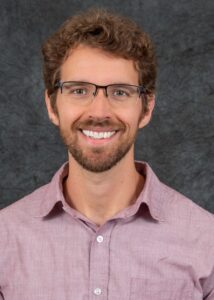
Current Position: Professor of Anatomy (2022 – present), Department of Biomedical Sciences, Northeast Ohio Medical University (NEOMED)
Education: Ph. D. Stony Brook University (Anthropological Sciences, 2002-2008); B. A.: Indiana University (Anthropology & Psychology; 1996-2000)
Professional Experience: Associate Professor, Department of Anatomy and Neurobiology, NEOMED (2015-2002); Assistant Professor, Department of Anatomy and Neurobiology, NEOMED (2009-2015); Postdoctoral Fellow, Department of Anthropology, UT Austin (2007- 2009)
SICB Activities: I have attended SICB conferences for more than two decades, participating in30 presentations over that time, including twice presenting in invited symposia talks. I have been a student prize judge several times (for both DCB and DVM) and chaired podium sessions at three different meetings.
Other Memberships: American Association of Physical Anthropologists
Research Interests: I am broadly interested in the evolutionary biomechanics of the mammalian locomotor system. I investigate the morphological and mechanical factors that constrain locomotor performance in mammals, and how these constraints determine the ecological capabilities of an organism across multiple time scales. Over the past 15 years, these research efforts have centered on two broad foci: 1) the evolutionary biomechanics of primate arboreal locomotion and 2) understanding the functional, and possibly adaptive, links between somatic growth and locomotor development (more on our work at www.younglaboratory.org).
Goals Statement: It is an honor to be nominated for Chair of the Division of Comparative Biomechanics. I have been attending SICB for over twenty years, since my first years of graduate school, and DCB has long felt like my intellectual home. The Division’s integrative spirit and collaborative culture have shaped my career, and I am eager to give back to a community that has given me so much. Although I have not yet served in formal leadership within SICB, I bring substantial experience from my home institution, where I have directed a large, team-taught medical anatomy course, chaired our university IACUC, and led the College of Medicine Curriculum Committee. These roles have reinforced my belief that effective leadership is mission-driven, data-informed, and collaborative. DCB is already a strong division, thanks to the dedication of its members and officers. My goal as Chair would be to sustain that strength while expanding engagement and opportunity. Comparative biomechanics is inherently integrative, positioning DCB to foster collaboration across SICB divisions and to engage broader audiences drawn to the remarkable capabilities of organisms. I would prioritize three initiatives. First, strengthening mentorship by promoting the existing DVM–DCB mentor program and developing targeted professional development resources for graduate students and postdocs. Second, enhancing visibility through active coordination with our SPDAC representative to use our social media presence to highlight member achievements and ensure clear channels for sharing publications, opportunities, and events. Third, implementing annual member surveys to ensure leadership decisions reflect the needs and priorities of our community. I would be honored to serve and to help guide DCB’s continued growth and impact.
Name: Dr. Eric Tytell
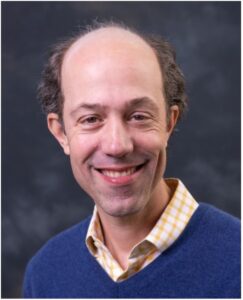
Current Position: Associate Professor, Department of Biology, Tufts University
Education: Ph.D. in Biology, Harvard University (2000- 2005); M.Phil. in Zoology, Cambridge University (1998- 1999); B.A. in Biology and Physics, University of North Carolina, Chapel Hill (1994-1998)
Professional Experience: Associate Professor (2019- present) and Assistant Professor (2012-2019), Tufts University; Director of Graduate Studies, Department of Biology, Tufts University (2019-2025); Editorial Advisory Board Member, Journal of Experimental Biology (2015- present); Editorial Board Member, Scientific Reports (2015-2016); Assistant Research Scientist, Department of Mechanical Engineering, Johns Hopkins University (2010-2012); Postdoctoral Researcher, Institute for Systems Research and Department of Biology, University of Maryland, College Park (2005- 2010); Director of Fluid Dynamics, Nekton Technologies, Inc. (1999-2000)
SICB Activities: Member since 2000. Public affairs committee member (2008-2013), where we first piloted the program that became the SICB Student Journalism Program. Member, DCB Nominating Committee (2025). Organized NE Regional SICB meetings (2016, 2023). Carl Gans award winner (2012). Mentor for the SICB Mentor-Mentee matching program (2022, 2023, 2024)
Other Memberships: AAAS, Society for Experimental Biology
Research Interests: Comparative biomechanics and neural control of locomotion in fishes, biological fluid dynamics. My lab group studies swimming behavior in many species of fishes, focusing on unsteady behavior and sensorimotor control. We have worked on the role of body mechanics and mechanosensation in swimming behavior, using experimental and (with collaborators) computational and robotics approaches. We have also studied the sensory control of schooling behavior.
Goal Statement: I have attended nearly every SICB meeting since 2000, before DCB was a separate division! I look forward to every meeting. I recently finished up a six-year term as Director of Graduate Studies in my department at Tufts, and I now feel that I have time to give back to the society that has been so important to me. In my department, I have been an advocate for the graduate students, and have developed and supported mechanisms for more open communication among faculty, staff, and students. SICB, and DCB in particular, are unusual in how much they center students, and I’d like to help that focus continue and grow. I have also organized two successful Northeast regional SICB meetings, and I think that experience will help me in service to DCB. Finally, I would like to continue supporting existing programs and developing new ways for members at all levels to network